Week 23/2026: I eat the stars
Week of 1 June 2026
A few years ago I read Sarah Wilson’s book on the climate catastrophe, This Wild and Precious Life, and I wrote a blog post about it at the start of 2021. I wrote about how every year, everyone kept wanting to chalk up the preceding year’s shitstorm as “just a bad year” and expected things to go back to normal. But even back then we kind of knew that wasn’t going to happen, yet still on some level kept clinging to a hope that something would change, surely someone will do something, it isn’t too late . . .
You can read it if you like (A new word for a new year).
It’s now five years since I wrote it, and not only has nothing got better since I wrote it, a lot of things have got significantly worse . . . and the feelings of “this isn’t getting better” chip away at me, while I continue to do pretty much what I was doing in 2021. It always felt too much, too big, overwhelming . . . I don’t have time . . . I don’t know what to do . . . and here we are, right in the thing we’ve been warned about for decades.
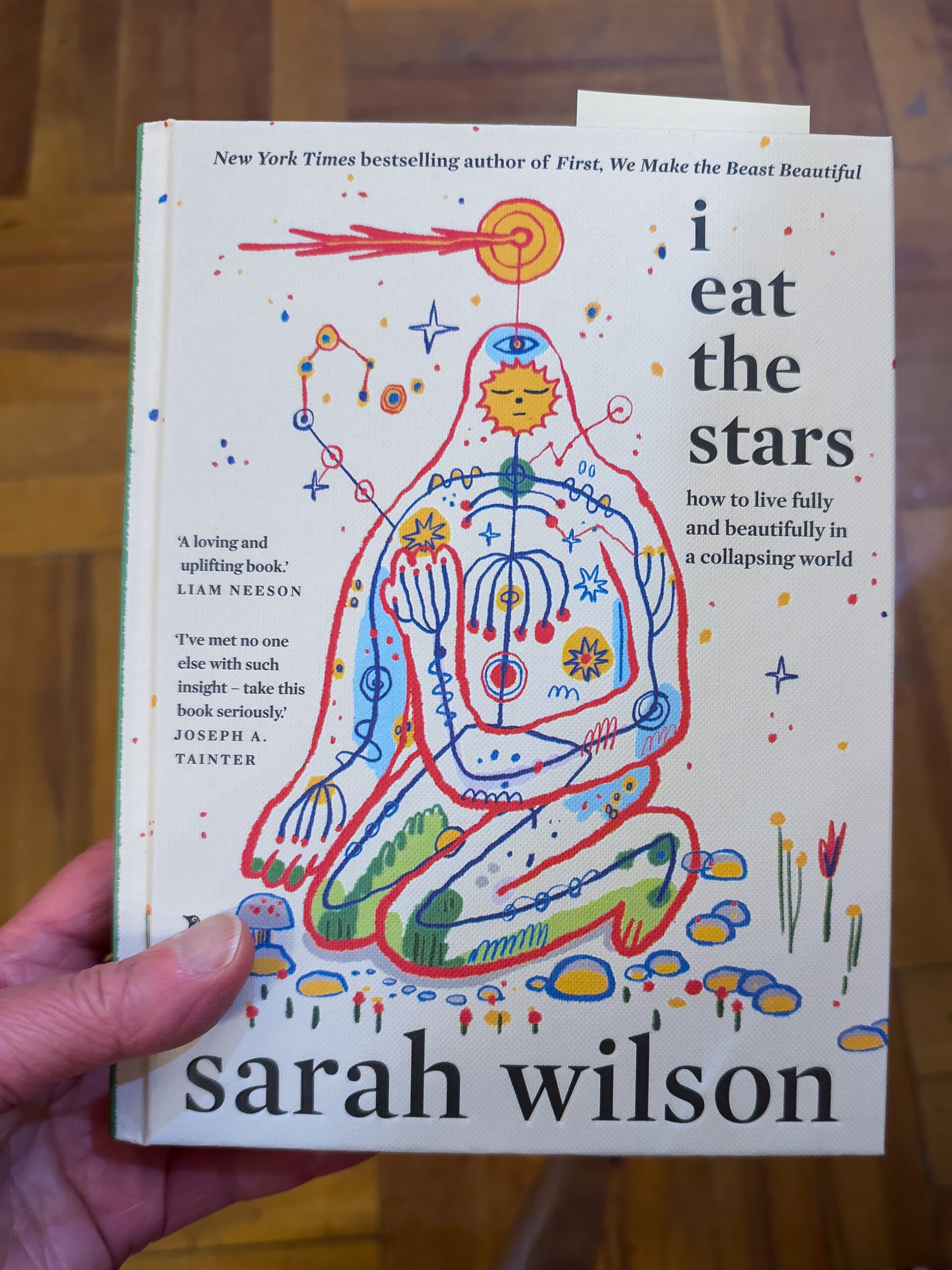
Enter I Eat The Stars: How to love fully and beautiful in a collapsing world.
This post is wholly researched and written by me, a human. I will always bring you my stories in my real human voice. I do not use generative artificial intelligence (AI) in my writing. If there are any em dashes in this piece, I put them there. I do not consent to have my work used for training AI.
I eat the stars
Sarah’s new book, I Eat The Stars, continues the same themes from her earlier book but goes further, talking about the systemic collapse that is occurring around us. She’s been writing it alongside her community on Substack for the last couple of years, and has been incorporating feedback from readers , as well as amending her content in real time as the state of the world changes.
As a not-paid member of her community, I’ve read many of her posts and saved up a stack more, including interviews with people who know a lot more about this than I do, ‘for later’ (but who am I kidding, there is no ‘for later’—these conversations are happening right now, it’s overwhelming and I can’t keep up.)
In the book, Sarah speaks to the feeling many people have that something is really really wrong in the world and it isn’t getting better. If it’s not the climate disasters, it’s democracies disappearing, it’s techbros forcing AI into everything, commodifying knowledge and using up the world’s natural resources to do it, it’s the rich getting richer, it’s genocides, it’s algal bloom and species extinctions, it’s years of social progress being unwound . . .
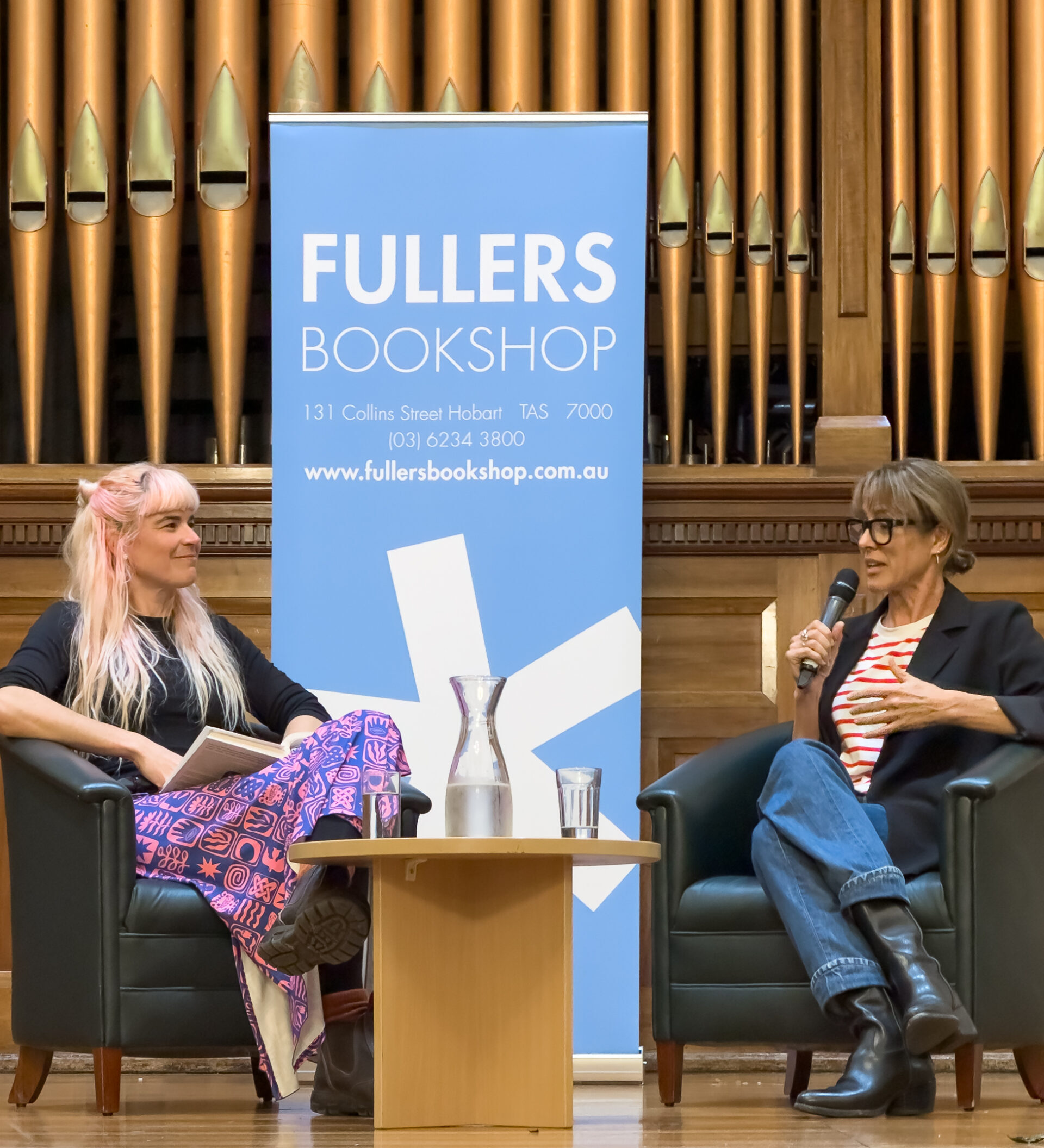
I hadn’t quite recovered from the “we are acutely aware that something is profoundly wrong” conversation with James Bradley, Cadance Bell and Margaret Merrilees at the writers festival last week, when I went along on Tuesday to Sarah’s talk with Hannah Moloney, which touched on all of what those writers spoke about and more.
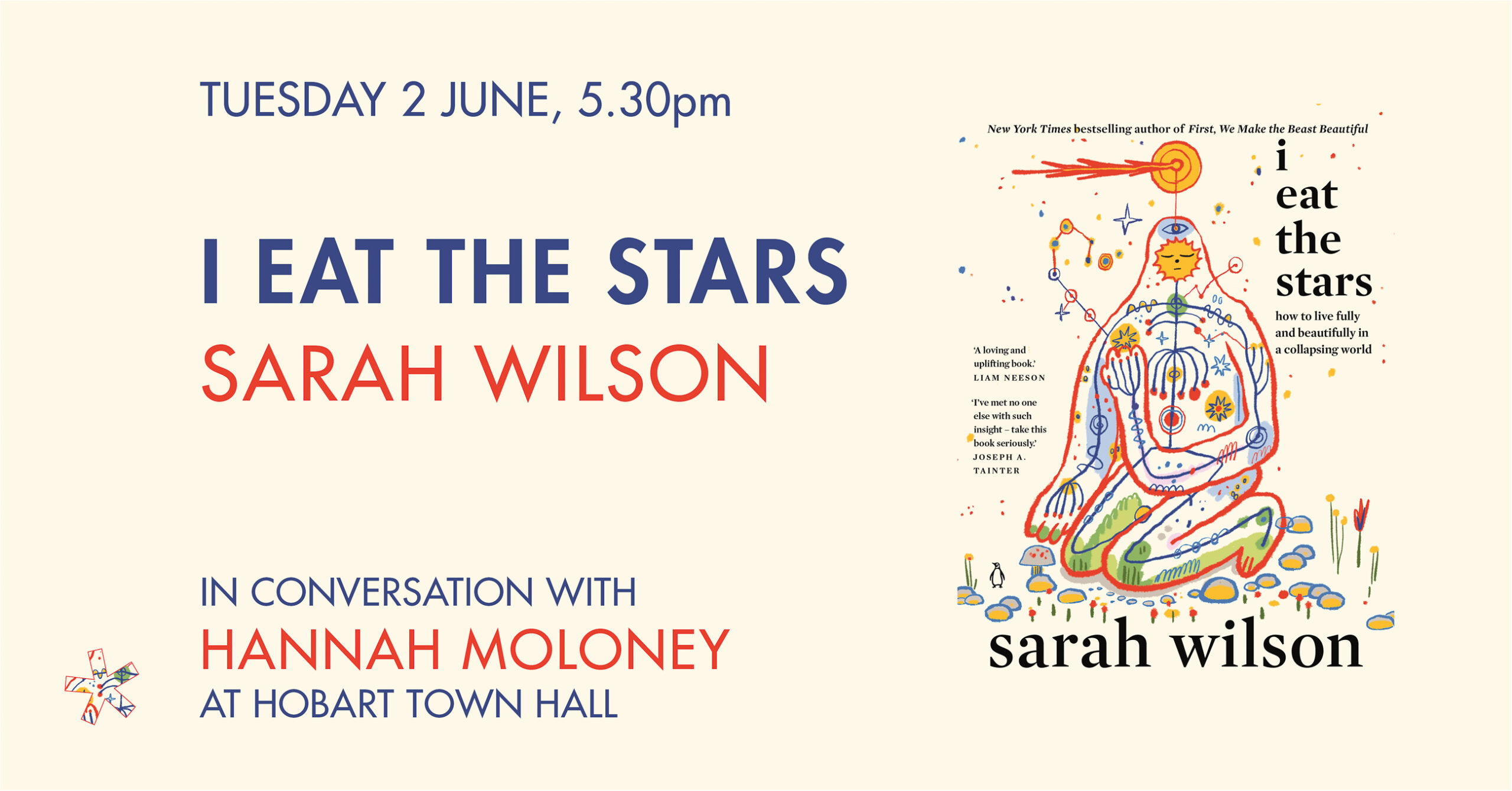
Here’s part of the spiel for the book
Why now, and why everything, all at once?
In I Eat the Stars, Sarah Wilson argues we are undergoing what every sophisticated civilisation before us has – complex systems collapse.
But how do we continue to live as sensitive, tender-hearted humans amidst such a tumultuous shift? What does life look like when the systems we rely on deteriorate? How do we make financial decisions? Should we be prepping or homesteading? Should we be having kids? How do we hold the grief and process the moral injuries? And, so importantly, how do we avoid succumbing to doom and despair?
[Sarah] delves into these pressing questions (and her answers are rarely the obvious ones!). Drawing on wisdom gained from more than 200 conversations with scientists, energy futurists, historians, philosophers, game theorists and spiritual leaders, [she] takes readers on an intimate journey as she lays out a path for living fully, meaningfully and beautifully through these troubled times.
It’s a lot to take in, even as a reader of Sarah’s work (and I’m going to admit I haven’t finished reading the book yet. I got three chapters in and I had to, I don’t know, retreat.)
There is so much I could say about this but Sarah has written it already.
So here are a couple of things from the conversation with Hannah that stood out for me.
First, we know that every complex civilisation has collapsed and this is because of its complexity, and all of the resources go into maintaining the complexity, which gets to a point where it can no longer be sustained. A difference between now and previous civilisational collapses is globalisation, which creates extra layers of complexity and connection, so absolutely everything is going down together.
Sarah says the collapse of the system may not be the collapse of humanity: the question is whether we go down with it, clinging to it, throwing everything at keeping it going, or do we let it go and work towards what comes next? Everything we can do to make even a degree of difference is positive. But we can’t stop what’s coming now. All we can do is do things that will make a difference to how hard it hits us—and what will make a difference is a return to community. Collaboration, cooperation and conversation. We need to take collective action.
Sarah talked about someone who had said that we must have a stable society with low levels of inequality and low levels of polarisation to guard against collapse. So taking a look around … that ain’t happening … (it’s getting more unequal and more polarised, right?)
She touched on how the constant barrage of bad things is being thrown at us to keep us distracted and outraged and too overwhelmed to do anything. It’s a deliberate tactic, which James Bradley called “flooding the zone with shit”. I mean, we can see this, right, and we can see how overwhelming “the fire hydrant of shit” is.
Another common theme with last weekend’s talk was the loss of democracy around the world, and how it looks like Australia is starting to head in the same direction as the US. The US is no longer officially a “liberal democracy”, and many people believe we’re kidding ourselves if we don’t recognise that what’s happening there could easily happen here. We’re doing things like letting AI companies in with no proper oversight or accountability. Other countries have not done this, and, for example, if I already didn’t shop at Coles, I definitely wouldn’t be now.
Greater inequality, polarisation and moving towards autocracy are more symptoms of collapse, I guess.
Look, I know this isn’t for everyone and it’s hard to know what angle to take. Many people won’t believe it, many people will deny it, many people will hope that something will come in and save us. It’s like getting a medical diagnosis of a serious condition you could shift with some work and lifestyle changes. You know it’s going to make you really sick or even die if you don’t make changes, but you’re human and it’s hard, and part of you doesn’t really believe it will happen to you.
There is so much going on in my head at the moment, but it felt good to hear Sarah say that letting go of a system that makes us sick and anxious and miserable will make us feel more human and live more fully. And considering we have an average of 4,000 weeks to live, might it not be a good thing that we don’t spend it serving a system that chews us up and spits us out?
I need to read the book and I know it won’t be an easy read. But maybe it will help.
In the mean time, what do I do? Carry on as if nothing was wrong?
Here’s my weekly update . . .
Habit tracker
- 15 minutes morning exercise sequence (7 days): 4/7
- Walk (7 days): 2/7 (what is going on here?!)
- Physio exercises (7 days): 4/7
- 9.30 shutdown (6 days): 3/6
Summary of the week
Something good
I went to Fullers Bookshop’s Silent Book Club on Friday.
It was great. You just go to the bookshop and read your book for an hour. No one talks.
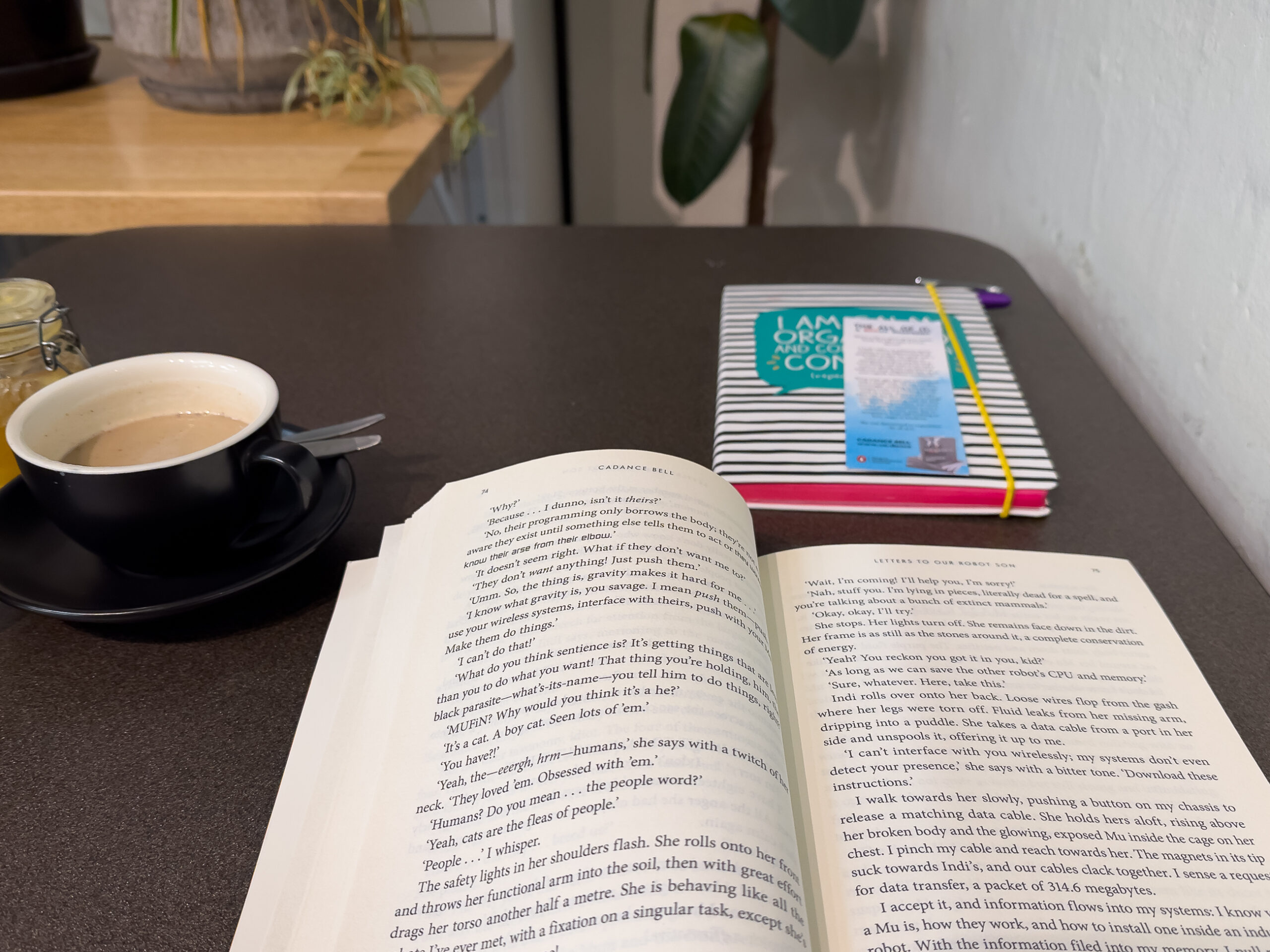
The event description says “Created for introverts, there is no pressure to speak, converse, or cringe through awkward small talk. Engage as much or as little as you like.”
I love this!
This week I learned
In the Victorian era, there were particular types of clothing people wore in the period after someone died that indicated how far along in the mourning process they were. In the early stages of mourning, you were not allowed to wear clothing that was shiny. The fabric had to be matte, like crepe or bombazine. (Thanks, Betwixt The Sheets.)
According to an ABC article about quirky laws in Canberra, you can be fined for tooting your horn ‘goodbye’ and waving outside a car window: $252 for using the horn unnecessarily and $205 for having body parts outside the vehicle. I am totally here for the tooting goodbye law. How do I make this happen?
This week I noticed
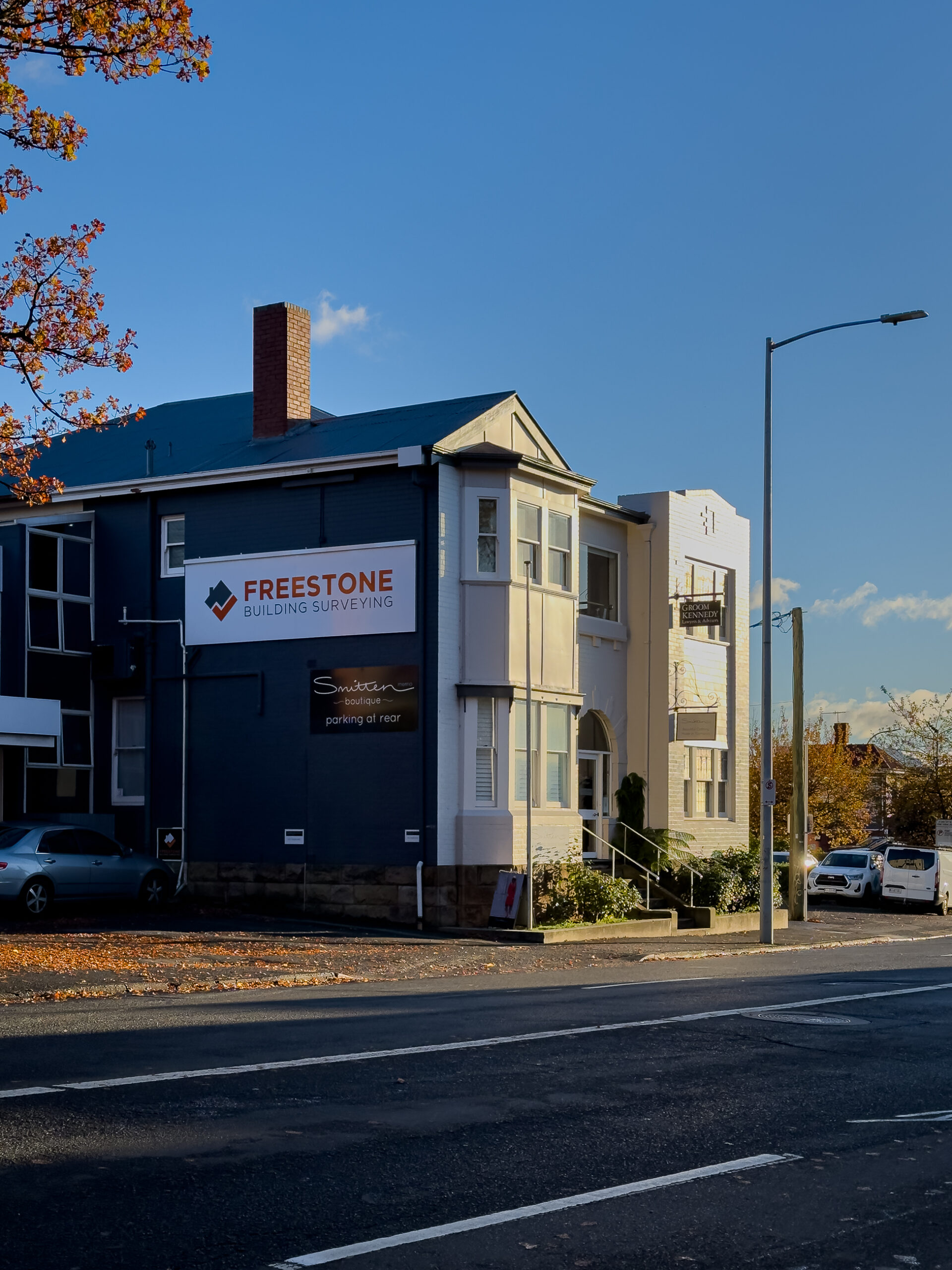
Cool light.
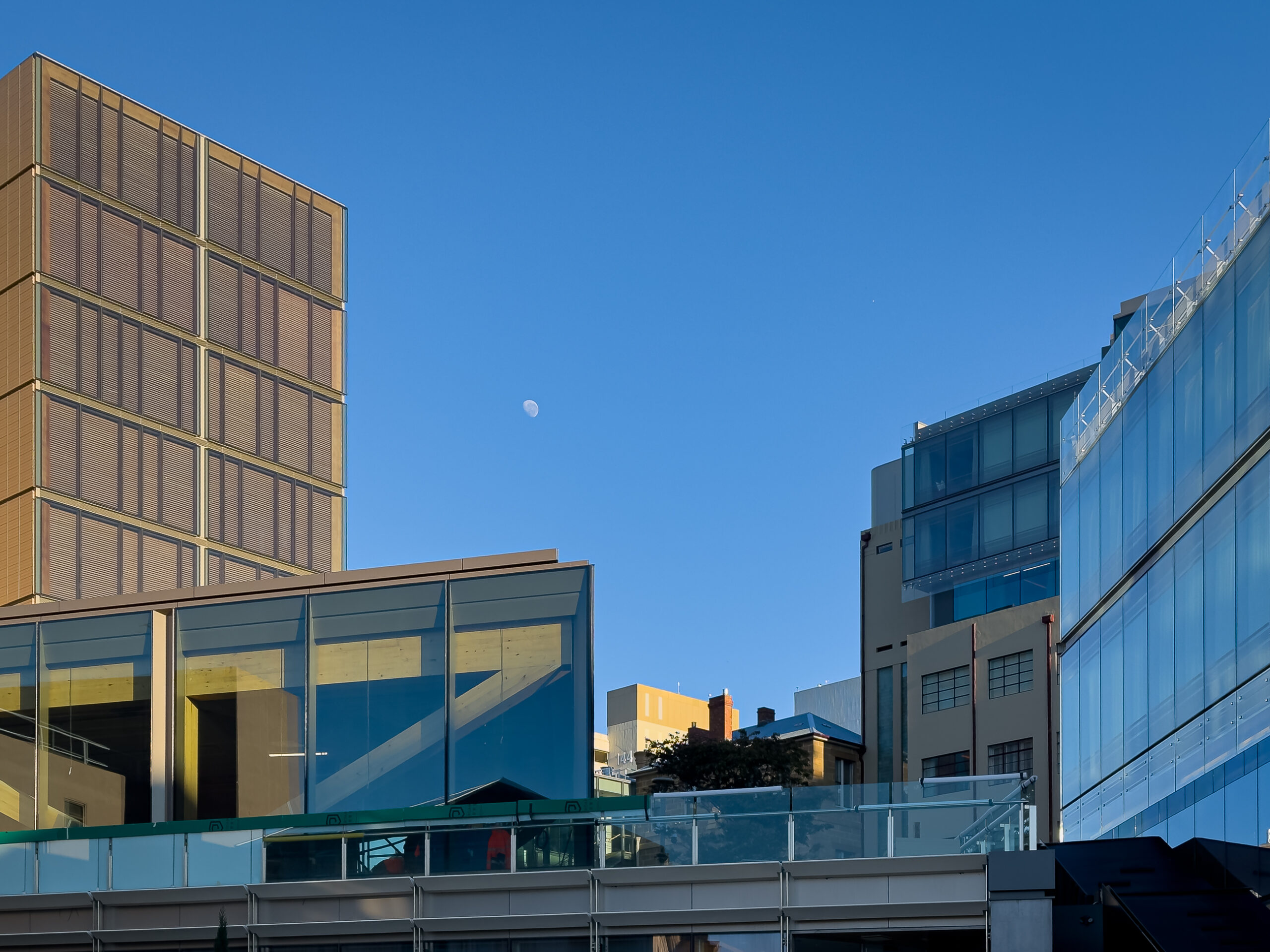
The moon.
What’s making me think?
Imagine if all you could ever see was what you could see between two slats of a horizontal blind.
I liked Hannah Moloney’s parting question at the end of her talk with Sarah Wilson: “How will I be useless to capitalism today?
Reading
- “Dracula’s Guest” by Bram Stoker
- Letters to Our Robot Son by Cadance Bell
Listening
- Betwixt The Sheets podcast
About The Author
