Week 28/2026: Weekly review
Week of 6 July 2026
It must be winter or something. I don’t have a lot to write about at the moment, so this is a quick weekly review of my regular things and some photos.
This post is wholly researched and written by me, a human. I will always bring you my stories in my real human voice. I do not use generative artificial intelligence (AI) in my writing. If there are any em dashes in this piece, I put them there. I do not consent to have my work used for training AI.
Weekly review
NAIDOC Week
This week was NAIDOC Week, which happens in the first week of July each year, to celebrate and recognise the history, culture and achievements of Aboriginal and Torres Strait Islander peoples.
I love seeing the poster designs each year, and as always, this year’s is beautiful.
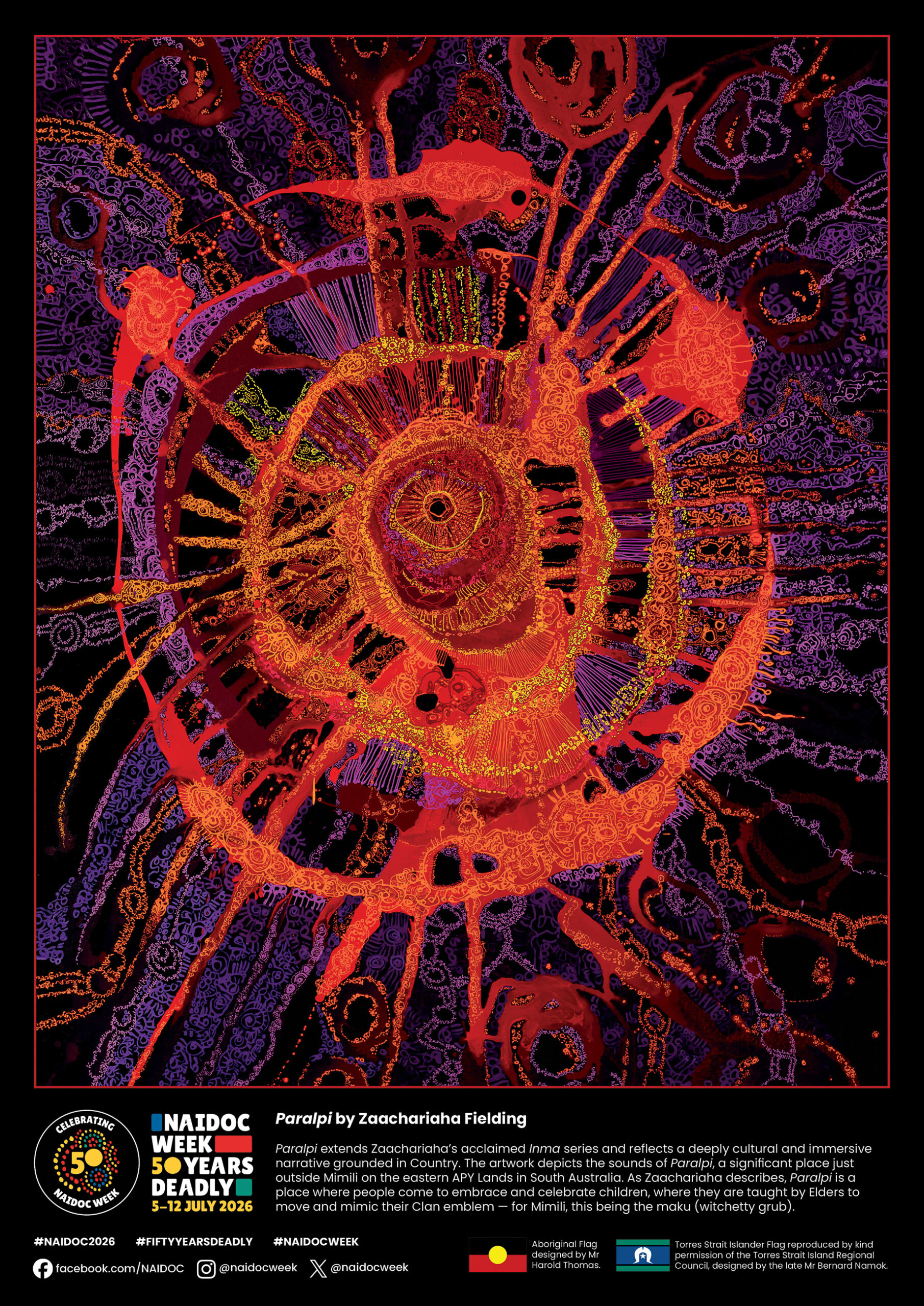
It’s by Zaachariaha Fielding, whose painting Inma won the Wynne Prize in 2023—I was lucky enough to see that in the Wagga Art Gallery.
Zaachariaha Fielding is a proud Yankunytjatjara man from the Aṉangu Pitjantjatjara Yankunytjatjara (APY) Lands in South Australia, and this artwork Paralpi continues the Inma series. Zaachariaha writes:
“Paralpi is about movement — movement through generations, through memory, through song and story. It speaks to the strength our people carry and the beauty of culture continuing to evolve while staying deeply connected to who we are.”
This link provides some information about the history of NAIDOC week and events leading up to it, from protests in the 1920s and 1930s, to the Day of Mourning in 1938, and the move from a day of commemoration to the week that we have now.
Habit tracker
Daily habits
- 15 minutes morning exercise sequence (7 days): 3/7
- Walk (7 days): 4/7
- 15 minutes writing (7 days): 3/7
- 9.30 shutdown (7 days): 3/7
Physio exercises
- Calf exercises (7 days): 7/7
- Hip lifts (5 days): 4/5
- Bridge (5 days): 4/5
- Chair squat (5 days): 4/5
Summary of the week
This week I learned
Okay, this is possibly the strangest thing I’ve heard all year. My mother’s NewScientist magazine had an article titled: “Diving suit helps cyborg cockroaches swim underwater”.
NewScientist is THE BEST!
According to the article, “swarms of cyborg insects controlled remotely via electrical implants can now operate underwater thanks to tiny diving suits.”
What the hell?!
Professor Hirotaka Sato and a team of researchers at Nanyang Technological University in Singapore developed electrodes they could implant into the sensory organs (cerci) of Madagascar hissing cockroaches (Gromphadorhina portentosa), so they could release the cockroaches after natural disasters to search for (presumably human) survivors.
The cockroaches have “a working fuel source (the article doesn’t say what that is), efficient locomotion and built-in reflexes to avoid obstacles—capabilities that engineers struggle to replicate mechanically at such a small scale”.
Nature > Robots.
But they can’t search in flooded areas, so the researchers developed a diving suit to enable them to work underwater.
The article explains that cockroaches breathe through pores called spiracles on their abdomen and thorax, so the team 3D printed a watertight resin suit that protects the abdominal spiracles from water. Tiny hoses run forwards from the suit to connect directly to the thoracic spiracles. They can’t cover them with the diving suit because that’s where their legs are so it would stop the cockroaches from moving.
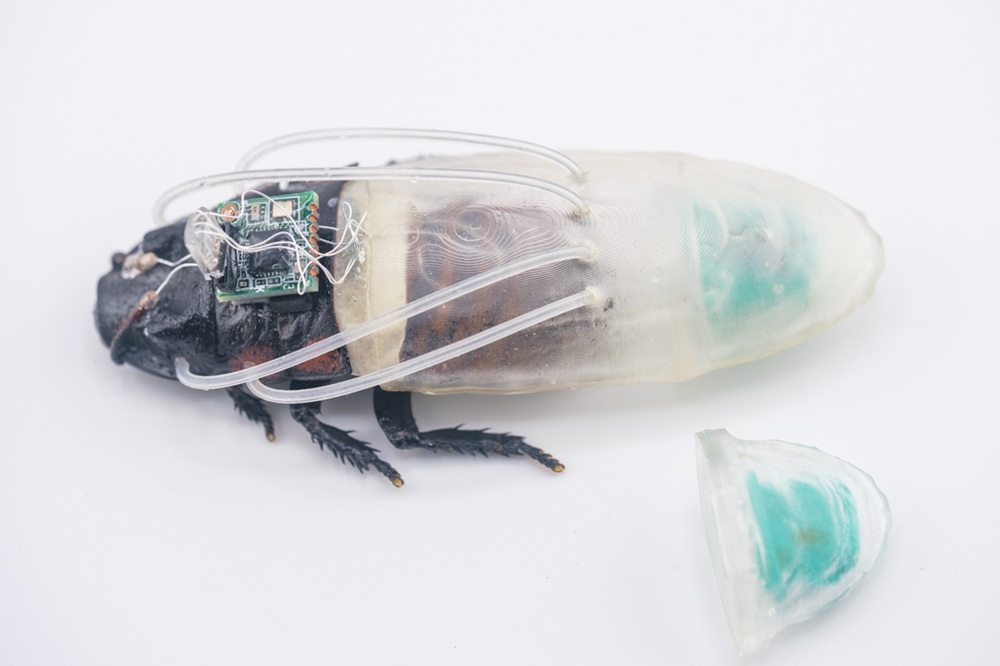
They don’t give the cockroaches an oxygen tank like scuba divers have. Instead, they include a mixture of hydrogen peroxide and manganese dioxide. When those chemicals interact, the hydrogen peroxide decomposes to produce oxygen that is channelled through the shell and the tubes to the cockroach’s thoracic spiracles. With this nifty setup, the cockroaches can walk under water for up to three hours at depths of 50 cm.
According to the researchers, the tubes can be removed later without hurting or harming the cockroach.
When I showed this to my mum, she said, 50 cm isn’t very deep, and I said, well not for a human, but compared to a cockroach size it would probably be the equivalent of us going 20 metres deep. (Maths, something, something. I read that humans can safely dive between 10 and 25 metres without gear but they aren’t gonna be staying down there for three hours are they? No, Barb. Leave the freediving rabbit holes alone … You don’t need to know about this stuff … We’re talking about cockroaches …)
I’m just like WTF?! How big are these cockroaches for a start?
I mean, I knew about the rodents of unusual size they train to go into disaster areas but cockroaches?!
(I looked them up. They grow from 5 cm to 7.5 cm.)
The Madagascar hissing cockroach is apparently often used in cyborg insect research because of its size and robustness and because it has no wings.
I had no idea cyborg insect research was a thing!
This week I noticed
Weird light on a tree in Parliament Lawns.

Spot the difference.

A question on the ABC quiz I knew the answer to. “Shakespeare’s Globe Theatre burned down in 1613 during a performance of which play?”

Light on Collins Street on Saturday morning.
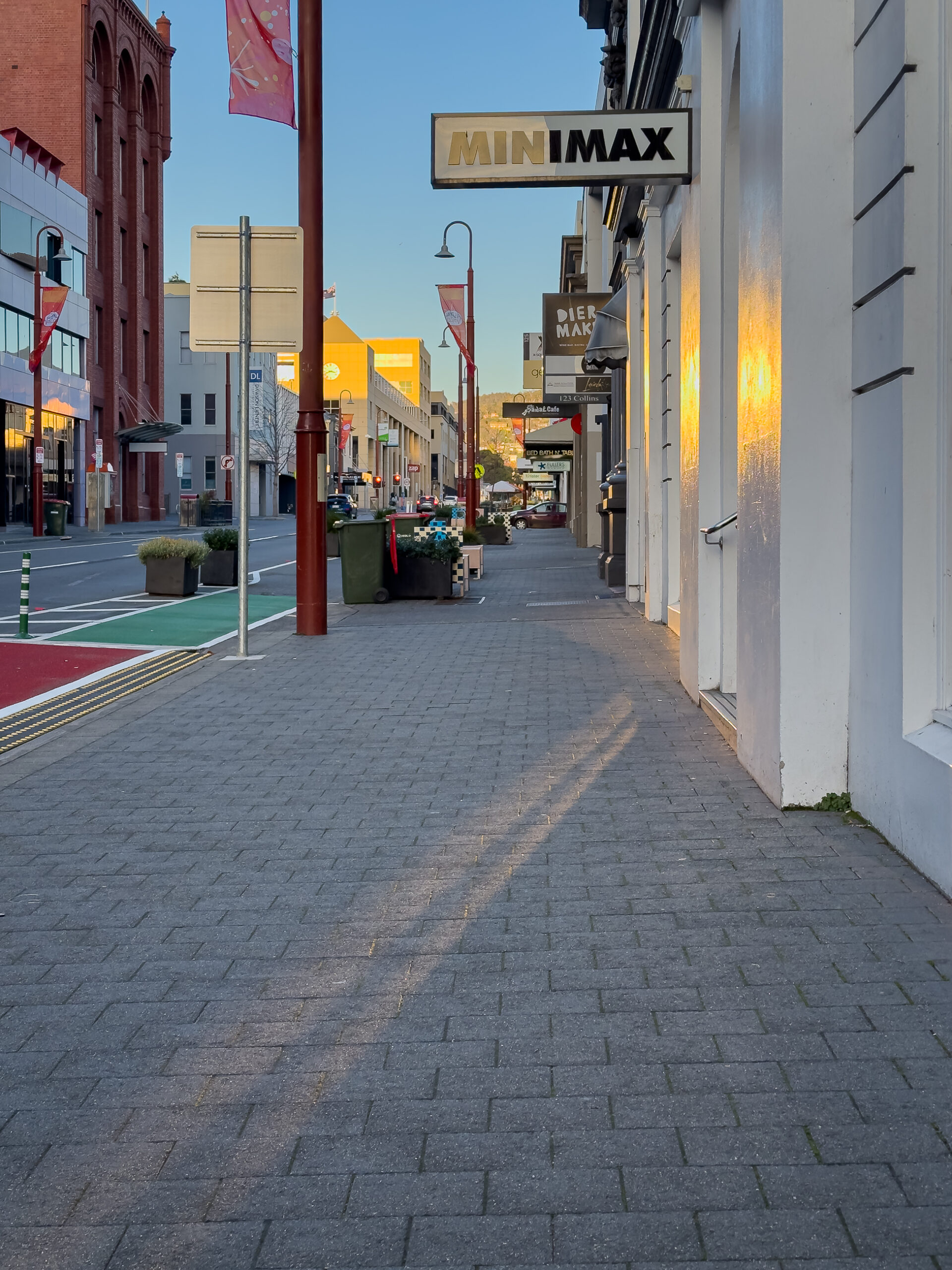
Both ways.

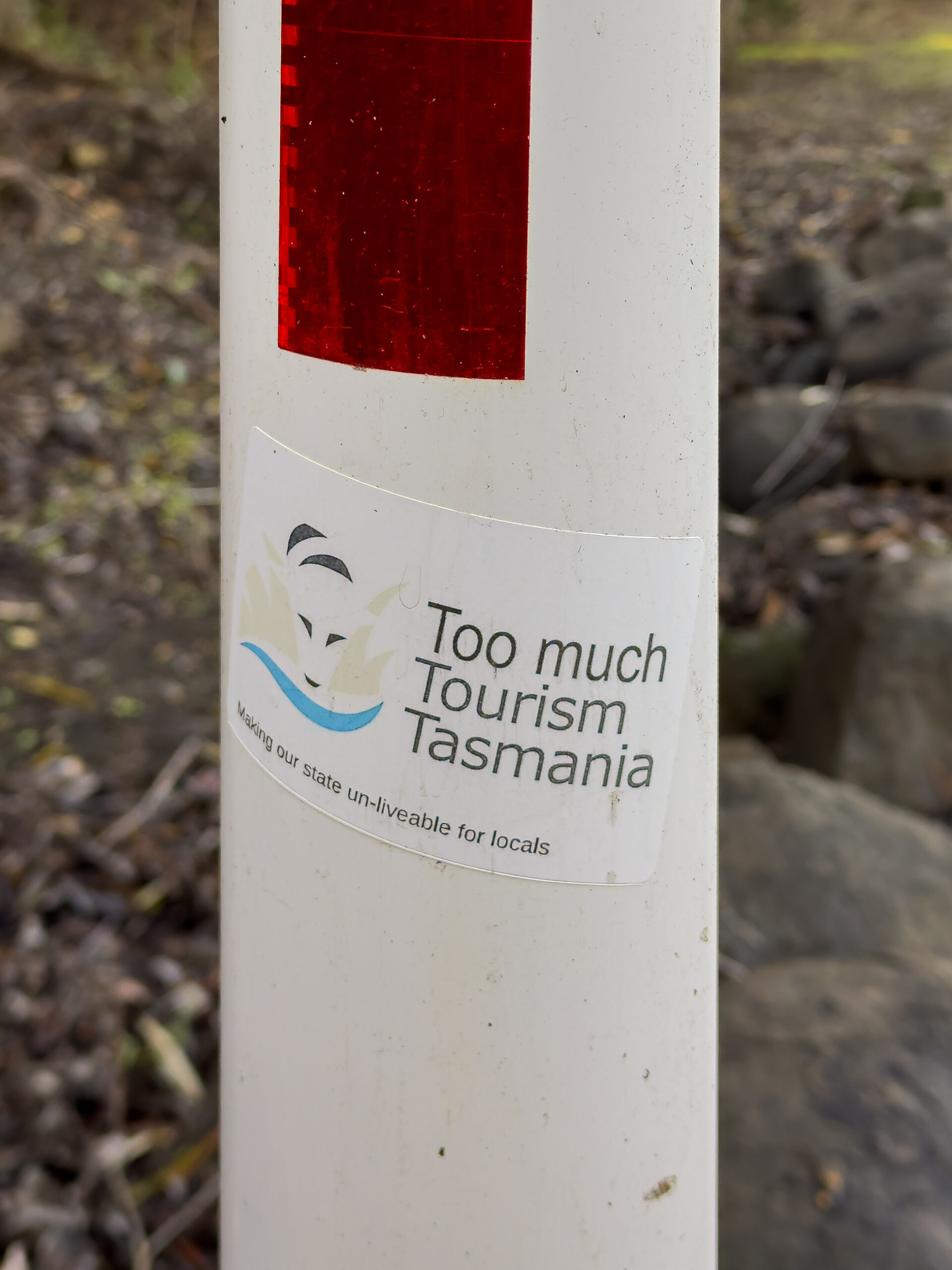
Too much Tourism Tasmania.
Reading
- The Science of Storytelling by Will Storr
- Release by Lucy Christopher
- Stolen by Lucy Christopher
- How To Try Again by Steve Kamb
- A Bogan Rhapsody by Cadance Bell
Listening
- purity ring by Purity Ring
- Thomas Dunford Solo lute recital in Wigmore Hall, 20th April 2017
- graves by Purity Ring
- Thomas Dunford plays Bach in Concertgebouw Bruges
Watching
- Doctor Who ‘Frontios’
- Ground Up
About The Author
