Week 27/2025: Quite the impression
Week of 30 June 2025
This post is wholly researched and written by me. I do not use AI in my writing. I will always bring you my stories in my real human voice.
A final day in Melbourne
aka Quite the impression
Monday was our last full day in Melbourne, and Slabs was very keen to go to the French Impressionism exhibition at the National Gallery of Victoria.
This exhibition
charts the trajectory of Impressionism and Post-Impressionism in late 19th-century France, highlighting the renowned avant-garde artists at the centre of this period of radical experimentation, who boldly rejected the artistic conventions of their time.
Many of the paintings had come from the Museum of Fine Arts, Boston, and the exhibition included works by Claude Monet, Pierre-Auguste Renoir, Edgar Degas, Camille Pissarro, Édouard Manet, Mary Cassatt, Berthe Morisot, Paul Signac and Alfred Sisley.
I don’t know if you’ve noticed that the 19th century isn’t really my scene, but it still seemed like a good opportunity to learn more about this art genre and see works that I’m unlikely to ever get another chance to see.
My knowledge of Impressionism is Monet’s water lilies and Degas made some paintings of ballet dancers and Renoir is like famous (I don’t know for what and maybe I keep mixing up Renoir and Rembrandt because they both start with R. Oh and Rembrandt was Dutch. And from a much earlier time, don’t ask me when.) Something about Impressionists painting the world they saw around them. #notanartstudent
So there was a lot for me to learn!
En plein air
As I moved through the exhibition I learned that these artists often painted outdoors (‘en plein air’) at the location they were painting, rather than in a studio. Up until this period, ‘proper’ art was made in studios and featured gods, goddesses, biblical figures and military leaders. So the ‘establishment’ (aka The Salon) didn’t like the impressionists very much.
It was funny hearing people talking about how old these paintings were because they were from 1830, when this continent’s rock art is over 40,000 years old—and it’s not stuck in a gallery where people look reverently at it. It’s in the place it was painted, and sometimes mining companies think it’s okay to blow it up. The contrast between respect paid to the gallery’s ‘old’ art and the ancient art of this land is striking.
Walking through the gallery also made me think about the logistics of transporting this collection from Boston to Melbourne.
How do they do this? Do the paintings travel by sea or by air? Do they send the paintings in one consignment or do they split them up so that if one plane crashes or one ship sinks they don’t lose it all? You know, like how the two people who know the KFC recipe are never allowed to fly on the same plane.
Do custodians travel with the paintings every step of the way like Phar Lap’s strapper did? And how much does it cost to insure such a trip? Can they even insure it? I mean, these painting are irreplaceable. It’s not like you can get your $6 million payout to replace the Water Lilies and nip into the gallery store and buy another one. (Okay, it’s probably closer to $60 million . . . which is just mind blowing!)
So many questions.
Look to the light
Moving on, I did enjoy most of the exhibition and I learned a lot of new artist names.
My interest was mostly in how the artists portrayed light, as this is what I look for in my photography.
For example, Narcisse Virgile Diaz de la Peña’s Path through the forest near Fontainebleau (c. 1875-76).
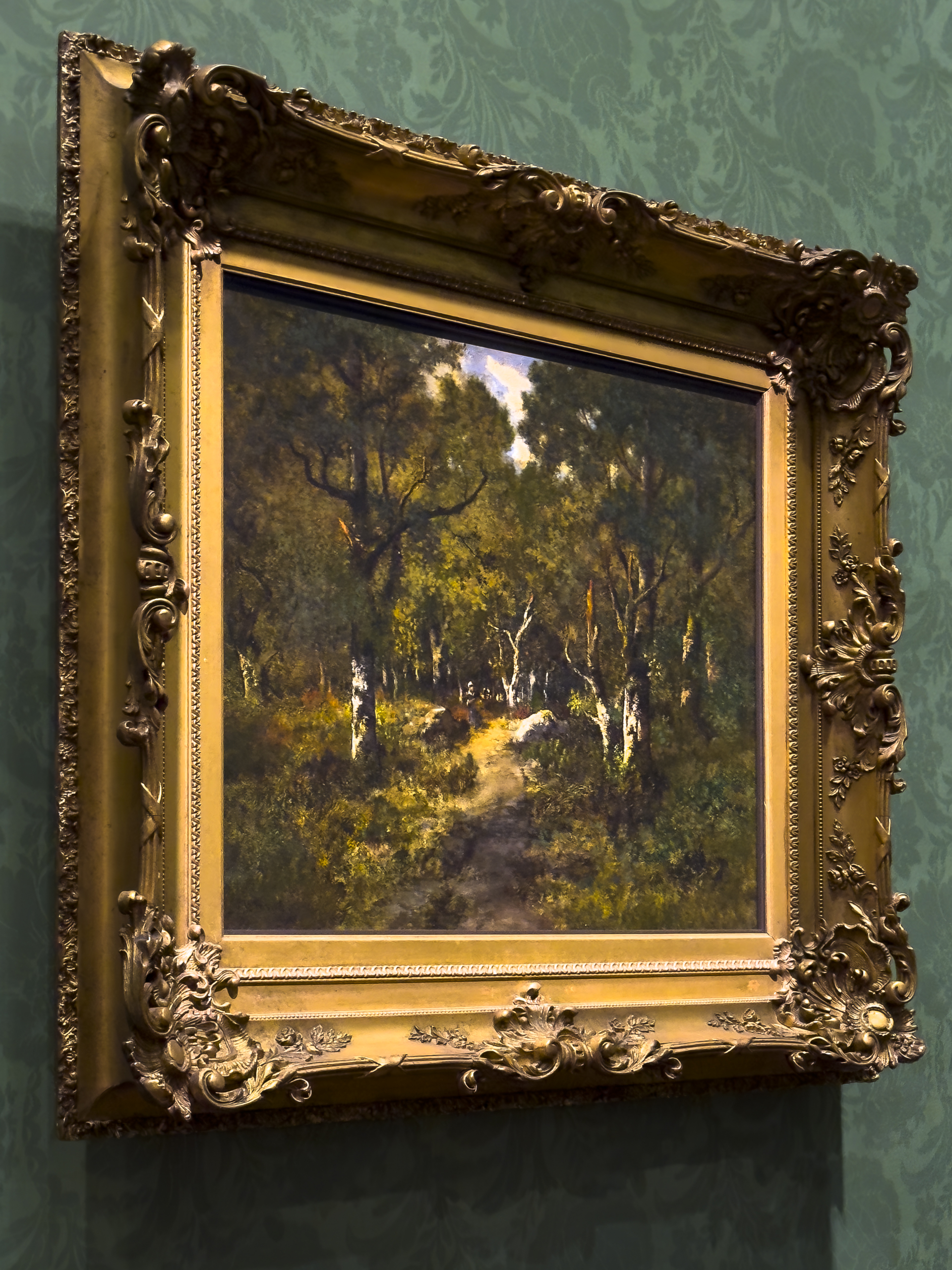
He is said to have “favoured stormy and shadowy settings in which the light trunks of the forest’s beech and birch trees shone almost as if illuminated by lightning”.
Eugène Louis Boudin: Venice, Santa Maria della Salute from San Giorgio (1895).
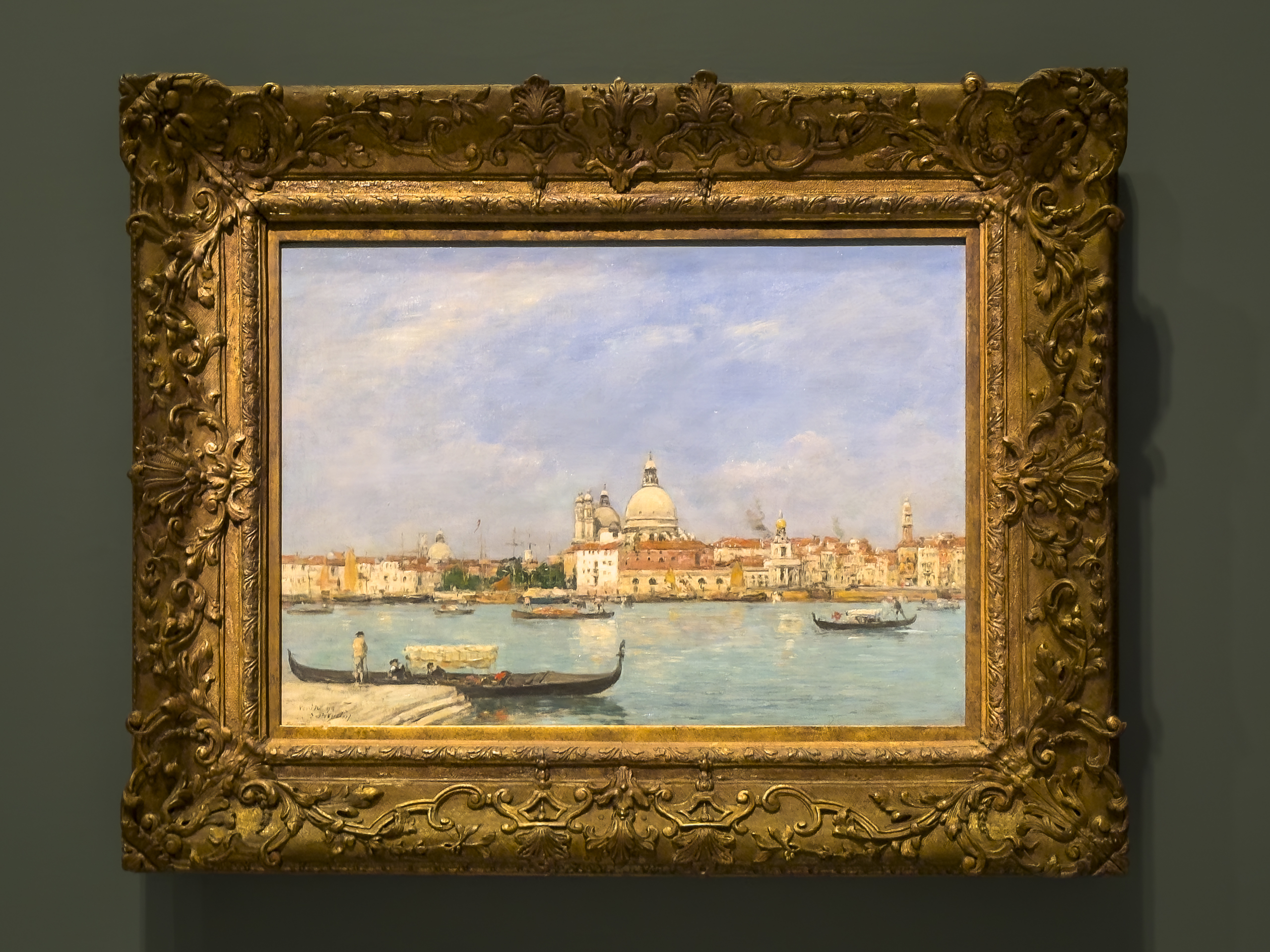
Boudin made several versions of this painting, with an interest in “differences in the cloud formations in the sky, the light and the atmosphere, which captured different effects of light and season on the same subject”.
Frits Thaulow’s Abbeville (c. 1894) “conveys the subtle swirling of the river’s surface with astonishing variety. Luminous blues and greens represent the sky’s reflection on the moving water, while touches of additional colours, reflected from the architecture, glow near the river’s edges. The overcast day provided a captivating quality of light, lending mysteriousness to the simple, familiar waterway”.
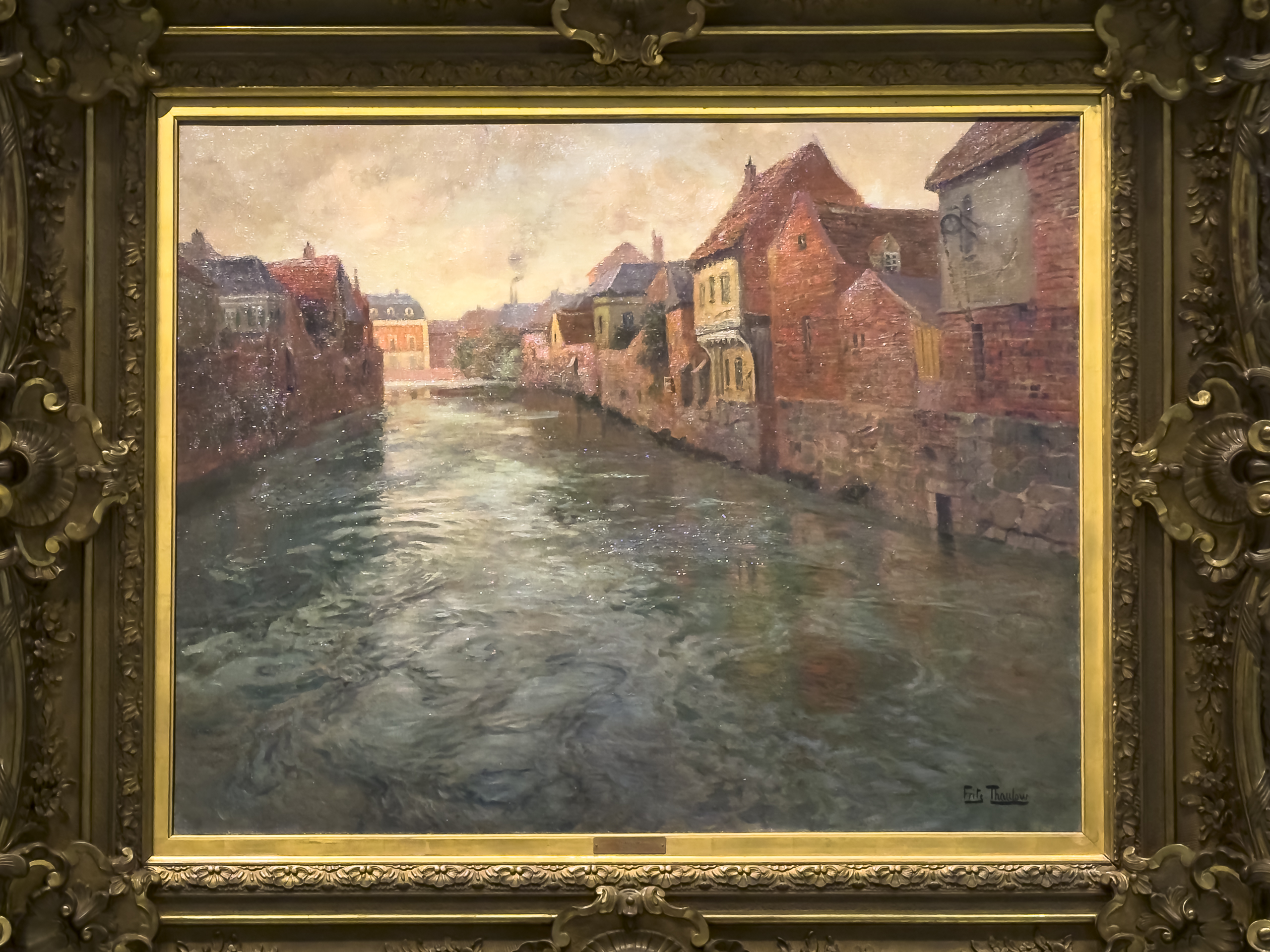
Thaulow, by the way, was Norwegian, not French. But he lived in France from 1892-1906, where he made a lot of his small town work.
The orange room (I can’t)
From the deep, dreamy green rooms of the early part if the exhibition I was a little (extremely) overwhelmed by a room in bright orange that hit me like a sledgehammer with its brightness and I couldn’t stay in that room, even to look at the Van Gogh painting.
It was too much, and I made my way in to the next room, which was a deep red and far more soothing.
The red room
In the red room I laid eyes on the most exquisite painting of all, Renoir’s Rocky crags at L’Estaque (1882).
According to the information board L’Estaque is a village on the southern French Mediterranean coast to the west of Marseille, and Renoir went there in 1882 to visit Paul Cézanne.
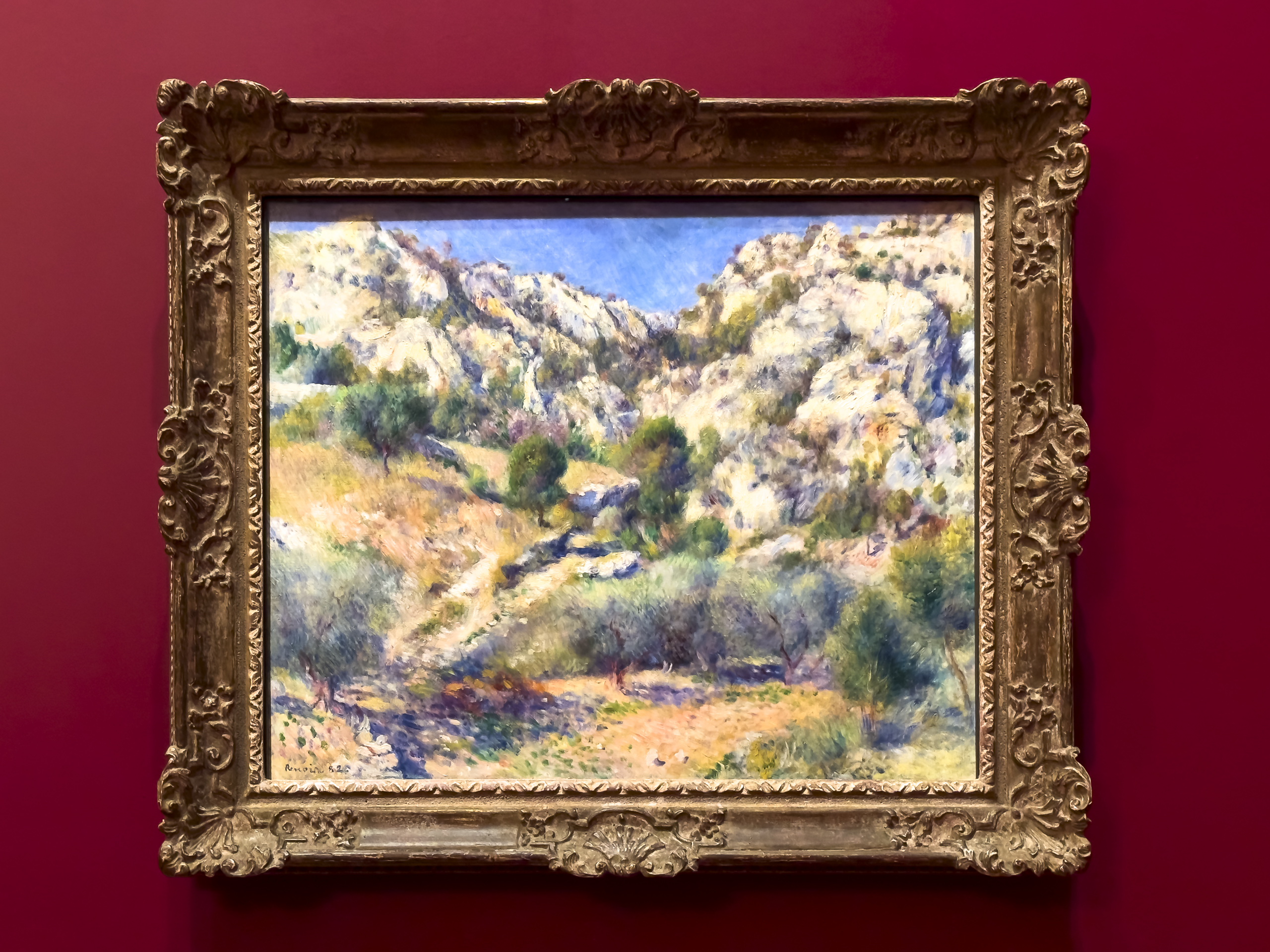
It goes on to say
“this region, where Cézanne had painted regularly since the 1860s, was favoured by artists for its strong light and dramatic geological features. The two artists worked in harmony here in 1882, Cézanne painting the same view, but in a more radically abstracted manner. This rocky hillside betrays the depth of Renoir’s admiration for Cézanne, whose more structured, architectonic treatment of rock Renoir emulates here, while maintaining his own idealised vision of nature.”
I was mesmerised and I couldn’t stop looking at this artwork.
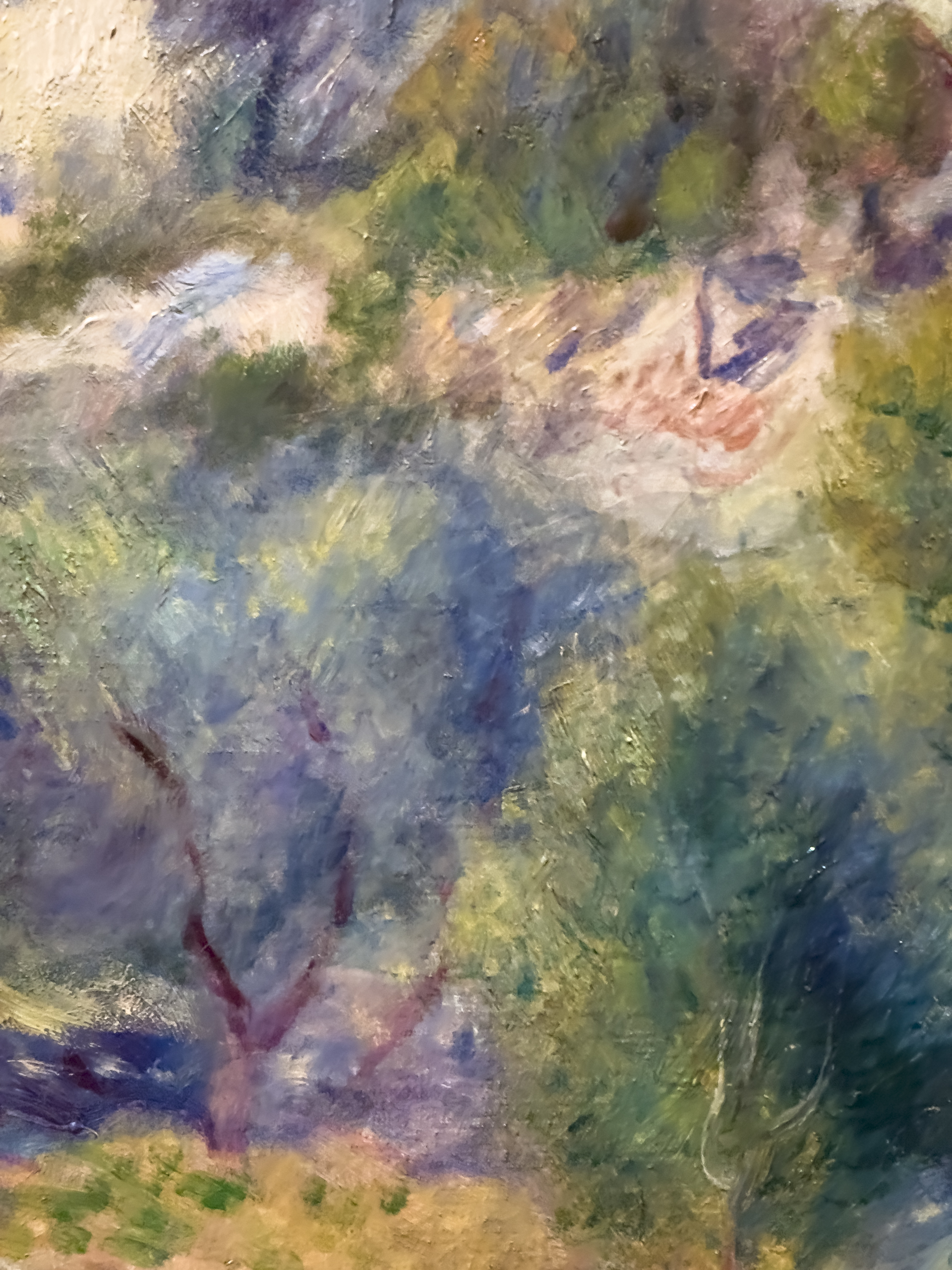
I can’t explain why, and I may have even cried a little.
It was amazing.
I’m so glad I went.
The afternoon of the last day
We wandered around the CBD for a while and visited a couple of shops, including Minotaur, which is a mandatory stop on any trip to Melbourne. It had, rudely, moved since our last visit but we did find it in the end.
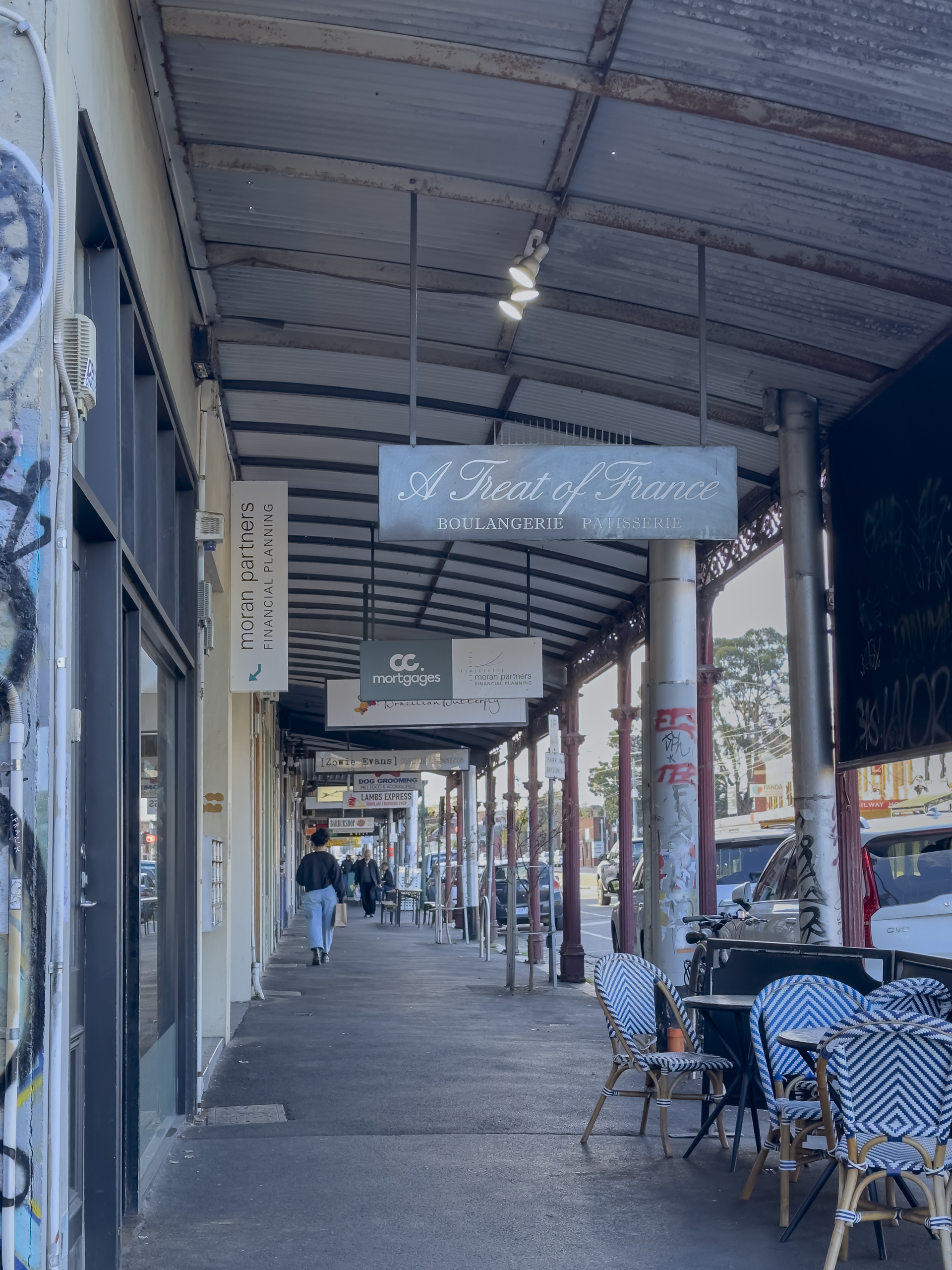
After that we jumped on the first tram that came past to go find somewhere out of the city for lunch. We ended up in Nicholson Street, which is Fitzroy or North Carlton or some such, and found a French bakery for the best toasties ever.
Encounters with misinformation
I had a photo mission in mind but I couldn’t figure out exactly where to go. So I abandoned that plan and went to the State Library to explore their Make Believe: Encounters with Misinformation exhibition.
There was a thought-provoking case study by Wiradjuri and Ngiyampaa artist Charlotte Allingham, whose work “responds to the myth of terra nullius through the lens of 1960s advertising, restoring Blak presence and exposing environmental spin”.
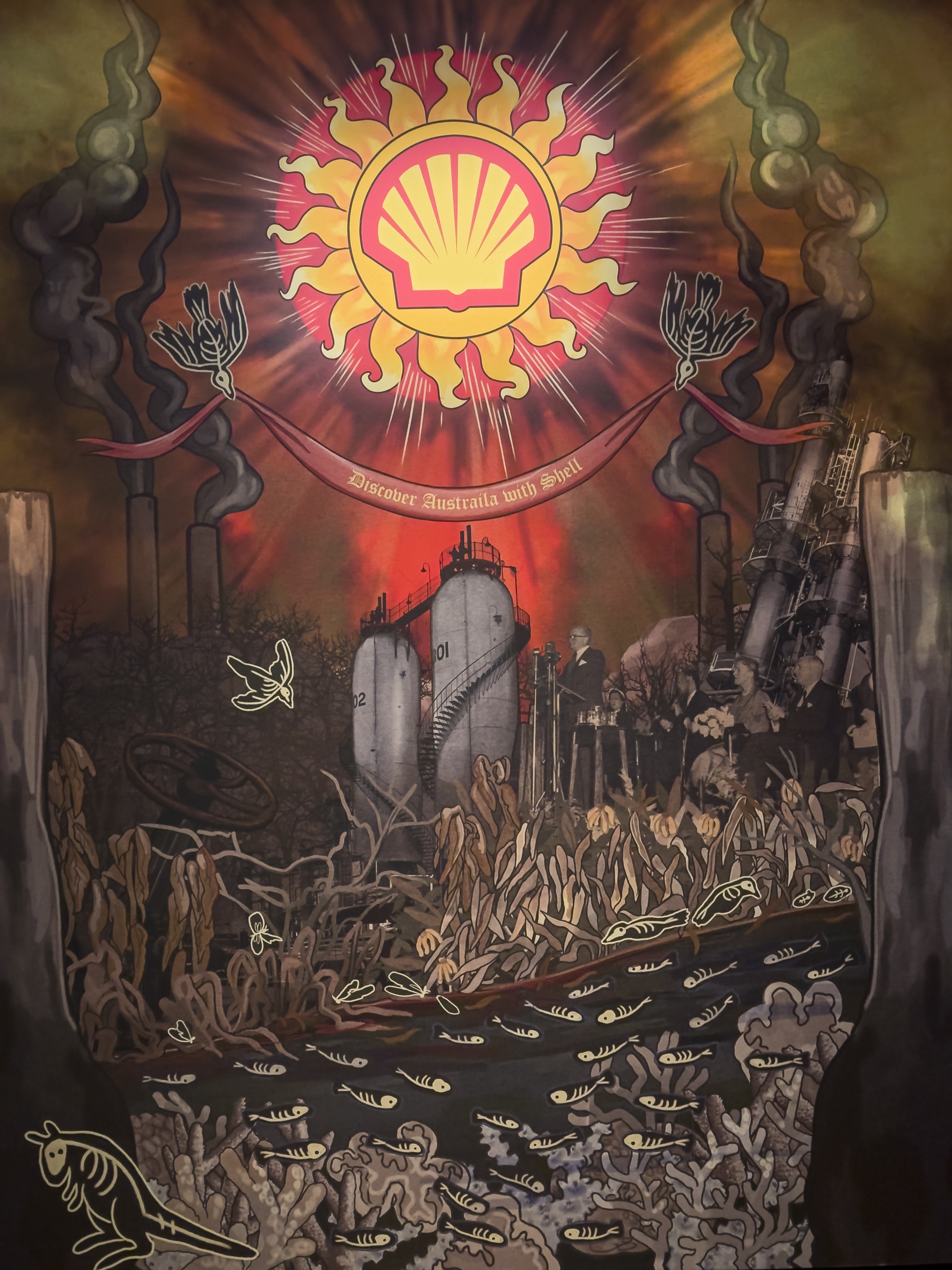
In particular, Charlotte focused on the
“advertising materials produced by Shell Petroleum and held in the Library’s collection. One of its campaigns celebrated Australia’s natural wonders and encouraged families to ‘Discover Australia with Shell’, promoting the idea of an empty, untouched land awaiting exploration. Using idyllic imagery and soft colours, the campaign painted a picture far removed from the impacts of Western industry, cars and fossil fuels”.
“Her imagery restores to Country the plant and animal life featured in the campaign, while her ‘Blak Fairies’ subvert traditional bush-fairy imagery, reinstating a First Nations presence and reaffirming Aboriginal culture’s deep connection to the land.”
It reminded me how whitewashed I’d been taught to believe Australia was when I was young.
The last evening
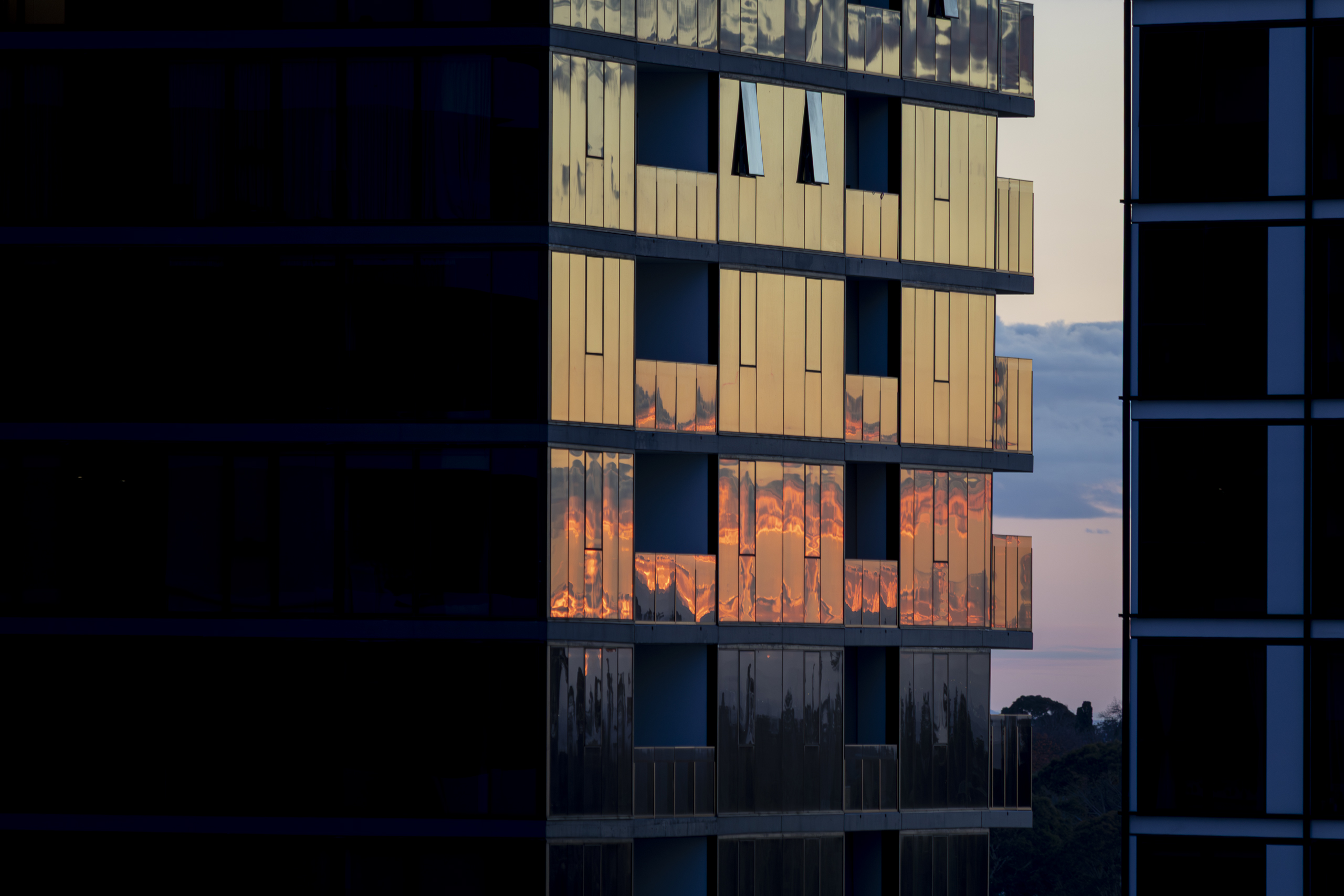
After a detour via a stationery store (where I did NOT buy anything), I went back to the apartment in time for my final sunset.
We met Kramstable for dinner and said goodbye to him as we wouldn’t be seeing him again before we left the next morning.
And that was it.
A great trip and I’m so happy to have seen him.
Back to the hip
the never-ending saga aka an update.
After the hip x-ray two weeks ago, I went back to the doctor and she said none of what is/has been going on with my back/hip/leg/foot is connected to anything the x-ray picked up.
But remember how I said the physio had told me to be careful about getting this scan because sometimes scans can show things which will then cause you to worry, that you’d otherwise never had known about and therefore never worried about? Well . . .
However, I’ve been relatively pain-free this week, which has been GREAT! There had been a little niggle in my foot but I changed back into my barefoot shoes (which have a hole in them, so I’d been wearing some not-new but relatively unworn Nikes) and that went away.
So I think I’m almost back to where I was before all this happened.
Seriously, if you are agile and mobile and fit, do whatever you can to keep yourself that way. And never take your ability to move freely for granted.
Habit tracker
Existing habits
- Go outside first thing (7 days): 7/7
- 15 minutes morning exercise sequence (7 days): 4/7
- Hip exercises (5 days): 5/5
- Walk (6 days): 6/6
- Walk 8,000 steps (7 days): 7/7
- 9.00 shutdown & dim lights (6 days): 0/6
- Evening routine (6 days): 1/6
New habits
- Carry a notebook with me when I walk (6 days): 3/6
- Mid-day journalling (7 days): 4/7
- Thinking time (4 days): 2/4
- Read aloud (7 days): 5/7
Summary of the week
Some positive things
- Our random tram up Nicholson Street for lunch.
- Going to to the State Library in Melbourne
- Getting a high distinction for my uni assignment. In particular, feedback from my lecturer on one of my essays observing I had used “a combination of precise description and elegant metaphor” to bring a place to life. I don’t think anyone has ever described anything I’ve written as “elegant” before, so this made me very happy.
- After watching Wicked last week with Kramstable, I went to Lil Sis’ place on Saturday to watch it with her and Shadow the cat, because originally we were going to see it at the cinema, and that time came and went, and we still hadn’t seen it. So now I’ve seen it twice!
What did I learn this week?
- A bus weighs as much as 13 hippos. (Thanks, Melbourne bus advertising.)
- If you go away for a few days in the middle of winter the house will be freezing when you get home.
- The hip socket is called the acetabulum.
- Behooves means ‘is necessary or proper for’. As in, “it behooves us to learn about the past so we don’t repeat the same mistakes”.
What did I notice this week?
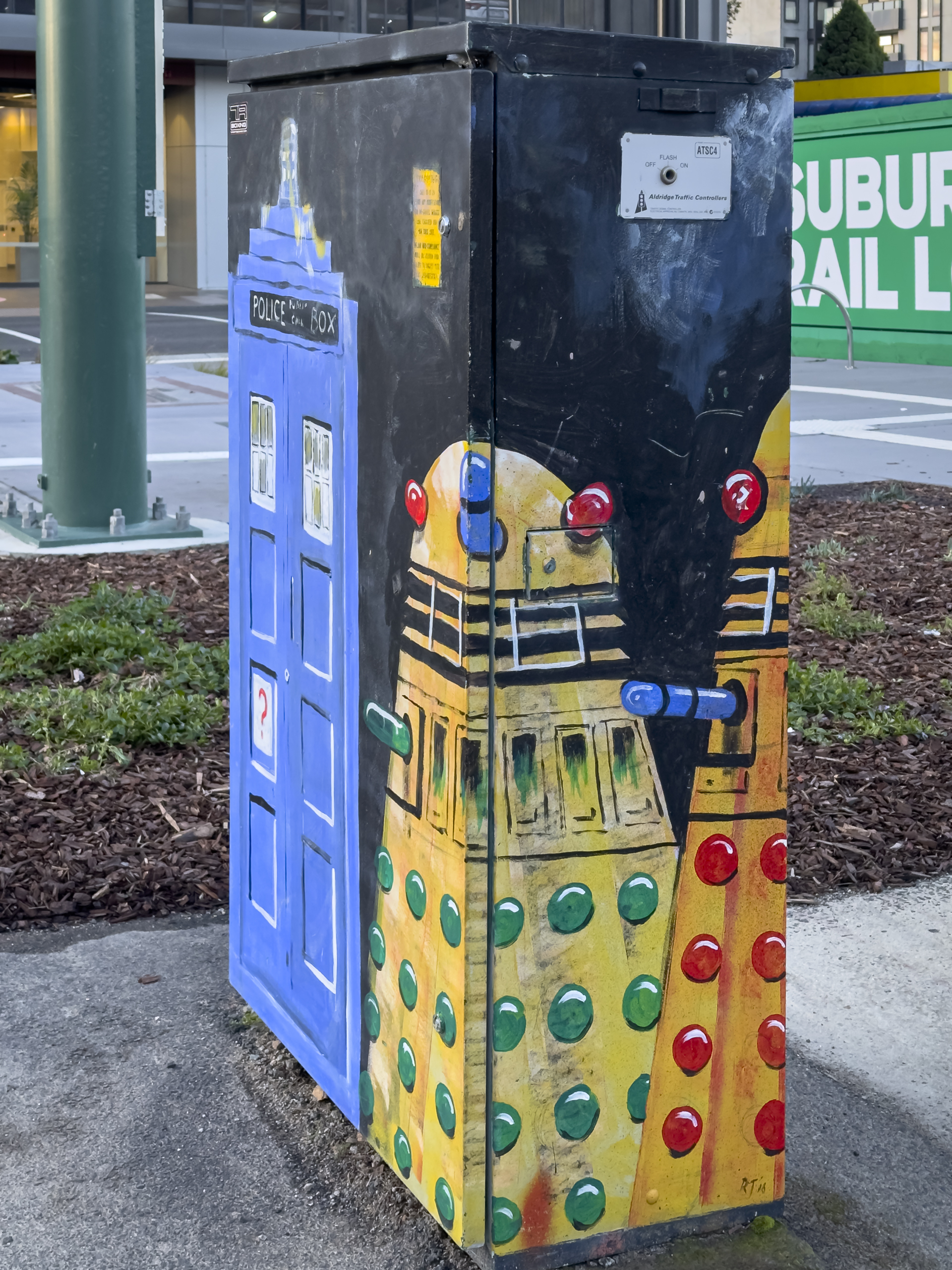
A signal box with a Tardis and Daleks near the tram stop at Box Hill.
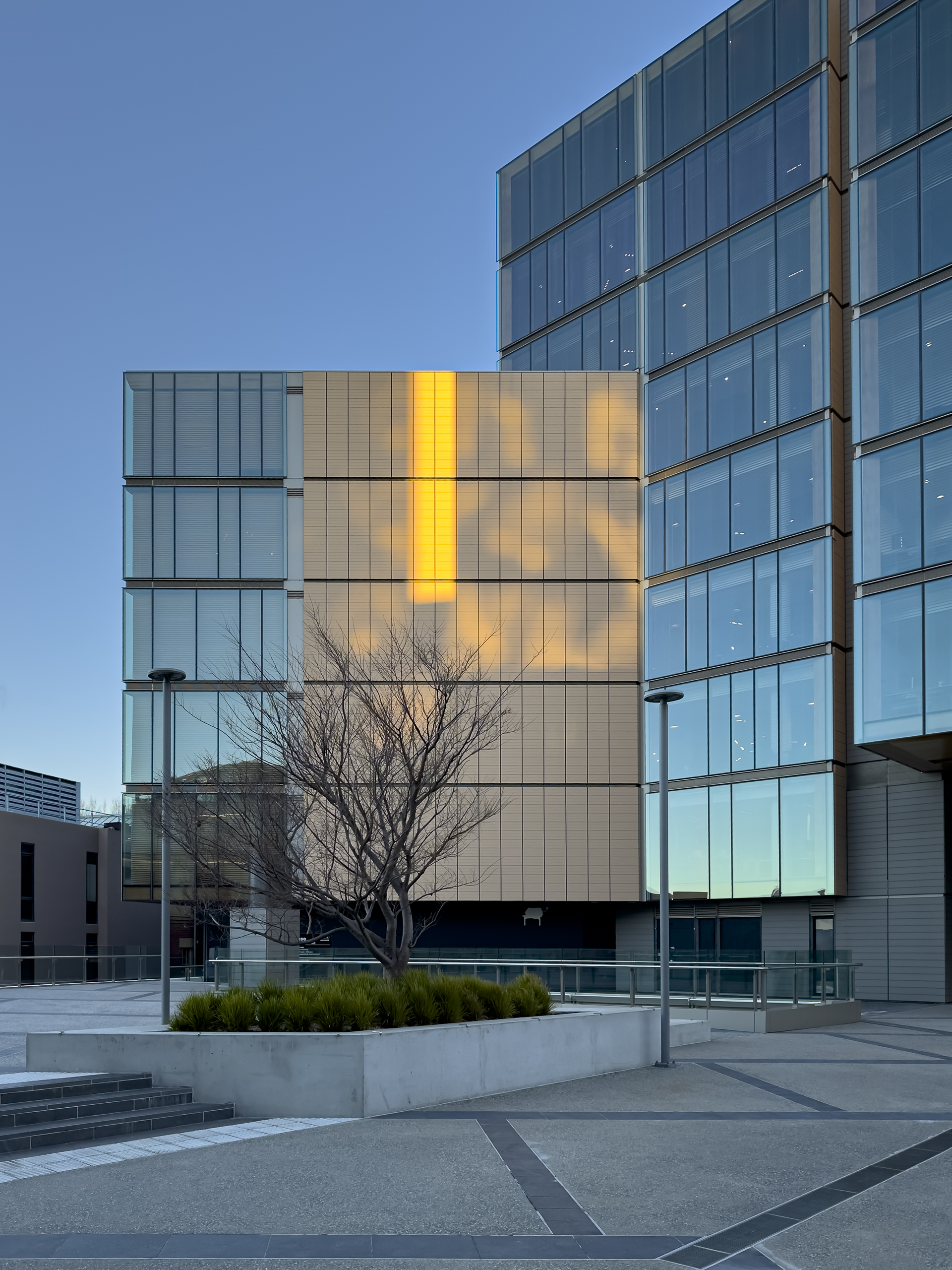
Light on the side of the Parliament Square office building.
I noticed (again) the reference to ‘Gulch’ in Wicked. So I went to look it up. The word is used in the scene where the headmistress at Shiz (Miss Coddle) hadn’t made any arrangements for Elphaba’s accommodation. It got awkward:
Just a slight gulch. We’ll find someplace to hide you.
I mean ‘house’ you.
If you know the Wizard of Oz you’ll know why this word got my interest.
(Fun fact. Miss Coddle is a new character in the movie, played by Keala Settle, who portrayed Lettie Lutz, the bearded lady, in The Greatest Showman and sang the wonderful song ‘This is Me’.)
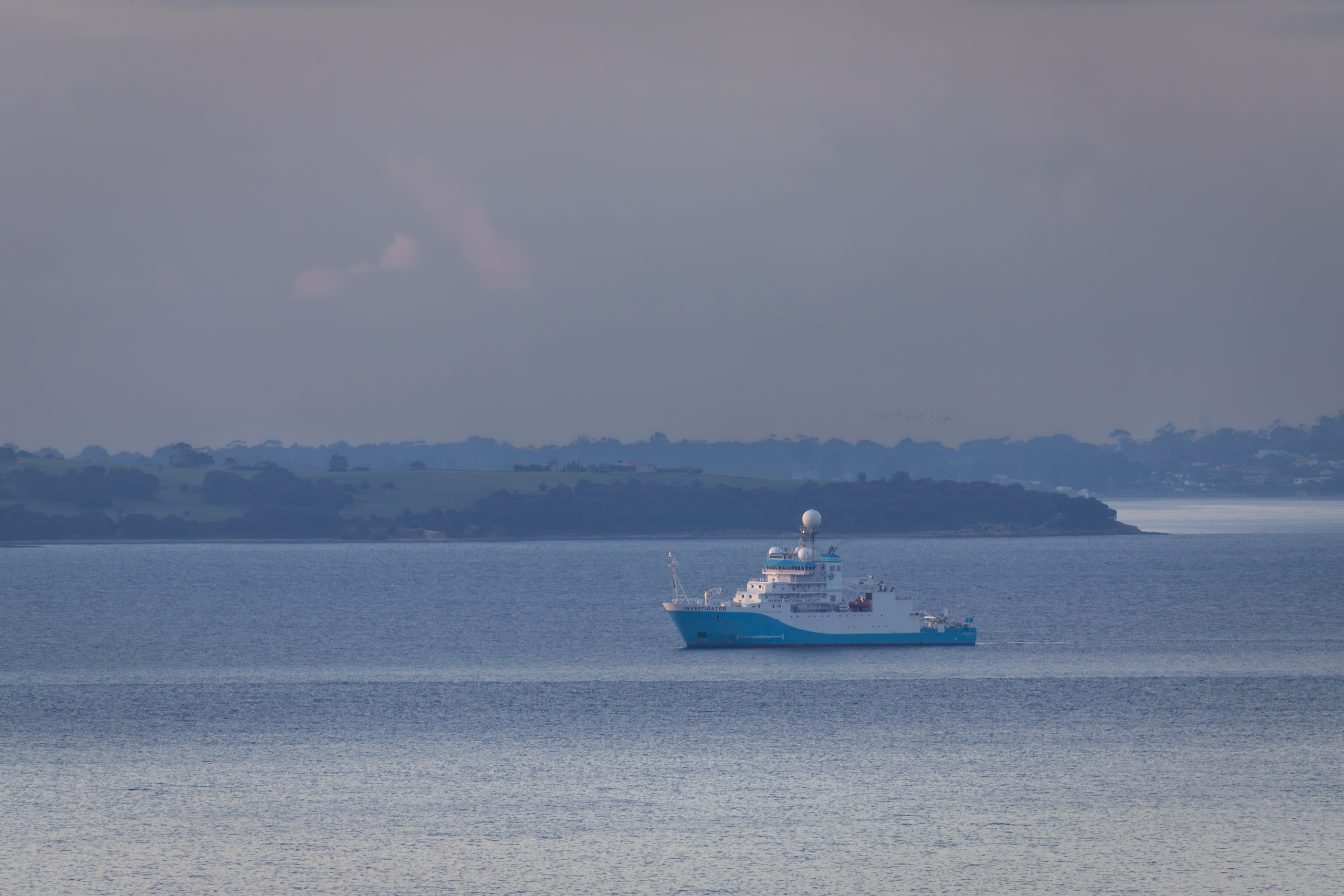
The RV Investigator making its way up the river.
What was the best thing this week?
Being in Melbourne, seeing the Renoir painting and having more time with Kramstable.
What am I reading this week?
- A Flat Place by Noreen Masud
- Into the Woods by John Yorke
- Sadvertising by Ennis Cehic
What am I watching this week?
- Bay of Fires
- Masterchef Australia
- Resident Alien
- Wicked
- Doctor Who: The Visitation
What am I listening to this week?
- They Might Be Giants Instant Fan Club 2024 rarities
- Spacemakers podcast season 3 (and season 1)
About The Author
