Week 11/2026: Semaphore score
Week of 9 March 2026
Monday was a public holiday. Yay!
I feel like I’m still trying to adjust to most of my regular things from last year changing days. I go into the office on different days, my acting class has changed days, my uni class is on a different day, and I constantly have to remind myself of what’s on when so I don’t forget. I also feel like I’m a week ahead of myself and wondered why something that was scheduled for 21 March didn’t happen on Saturday.
Time is weird.
Having a day off was nice.
This post is wholly researched and written by me. I do not use AI in my writing. I will always bring you my stories in my real human voice.
Semaphore Score
Semaphore Score is an exhibition by Margaret Woodward currently showing in the Allport Gallery at the State Library in Nipaluna/Hobart.
I visited it a few weeks ago, just after it opened, by accident when I was in the library. I had some time before an appointment and I didn’t want to go outside in the heat so I went exploring the Allport Gallery. The exhibition fascinated me so much that when Libraries Tasmania advertised some artist talks with Margaret, I decided to go along and learn more.
Semaphore Score: The back story
Margaret received a Creative Fellowship at the State Library and Archives of Tasmania in 2024, and Semaphore Score is the result of this work. It’s inspired by the 1868 Tasman’s Peninsula – Semaphore Code Dictionary, which Margaret discovered in the archives collection.
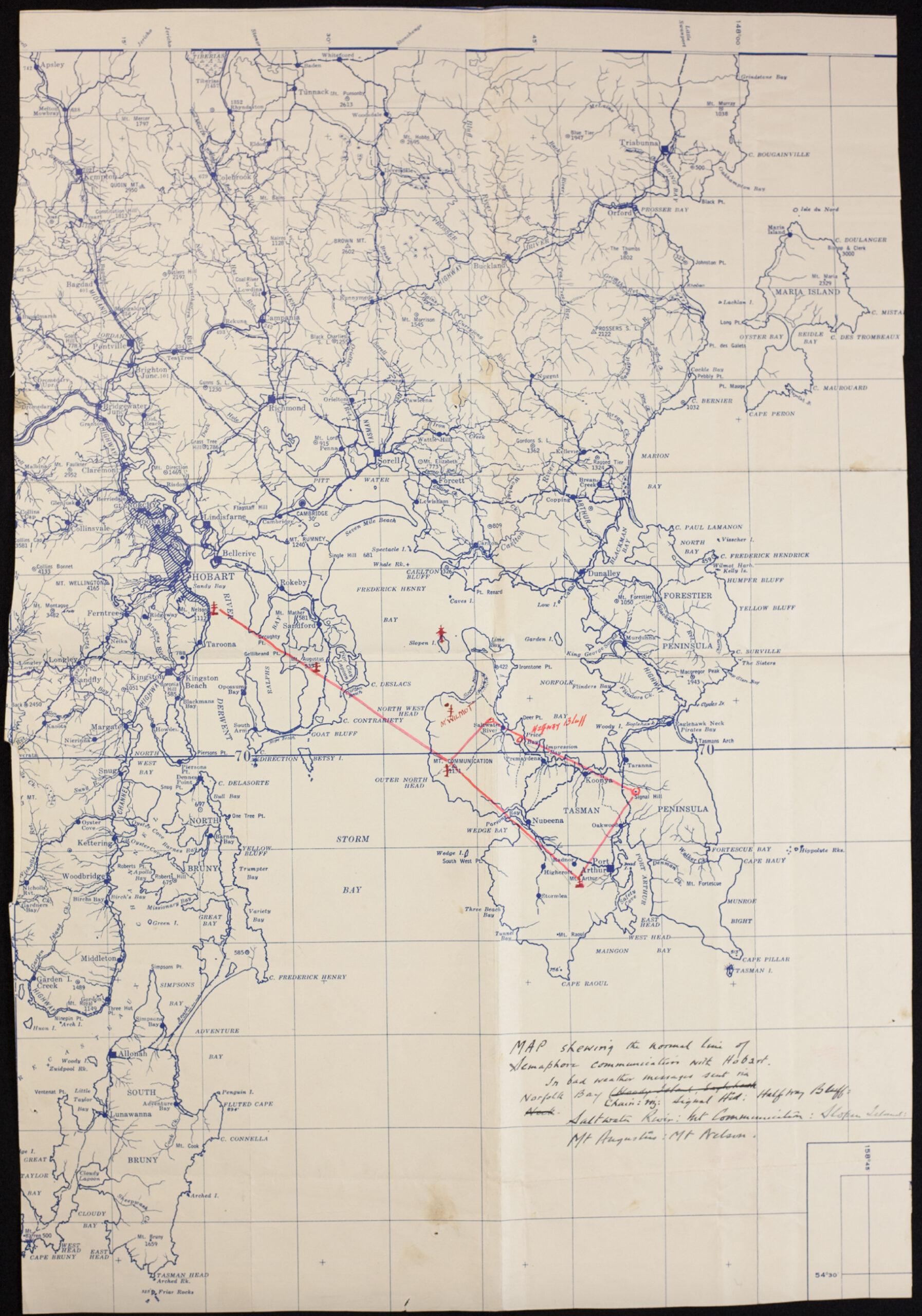
The dictionary consists of semaphore codes, which were developed by Charles O’Hara Booth, the commandant at Port Arthur in the 1830s and 40s, to send messages between Port Arthur and Hobart between 1834 to 1880. Semaphore messages were sent through a string of eight semaphore signal stations that connected Hobart Town to the penal settlement. The first one built was at Kriwalayti/Mount Nelson in 1811.
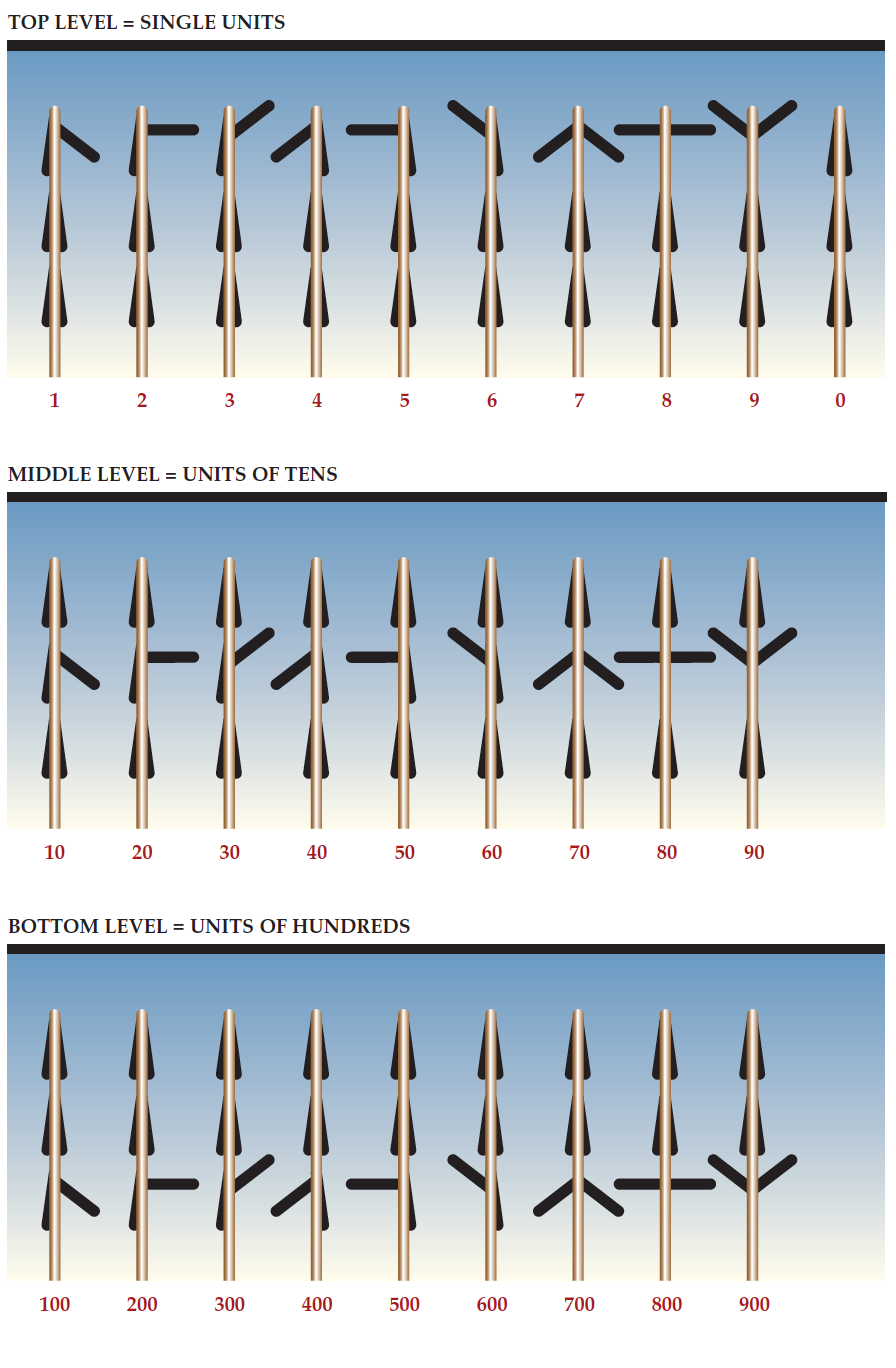
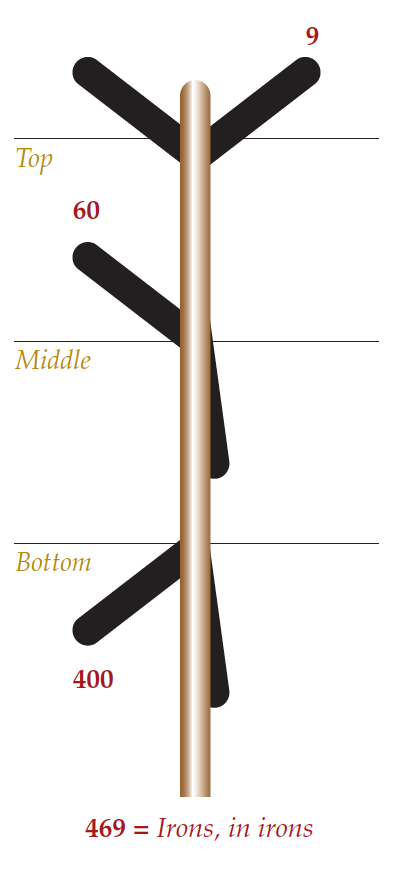
The signal station had three pairs of arms, which could be moved into various positions to represent each number from 0 to 9. The bottom arms were hundreds, the middle arms were tens and the top arms were units, with a chequered flag able to represent thousands. You can see how it worked on the Port Arthur website, but here are a couple of screenshots to give you an idea.
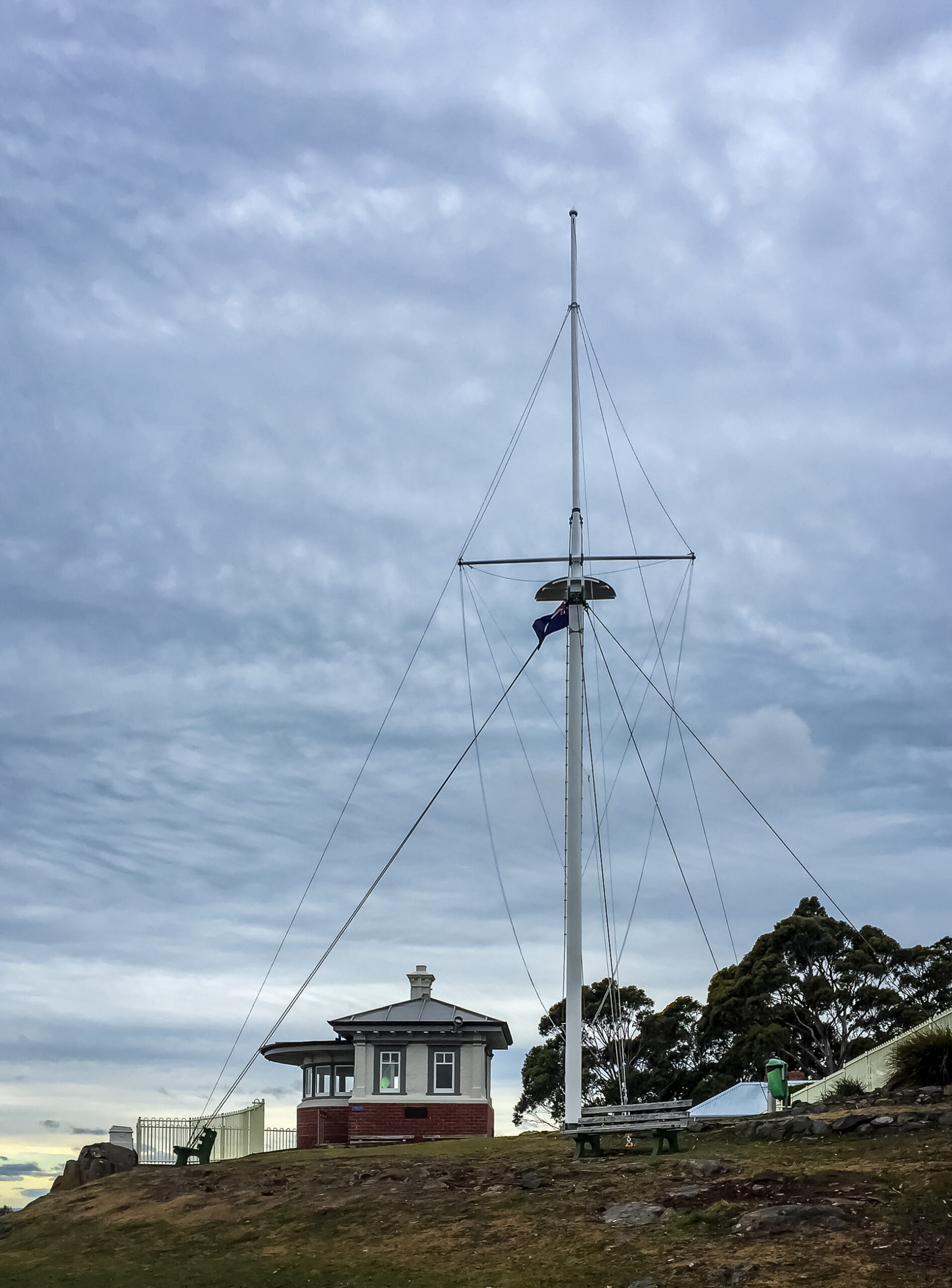
Mount Nelson signal station was built in 1811, and it had two sets of arms. The lower one was for signalling locally about ship arrivals into the river, and the upper set was used for communicating with Port Arthur. According to Utas, the operators could sent a short message from Hobart to Port Arthur and receive a return reply in about 15 minutes if weather conditions were clear.
This made me think about what I’ve been learning in my uni course about how in the 1860s people were zooming around England in trains and sending telegrams, yet at the same time, people in the colony were using a system of flags, chains and pulleys to move signal arms on signal masts.
It also occurred to me that I’ve been to Mount Nelson signal station many times, and it never once occurred to me how they actually used it to send the messages. I honestly don’t know what I thought they did (and I must have read it on the information boards in the little hut and it never sank in), but I had no idea how this system worked, or that there were people with telescopes looking at huge masts in the distance and writing down numbers in a logbook.
Anyway.
I’ve gotten off track. How unlike me.
The research
Let’s go back to the Semaphore Score exhibition and the code dictionary. This is the actual book.
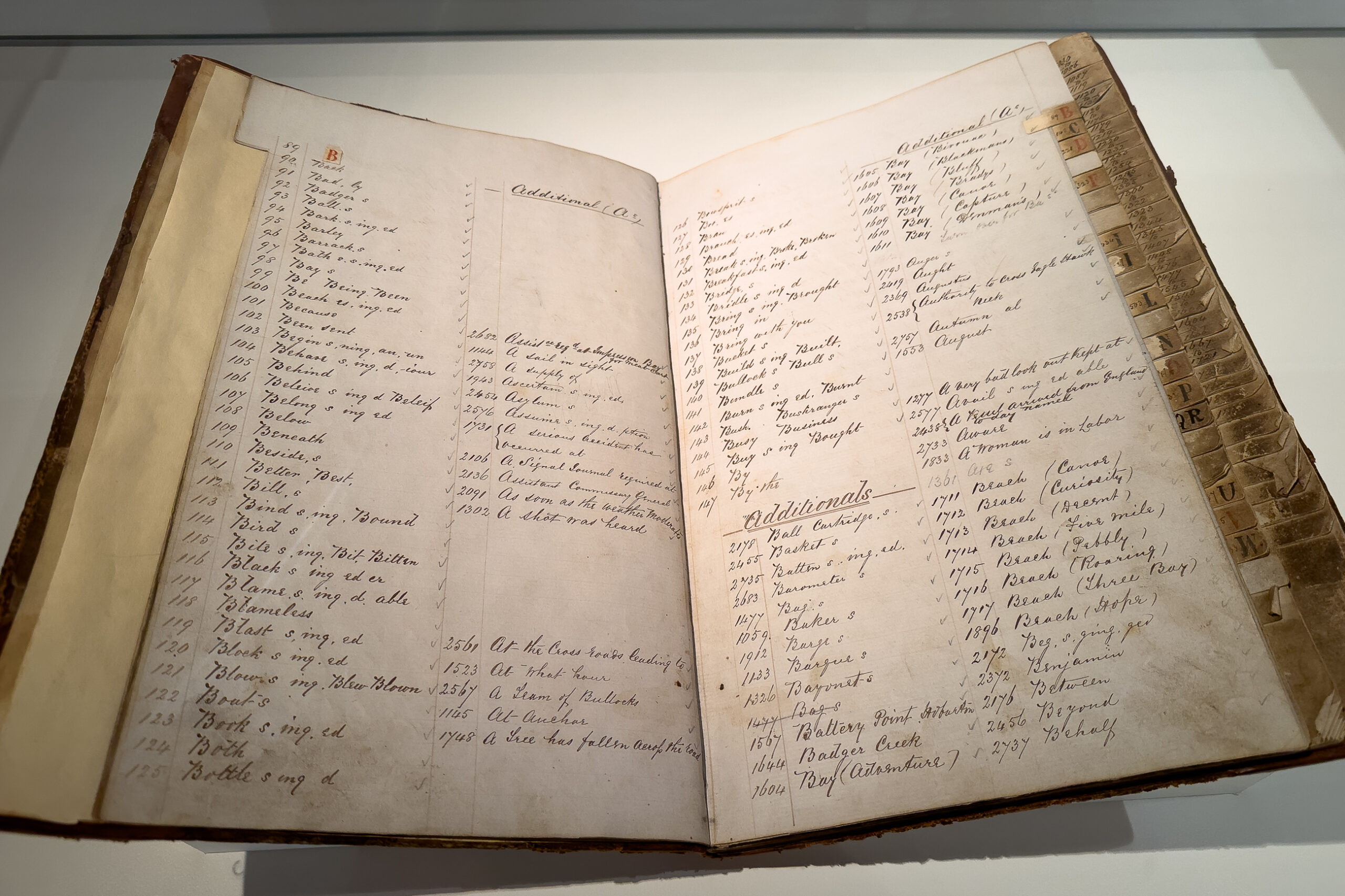
Imagine for a moment, the time and attention it would have required to hand-compile this and make multiple copies for all the signal stations.
This is the artefact that sent Margaret off on her exploration. As she worked through the dictionary, she observed it was a military document used to convey information about the workings of the prison and the colony, some of which would have been confidential. As such, there were categories for things like boats, arms, bedding, prisoners absconding, and provisions.
None of the transcribed messages that were sent between Hobart Town and Port Arthur survive, so we don’t know what they said. Margaret said it’s believed the logbooks were tipped into the sea when Port Arthur was closed. So, while we don’t know what was in the messages, the words that appear in the dictionary gives us clues. We can also know what wasn’t in the messages because of the words that don’t appear. For example, Margaret noticed was missing was language about women, aboriginal people, emotions, wild life, descriptions of the place, other than in very general terms.
There was an entry for “porcupine” (2635), for example—not even the correct name of the animal—and a code for “tree” (878) but not a specific type of tree. (This reminded me of what author Robbie Arnott said in one of my English lectures last year about forests being more than ‘green’.) 2603 is for “female/s”, which appears at the back of the directory as an “additional”—it isn’t even under F. “Wife” does, however, appear at 970 in the W entries.
Reflecting on these absences, Margaret says in her notes that the dictionary shows the power that is “wielded by those who control language and what gets written out or over in its construction”.
She invites people to consider what has been obscured.
Semaphore Score: A new directory
Margaret says these absences became her hook into the work, and her angle was to create a new dictionary that is relevant to the present day. For example, rather than codes expressing alarm alarm over escaping convicts, her new codes express alarm at environmental damage and climate change.
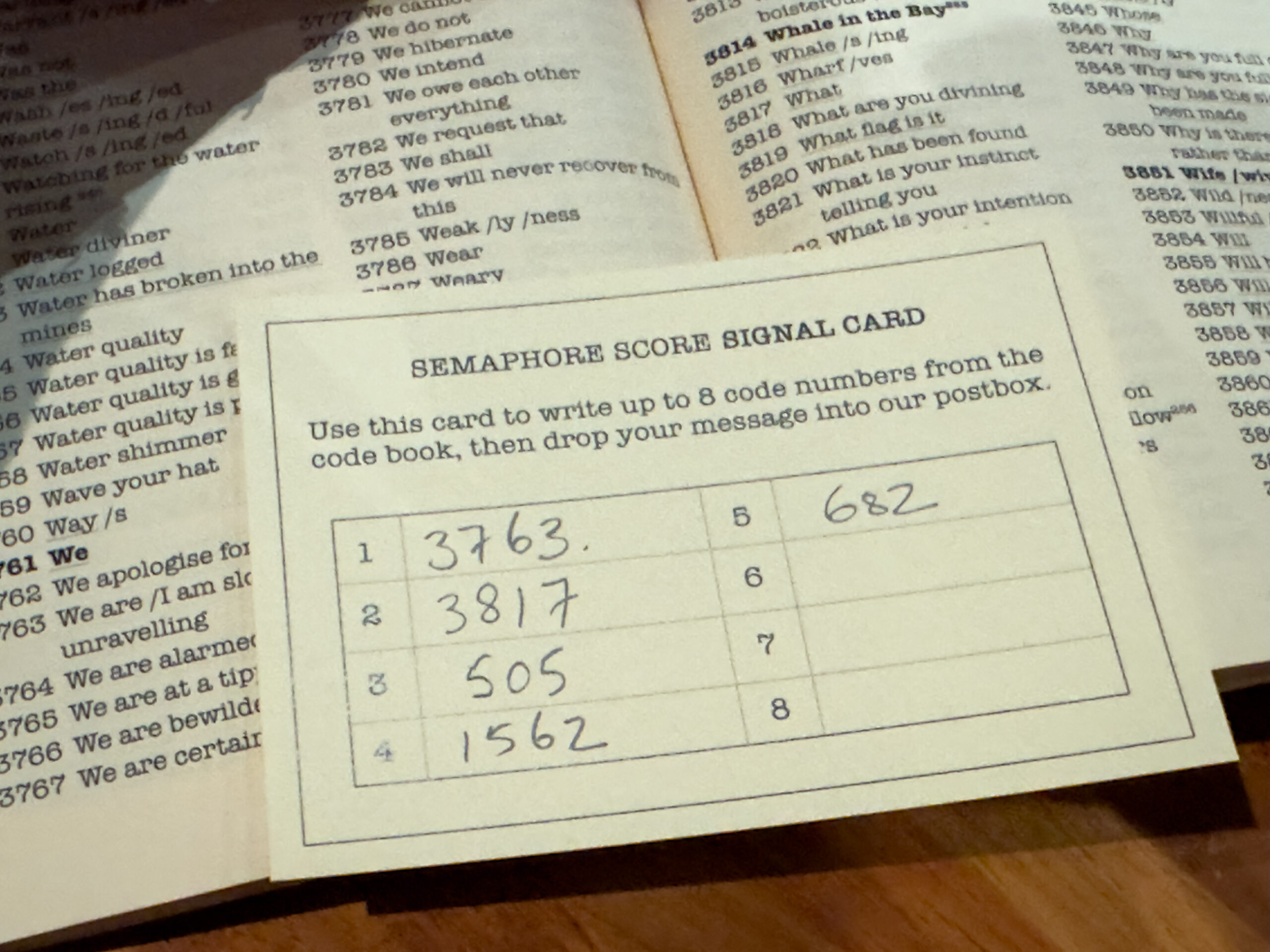
3764 3765 3321 589 1711 3640 3644 2219 505 3761 3216
We are alarmed. We are at a tipping point. The climate emergency is upon us now. Can we survive.
Margaret wanted to break away from the militaristic language of the 19th century and enable language to be used to “create messages of care, concerns and stewardship”. So her dictionary includes words from the original Port Arthur dictionary as well as new words, which she intends will fill some of these gaps and express concepts and things that didn’t exist in 1868 (like 1937 log truck or 1329 global warming), or weren’t required in military vocabulary (1387 grief or 1952 love) in 1868.
The Port Arthur dictionary starts as an alphabetical list of words (below), and then branched out into clusters of words for commonly used phrases.
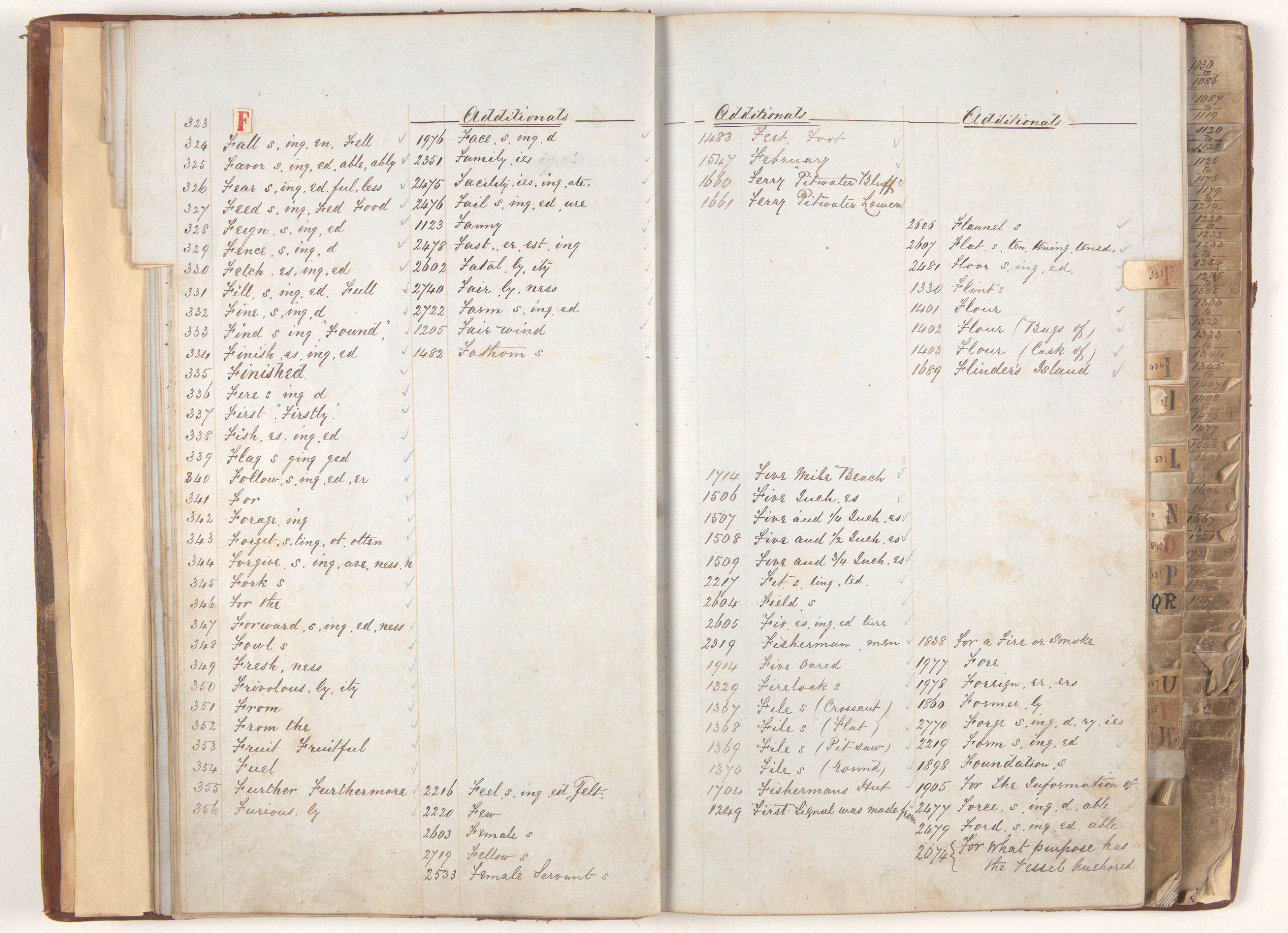
For example:
1306: Prisoners are expected to abscond. 1307: A prisoner has absconded. 1312: The prisoners have attacked.
This is the approach Margaret has used in her dictionary—an A-Z directory of words and phrases, followed by what she calls “concentrations”. These are word clusters arranged by theme, such as cloud names, place names, emotions and body parts.
3410 = The tawny frogmouths are gone.
(They really are.)
Margaret says she wanted her language to be able to “just as easily send a message as a call to action, an instruction, a plea, a poem or a love letter or warning” that could reflect what it is to live in Lutruwita/Tasmania within the context of our colonialist history. For her, this included thinking about her convict ancestors, and she notes how their lives would have been affected by the messages sent between Port Arthur and Hobart Town.
The dictionary also includes words in palawa kani, the language of the Tasmanian Aboriginal people, and Margaret worked with Palawa woman Theresa Sainty on how to include these words. Margaret asks, “How might a rethinking of post-colonial languages contribute to the courageous process of truth-telling in Lutruwita/Tasmania?”
(PS: Margaret and Theresa had a public conversation the next week which explored some of these issues further.)
The flags
Margaret said that the work on the code satisfied her research and writing side but, as a maker, she wanted to make something too, and this is where the wonderful flags that are on display at the Allport Gallery come in.
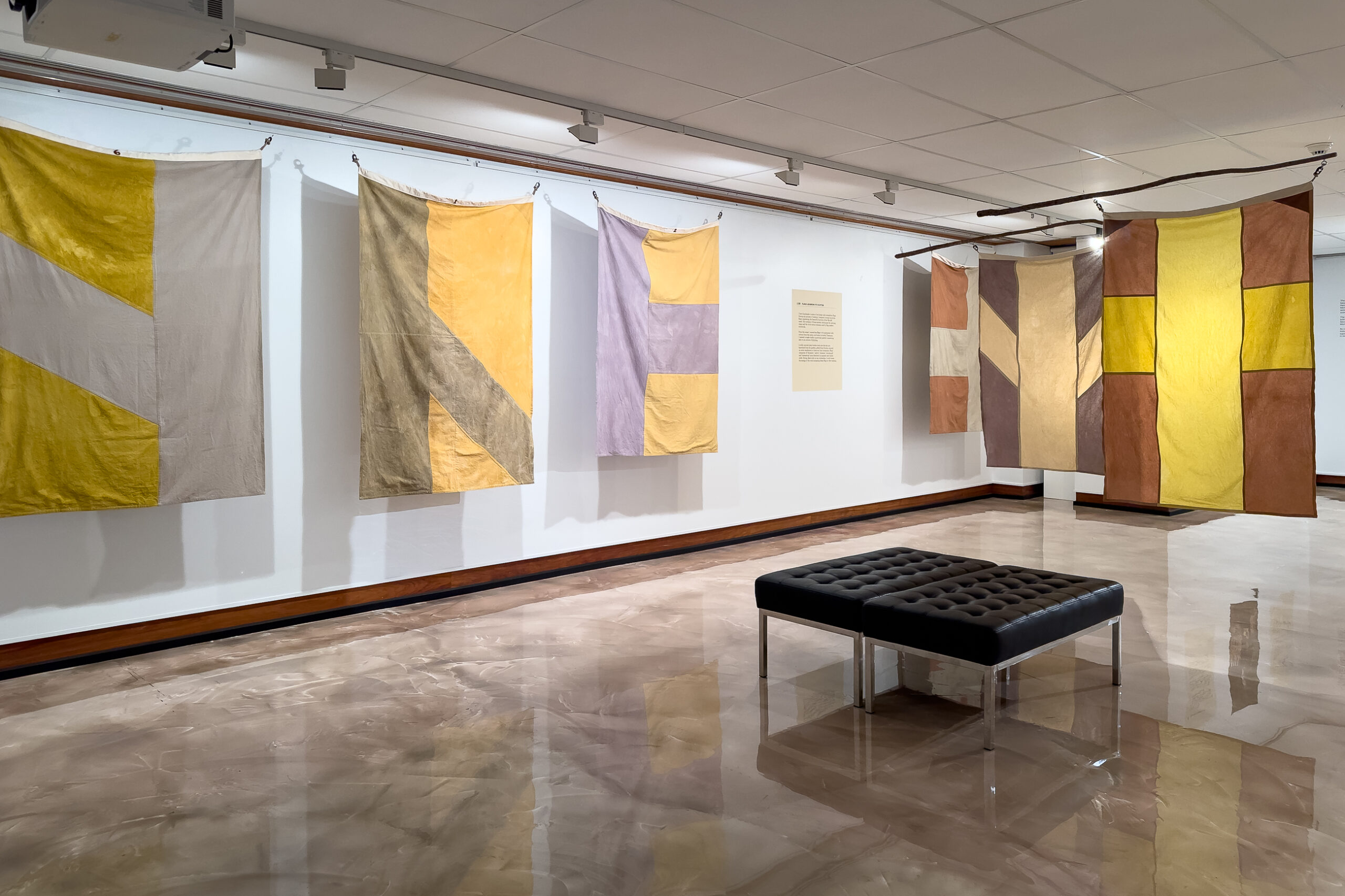
These ten flags represent the numbers 0-9 and correspond to the positions of the signal arms in conveying those numbers.
As part of her research on flag making, Margaret looked at how old maritime flags were made, and she decided she wanted to colour them with the colours of this place. To do this, she set about experimenting with plant and other dyes that could be used in creating the flags. They include bark, pepper berries, metals, and flowers, and this language too is included in her dictionary.
The flags are arranged in a particular way in the gallery.
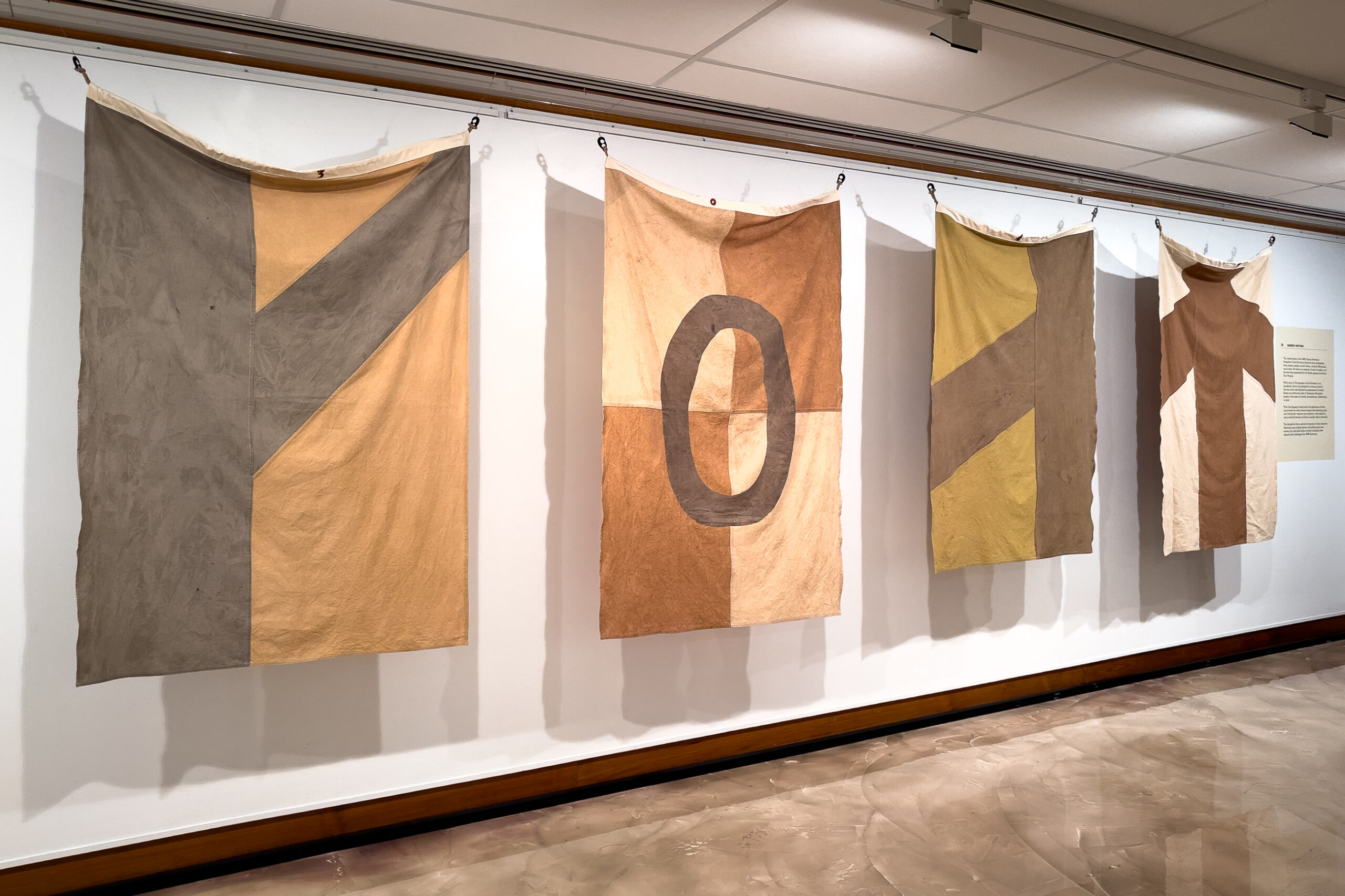
As I was looking at how the flag shapes combined in a three or four number combinations, it struck me that it almost resembled runic writing.
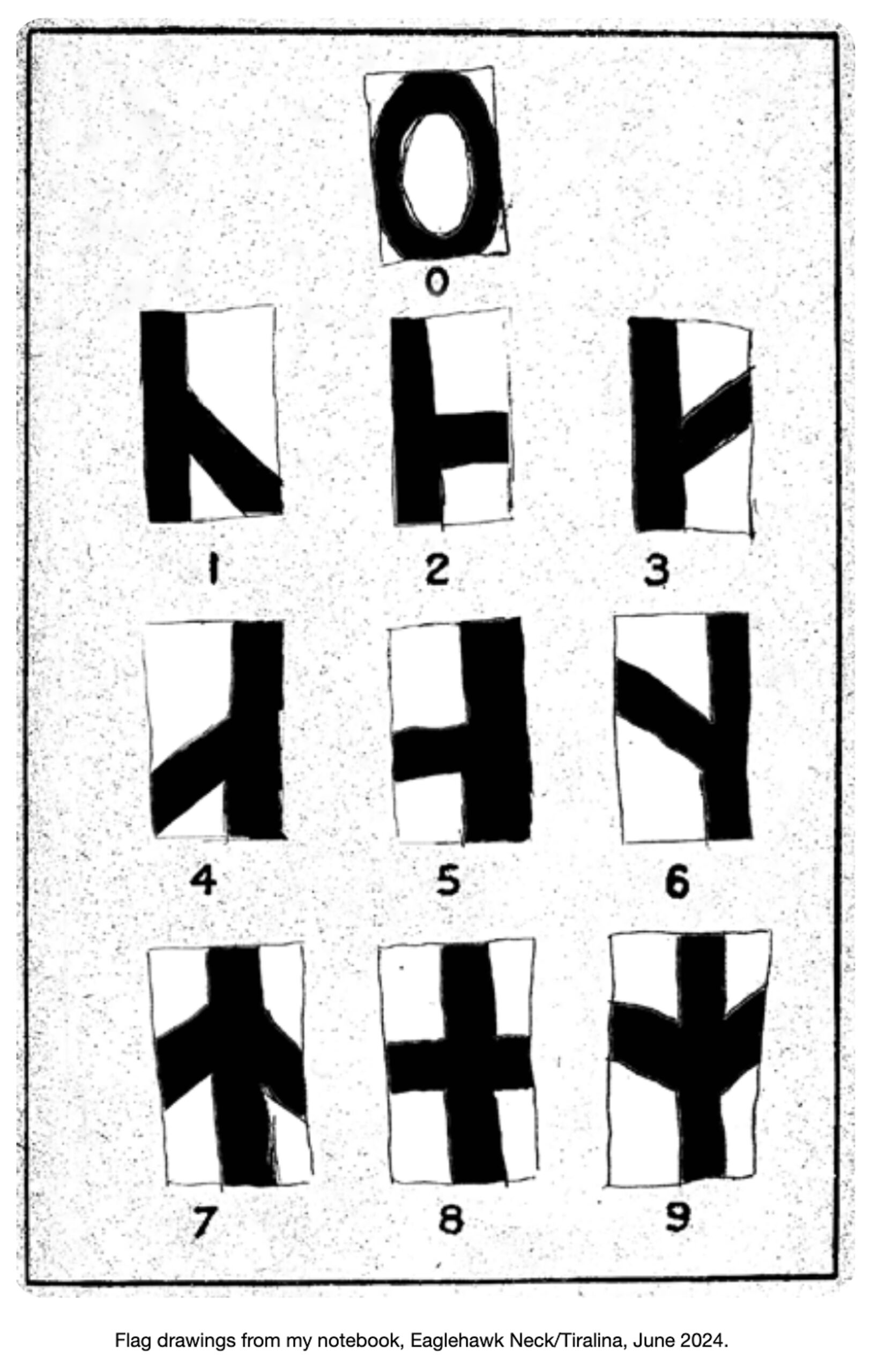
Fascinating!
Wouldn’t it be fun to have a little deck of 40 cards that you could move around and make the codes that way?
As well as the giant flags, Margaret made sets of hand-held flags so people could send messages by holding their arms in position, like a small, human version of the masts at the signal stations.
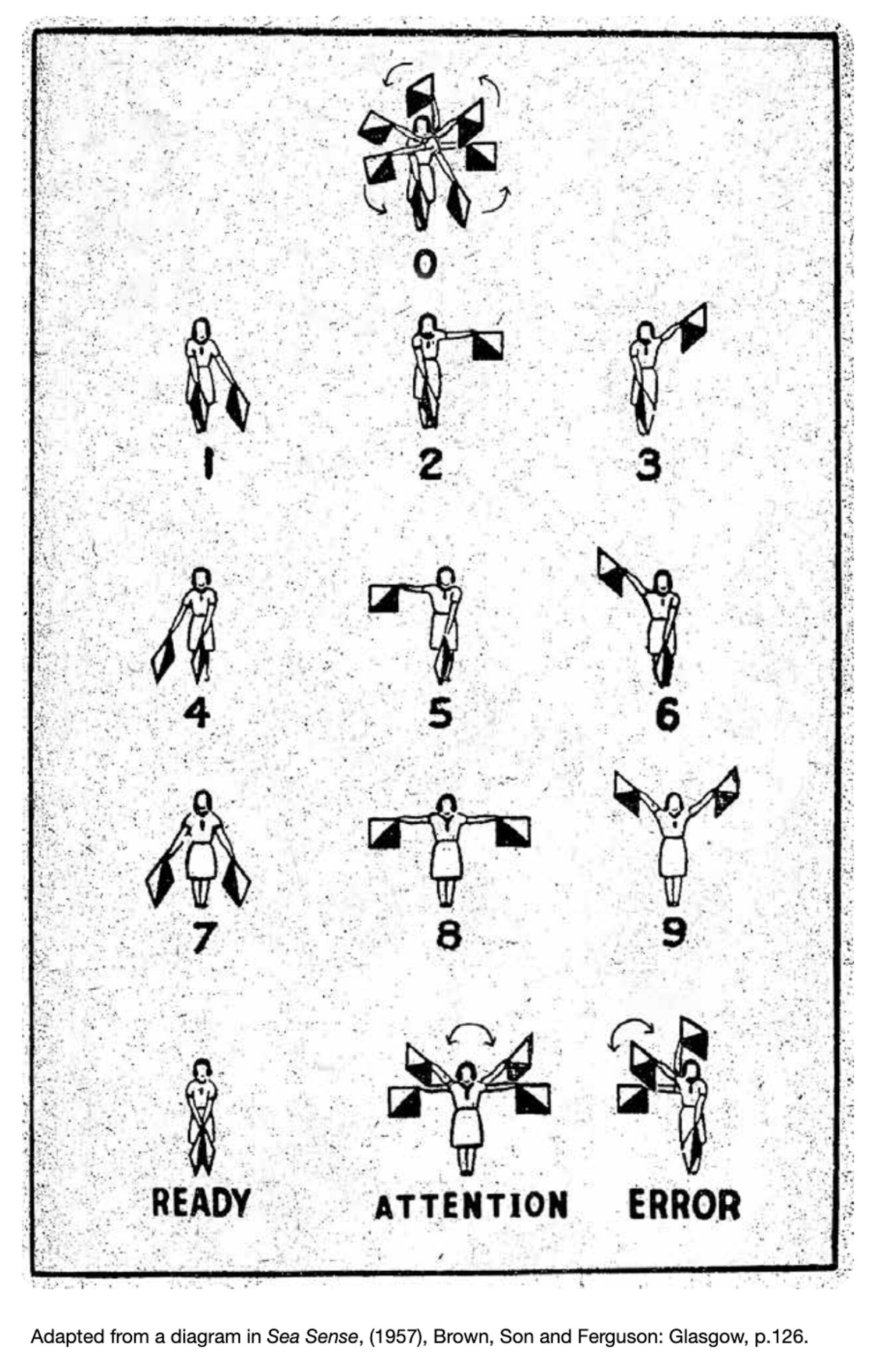
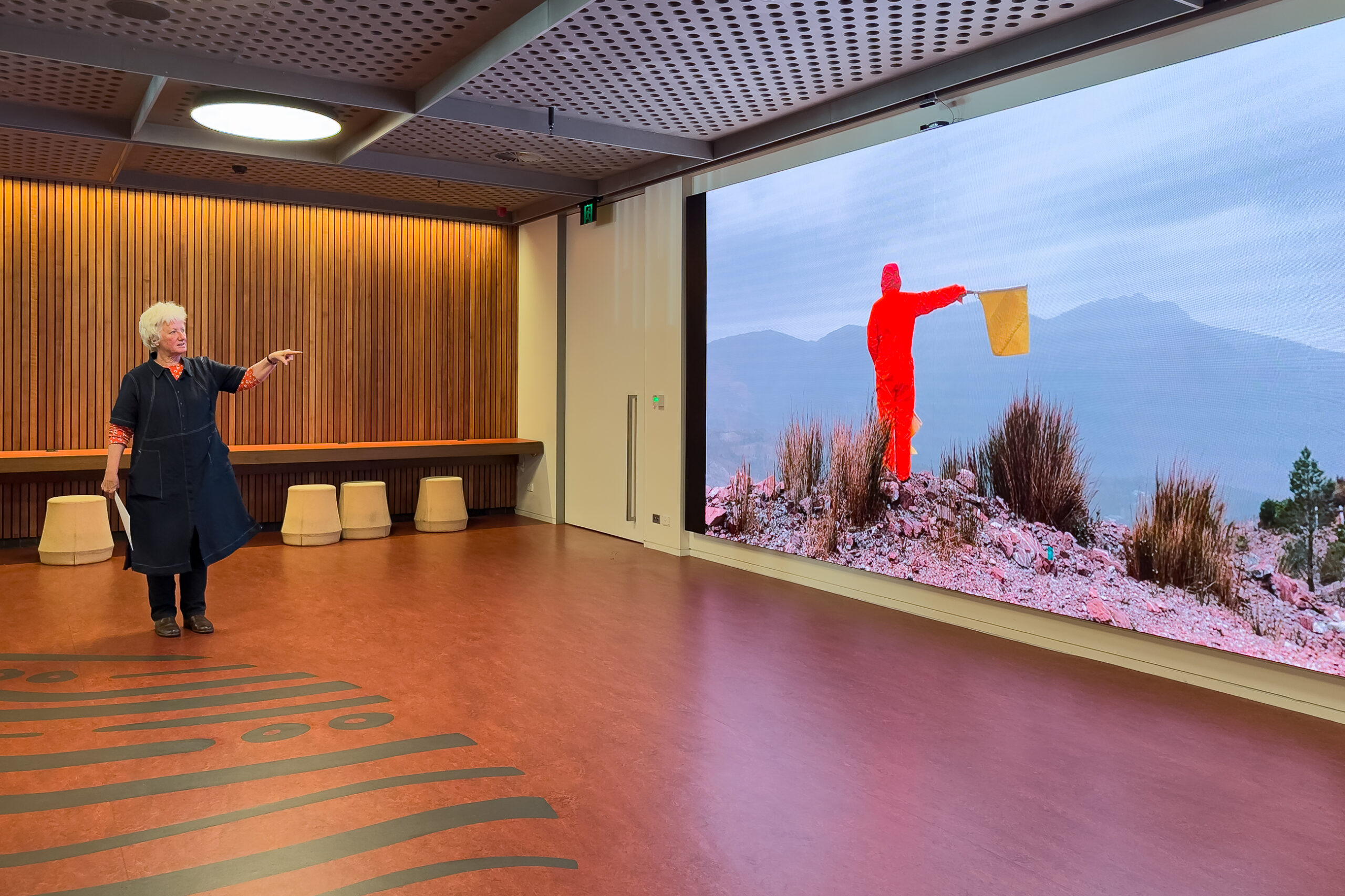
There’s a demonstration of this running on a video screen in the library foyer.
The Unconformity
Margaret took Semaphore Score to Queenstown for The Unconformity festival in 2025, which is where the video footage is from. There, a group of eight signallers took the hand flags up into four locations in the hills around Queenstown to send messages that festival attendees were invited to write using the codes in Margaret’s dictionary.
The first message signalled was Theresa Sainty’s welcome message, which was the first time a message in palawa kani had been coded and sent by semaphore. It sounds like that was a very special and emotional moment for everyone who was there.
In the hills, the signallers worked in pairs. One person would send the message to the next pair and the other person would transcribe the messages they received. The furthest apart the signallers could be was about 1400 metres because of visibility and the limits of the binoculars. Margaret said it was an interesting exercise because sometimes the messages received would be different to the messages that were sent. (Which got me thinking about the way in which even spoken messages can be confused in transit between the sender and the receiver . . . )
The messages as transcribed were posted on the festival website.
Margaret saw signalling between the hills as releasing the messages to the wind and air—the ‘flutterscape’—which she said was a way to do something with the messages, not just leave them (or the system) in the past. And the web log of the transcribed messaged is equivalent to the logbook of the 19th century, bringing that element into the present too.
Our own messages
As we made our way through the Allport Gallery, we explored some more of the work on the history of signalling, including some art works of maritime signals on display.
Margaret invited us to write our own messages which she would then transcribe, and her co-collaborator Justy Phillips would later post to the web log. It’s fascinating how people respond to this and the types of things they will say anonymously in code.
I asked Margaret what kept her on track during the project, as I imagined there would be so many rabbit holes one could fall into with this work—and having the entire archive collection at your disposal through the fellowship would have been incredible. If that were me, I would never find my way out. (This has already taken me more than three hours of writing and looking things up I wanted to clarify, and finding more information than I’ll ever need about signal stations . . .) She said she had deadlines to meet and exhibitions and shows to put on, and she was very motivated to get the work out there and displayed, so she had to stay on track.
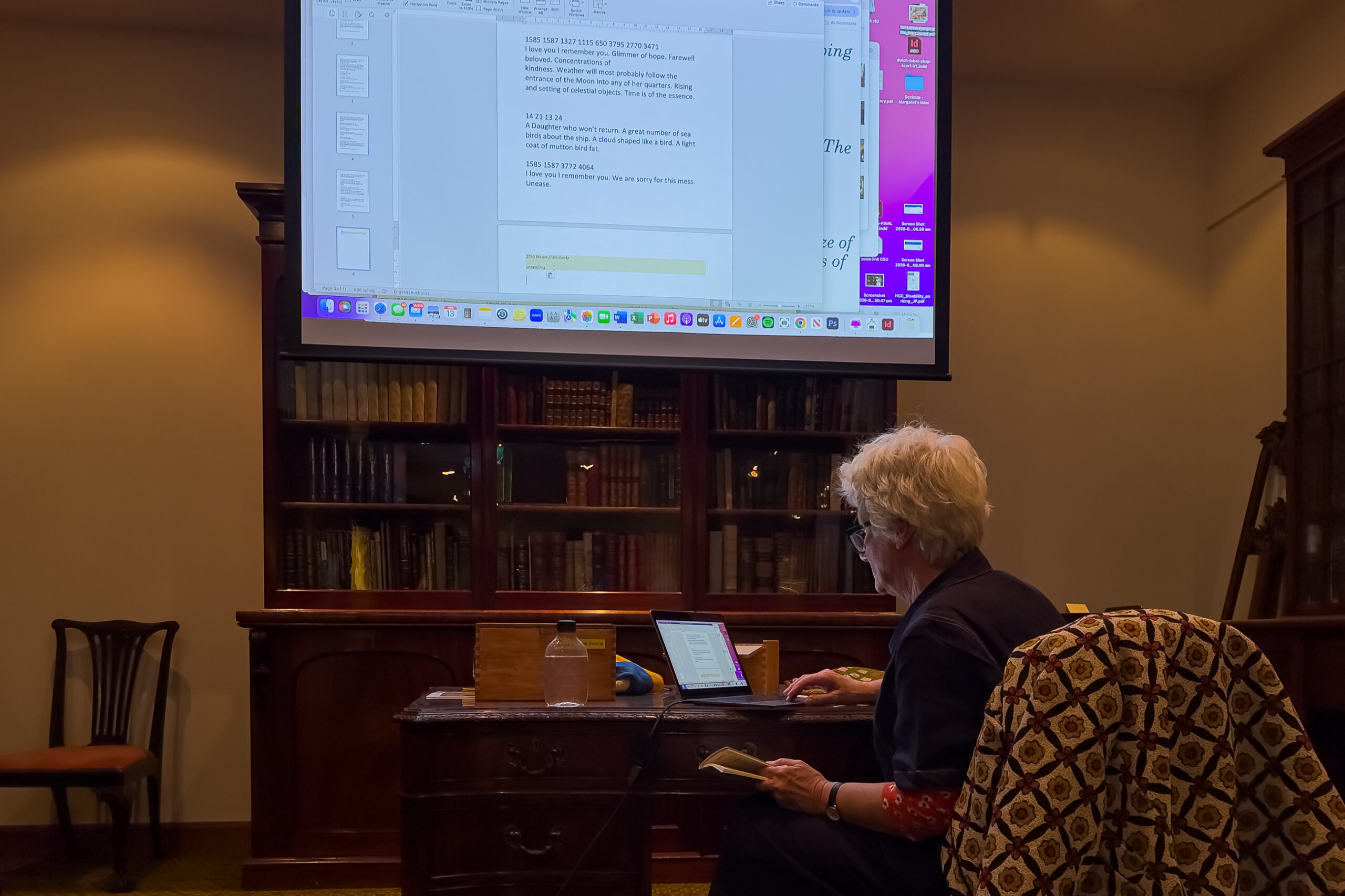
I’m glad she did!
It was so exciting to see all this and to hear Margaret speak about it. It sent my mind off in all kinds of directions. It’s a wonderful body of work that tells a fascinating story, exploring language, history and the place we live in in a way I’ve never seen before.
I also felt inspired by how this project showed me that it’s possible to make work that combines the three things I love to do: research, writing and art.
Wow!
Thank you, Margaret, for sharing your project and for making such a powerful body of work.
Habit tracker
- 15 minutes morning exercise sequence (7 days): 6/7
- Hip or shoulder sequence exercises (5 days): 0/5
- Walk (7 days): 6/7
- Thinking time (4 days): 5/4
- Morning planning routine (3 days): 0/3
- Mid-day journalling (7 days): 0/7
- Work shutdown (3 days): 0/3
- 9.30 shutdown (6 days): 1/6
- Evening routine (7 days): 6/7
Summary of the week
This week I learned
If you’re on Duolingo maybe you’re increasingly frustrated by the way this app spends most of its time trying to keep you in the app and get you to pay them money rather than actually teaching you anything (not to mention its AI-first policy). So, while I hate this, having a 2300+ day steak does exactly what it’s intended to do and keeps me using the app.
This week I learned that Libraries Tasmania provides free access to the Mango Languages platform for library members.
I joined up to check it out. I started out with the placement test for German, which is a language I studied many many years ago, and have also been doing on Duolingo. I was a bit disappointed that my Duolingo lessons had taught me precisely nothing, as the placement test put me right back at the beginning of the course (sadface). I did slightly better in French, probably because I’m more familiar with that language and it comes a lot easier to me than German.
This is a very different platform to Duolingo.
It uses authentic speakers of the languages to create the lessons and it lets you compare exactly what you say to the way they say it. It also includes explanations and instructions alongside the lessons and the exercises, so you don’t have to go looking for them elsewhere like you do in Duolingo. It feels like a much more structured way to learn and there are no ads, no annoying characters, no ‘energy’, no ‘gems’, no streaks, no ‘leagues’. It’s not a game. You just go there to learn.
And what I learned from my first French lesson was this:
Le salon du livre de Paris has been hosted by Paris since 1981 when it became a big event open to the public every year in March. It not only hosts the biggest publication houses to display their work, but also provides conferences and spaces where authors can come and chat with the public. Every year, a country or region’s literature is chosen as the highlight of the fair. For example, one year it was dedicated to Mexico and another year focused on Nordic literature.
That sounds cool.
Thanks, Libraries Tasmania. Another reason for loving you!
Unrelated, I learned that if you want to make a recipe with quinoa, you need to make sure you actually have quinoa in the house.
This week I noticed
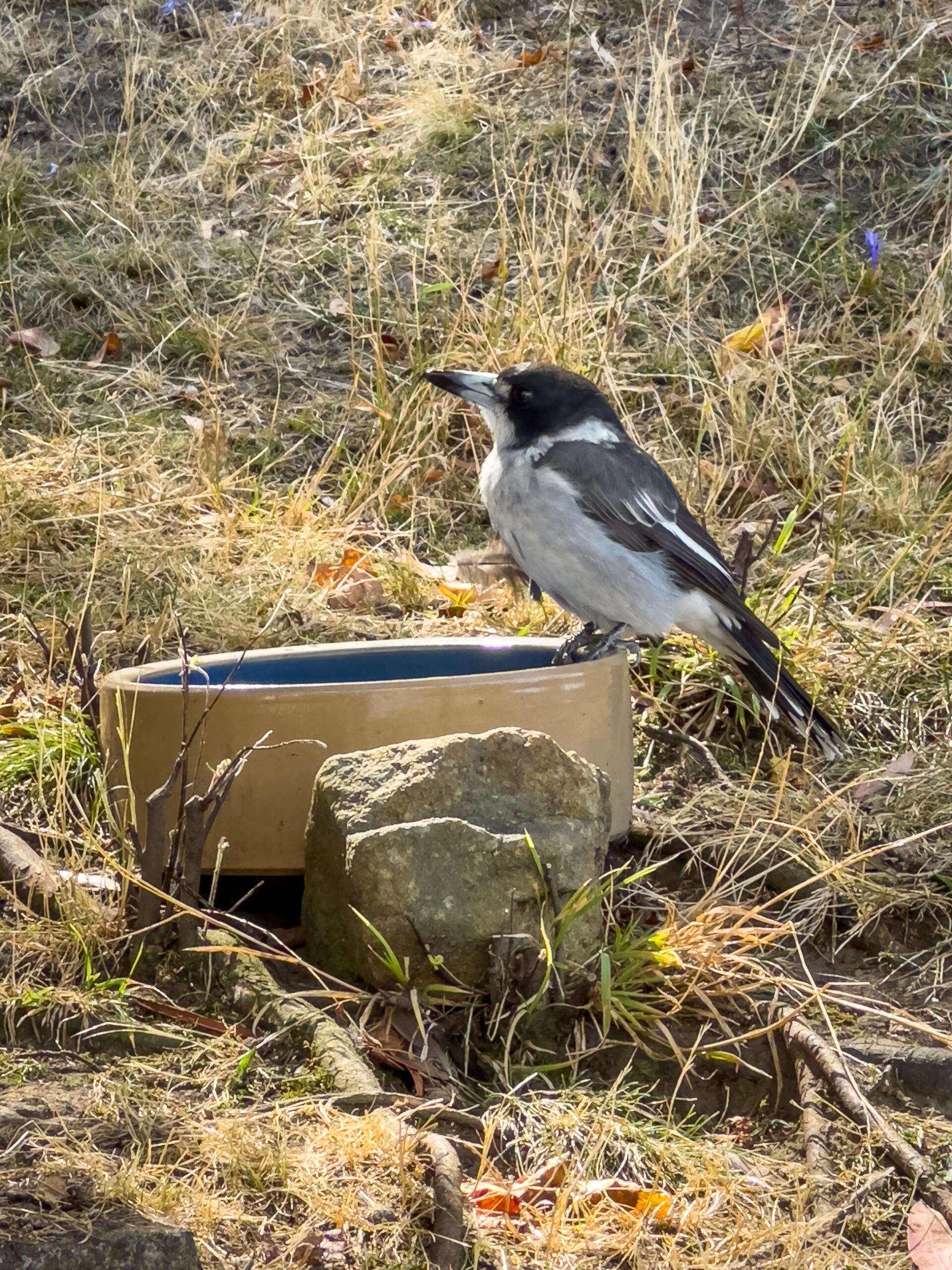
A butcher bird on the chickens’ water bowl.
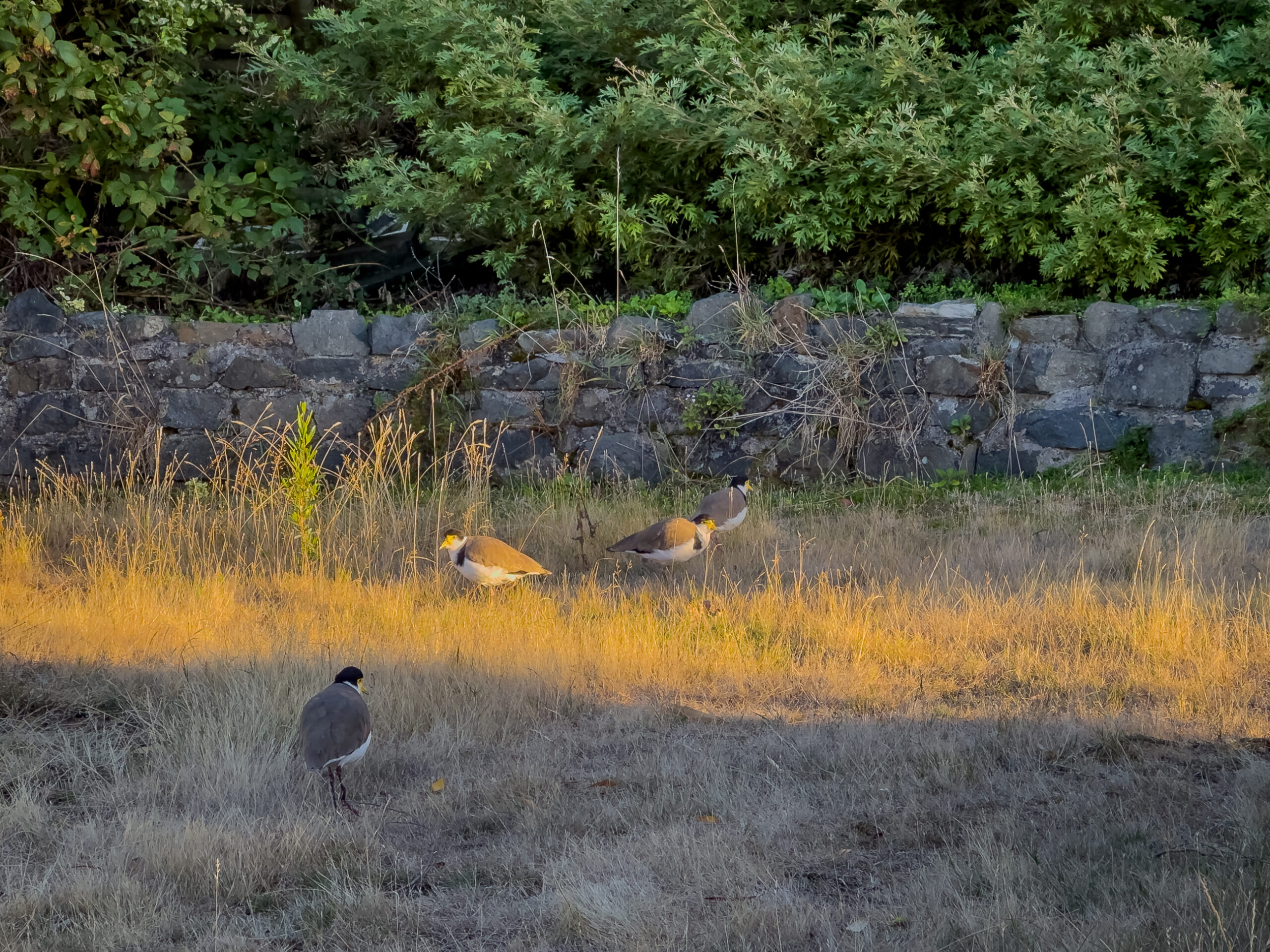
Plovers near my house.
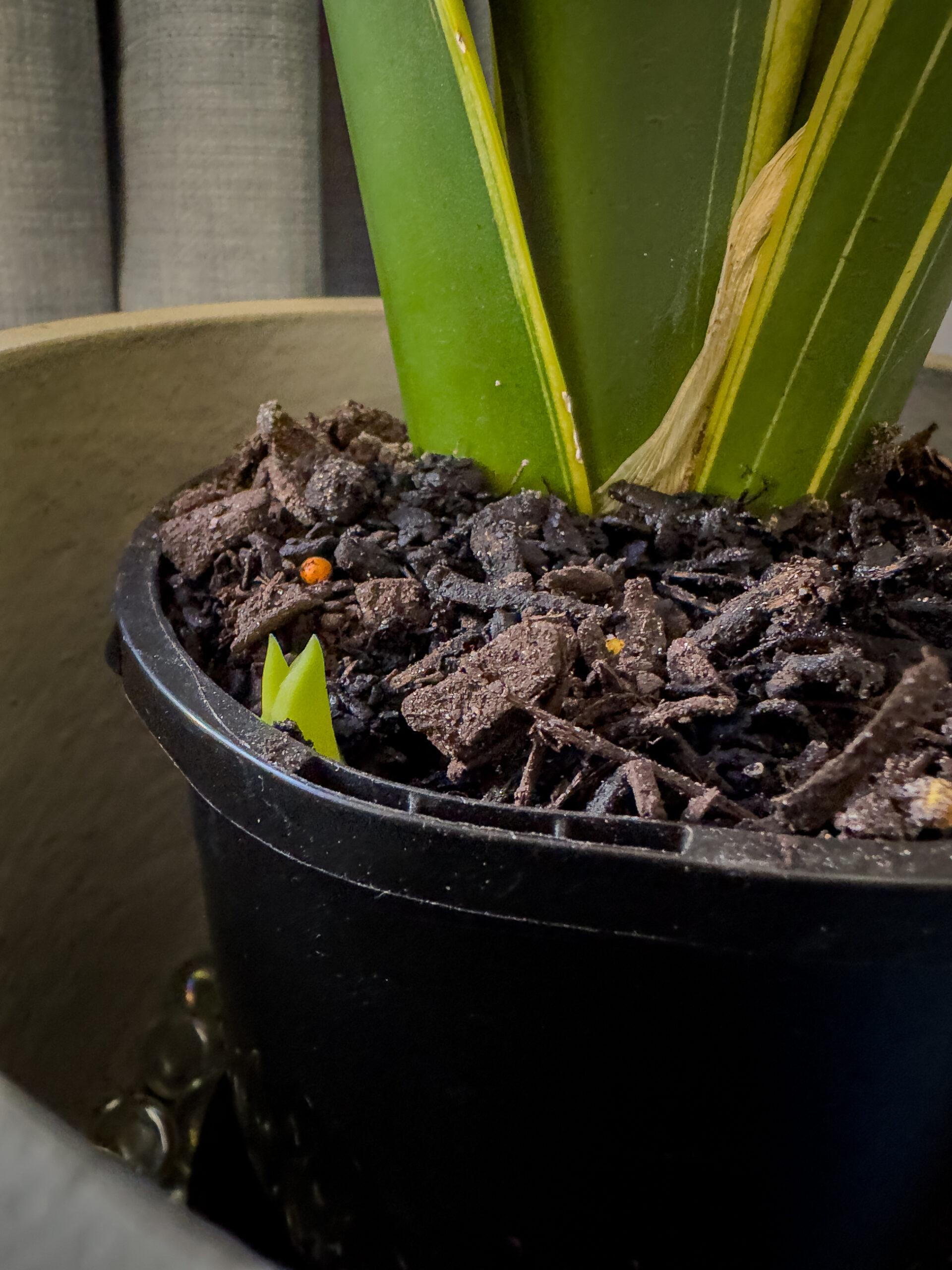
My snake plant is having a baby!
What’s making me think?
When they tell you
that if you do not
take off your mask,
that if you do not
start using Al,
that if you do not
get with the times,
that you will be
left behind,
remember:
it is perfectly acceptable
to respond by telling them
that you do not want
to go where they’re going.
This post from Gothic novellist CJ Cooke appeared in my Substack feed and it seemed relevant to the work I’m doing at uni at the moment on Gothic fiction.
Every haunted house in fiction is really a haunted family. The house is just the container. When I write a building—a lighthouse, an asylum, a croft—I ask: what does this place remember that the people inside it have tried to forget?
Reading
- She’s All I Need by Jen Morris
- Let Them by Mel Robbins
Watching
- Pet Shop Boys Dreamworld
Listening
- PBS FM
- SIX The Musical Studio Cast Album
About The Author
