Week 06/2025: World wetlands day
Week of 2 February 2026
World Wetlands Day was on 2 February.
Wetlands, according to the definition on the official site, are land areas that are saturated or flooded with water either permanently or seasonally. They include inland wetlands such as marshes, lakes and swamps, coastal wetlands such as estuaries, salt marshes and lagoons, and human-made wetlands such as fish ponds and rice paddies.
World Wetlands Day raises awareness about wetlands and how important they are. It marks the date the Convention on Wetlands was adopted in 1971 in the Iranian city of Ramsar— hence the title of Ramsar Convention—which emphasises the need for conservation and sustainable use of these critical environments.
This post is wholly researched and written by me. I do not use AI in my writing. I will always bring you my stories in my real human voice.
World Wetlands Day
Saltmarsh walk & talk
My sister invited me to the Conversation Volunteers Australia event to mark this day, called Saltmarsh Walk&Talk + Birdwatching at Windermere Bay in Claremont, with guest speakers Dr Vishnu Prahalad, senior lecturer at UTAS, and Bec Sheldon, Senior Wetland Ecologist, along with bonus speaker Jason Graham, convenor of the Pacific Black Duck Conservation Group.
I know nothing about wetlands before this and I didn’t even know where Windermere Bay was, so it was a big adventure!
The event took place on 1 February, which was technically last week but since World Wetlands Day was Monday, and last week’s post was already long enough, I decided to hold it over till this week.
The Derwent Estuary
The Derwent Estuary. It’s big.
It’s the section of Timtumili Minanya/River Derwent that extends from New Norfolk to the Iron Pot lighthouse in Storm Bay. Windemere Bay is in what they call the Middle Estuary, which is the section between the Bridgewater and Bowen Bridges. This is the location of the saltmarsh that was the subject of the walk and talk.
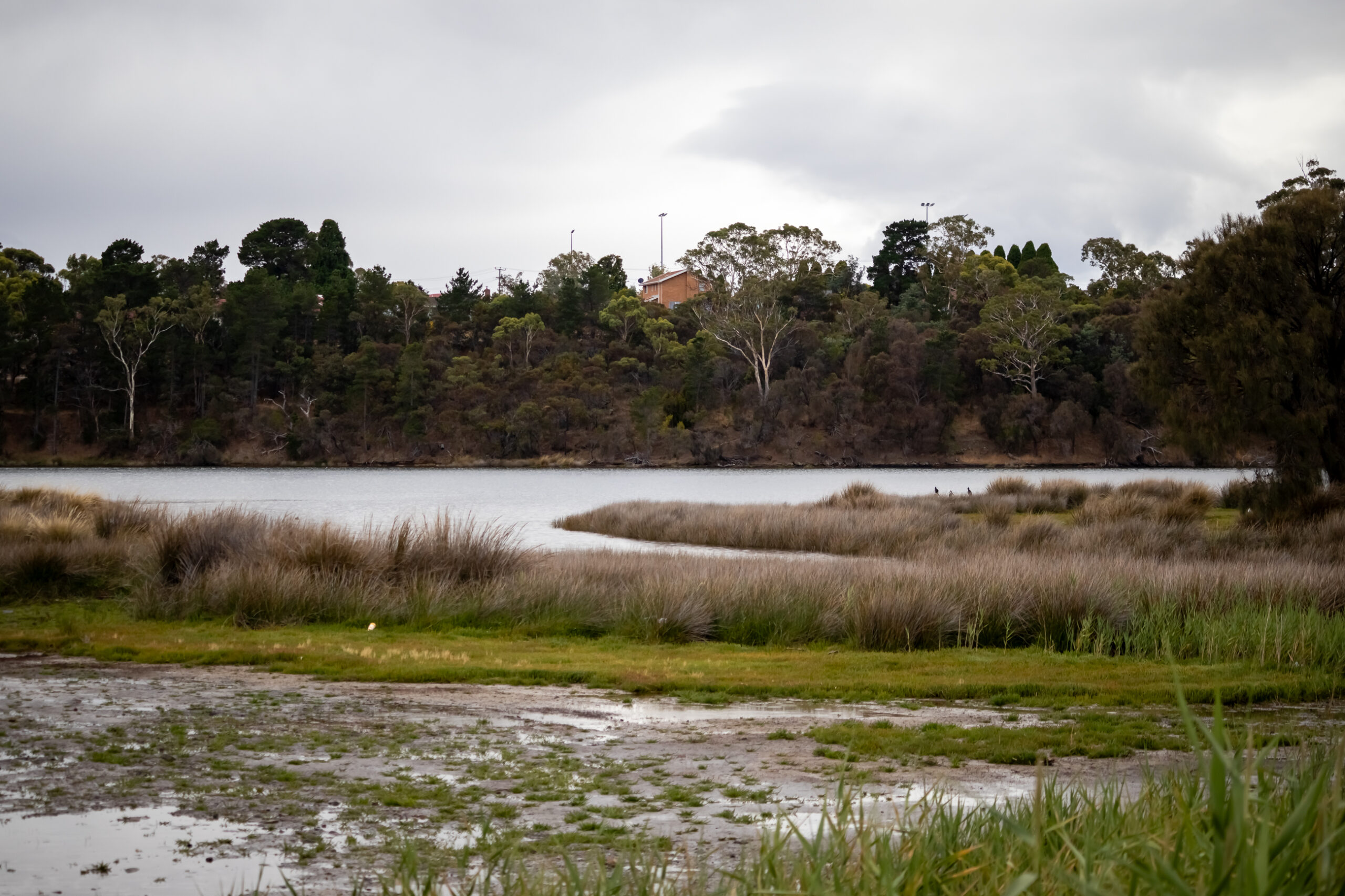
This area was originally cared for by the Muwinina people, who lived in an and around the area of Hobart on the eastern shore of the river. As you might know, none of this group survived the British colonisation of Lutruwita/Tasmania.
What is a saltmarsh, you ask?
Before this event, I had no idea what a saltmarsh was.
I learned that it’s a “coastal marsh located in the intertidal zone, where saltwater meets the land between high and low tides. Freshwater also flows through these areas from rainfall, groundwater and creeks.”
That means that sometimes it will be underwater, sometimes it won’t, according to the tide.
According to the website, in Tasmania saltmarshes mainly occur in small patches and are generally found within bays and at the mouths of creeks and streams. There are significant patches at Old Beach, Ralphs Bay and Piyura Kitina /Risdon Cove.
They are really important ecosystems as they can store carbon from the atmosphere—I think Vishnu said they are more efficient at this than old growth trees, improve water quality, coastal protection and reduce flood risk. Healthy saltmarshes are nature’s water filters in coastal environments.
After an introduction from Janine from ACV, Vishnu spoke about the saltmarshes, what plants and wildlife we can find here, and how they are important for the environment.
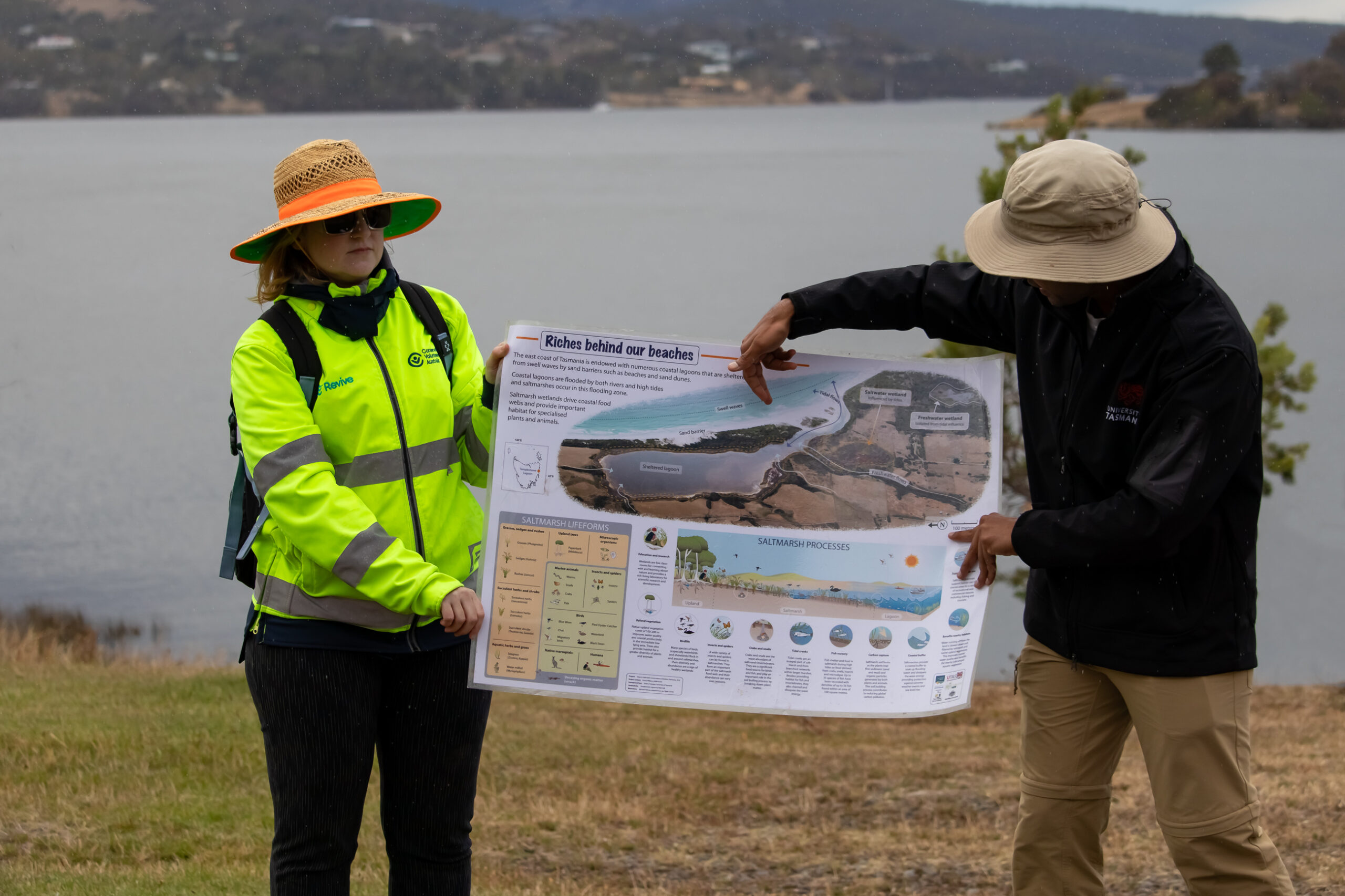
Restoration of Windermere Bay saltmarsh
Bec told us about the project to restore this saltmarsh.
Apparently in the 1970s when they were building the surrounding suburbs, they dumped a lot of landfill, which destroyed the wetland ecosystem. The project that Bec and her teams have been working on has removed 0.3 ha of this infill to allow the area to restore itself. That’s meant reducing the ground level to what it was before, which allows the water to flow through and across the area.
Then they left it to restore itself, a process called “passive restoration”, rather than directly planting any saltmarsh plants. The new plants have either grown from seedbanks that have remained in the soil for the last 50 years or have been transported naturally from neighbouring plants. Bec said it didn’t take long once the soil was removed for the little saltmarsh plants to start emerging.
The excavated landfill was tested, any weed matter removed, and then it was deposited over what had been a steep embankment by the roadside and left to grow into place.
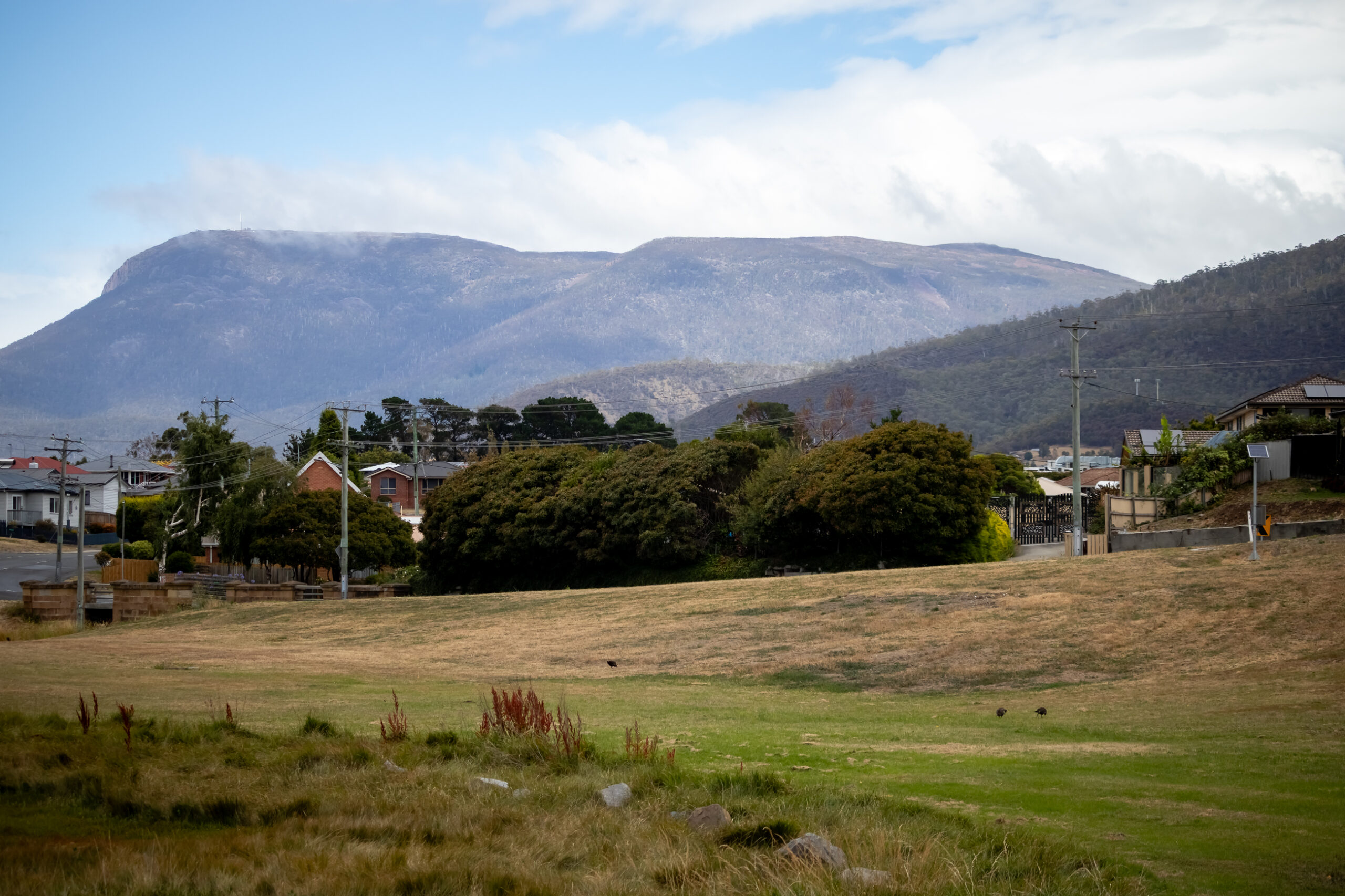
Glenorchy Council has improved the boardwalk across the restoration area, and the team has planted around 700 native plants to act as a buffer for the saltmarsh and to attract native animal species.
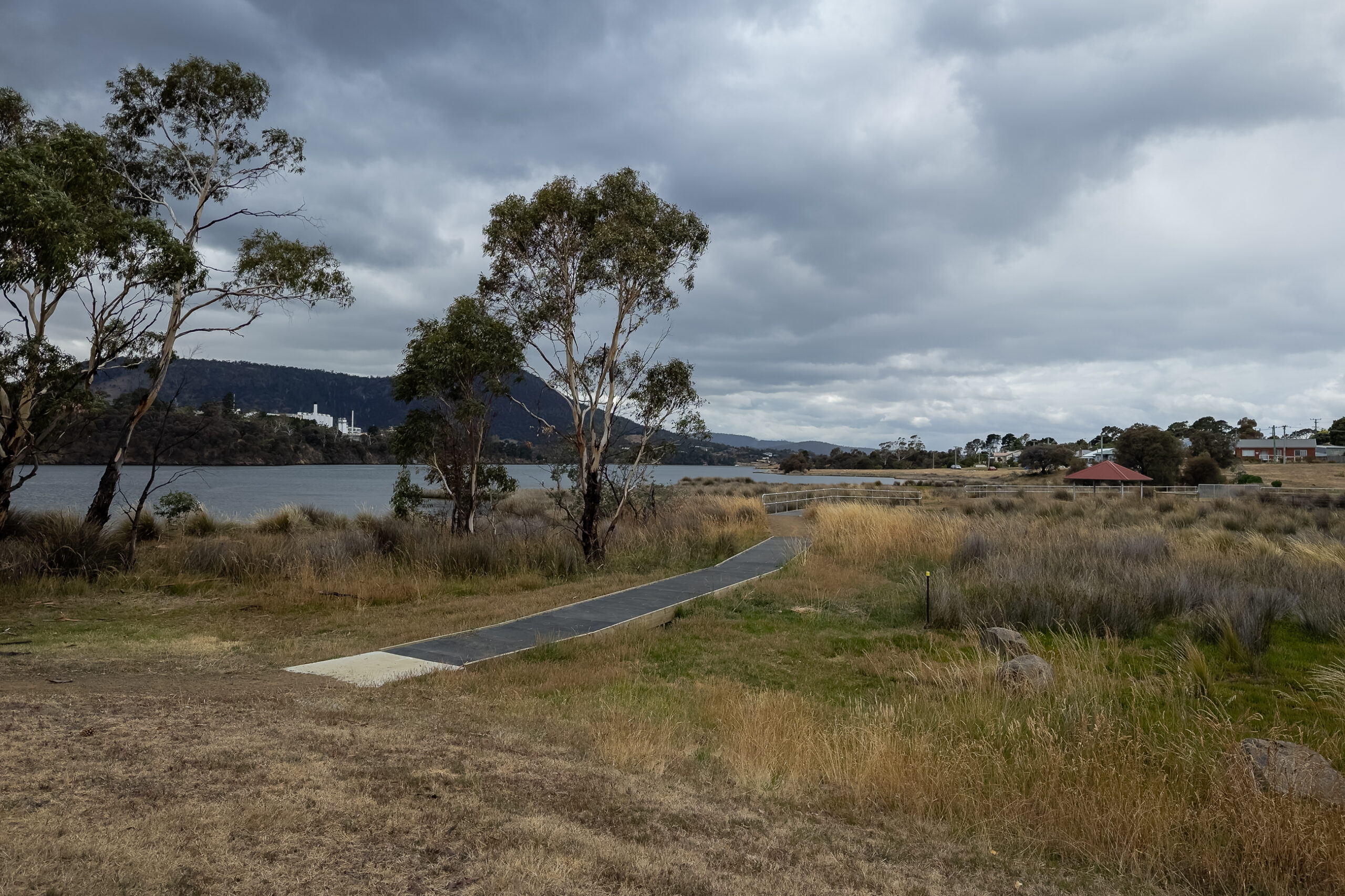
This website has a good overview of the restoration project, including some before and after photos.
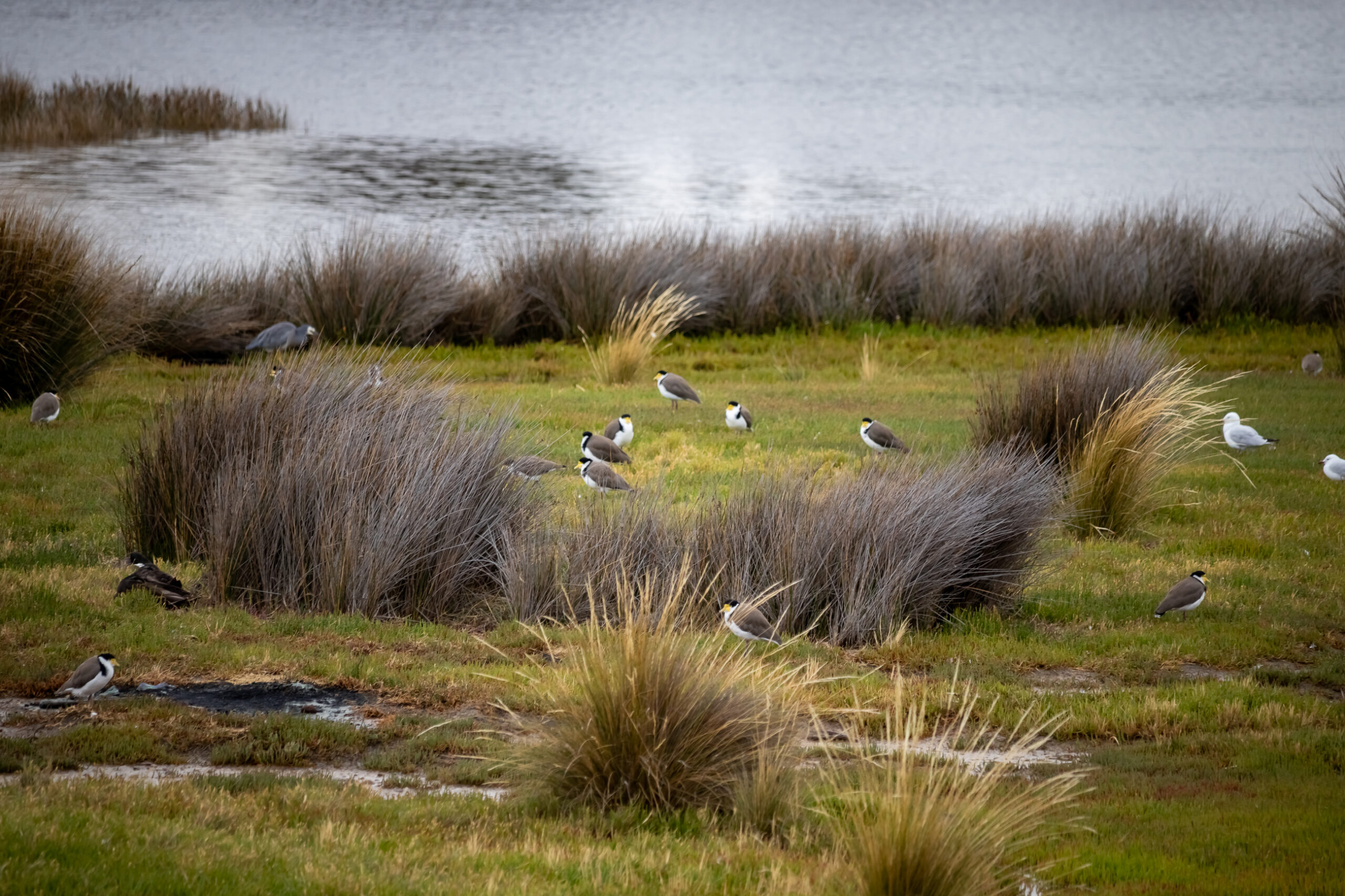
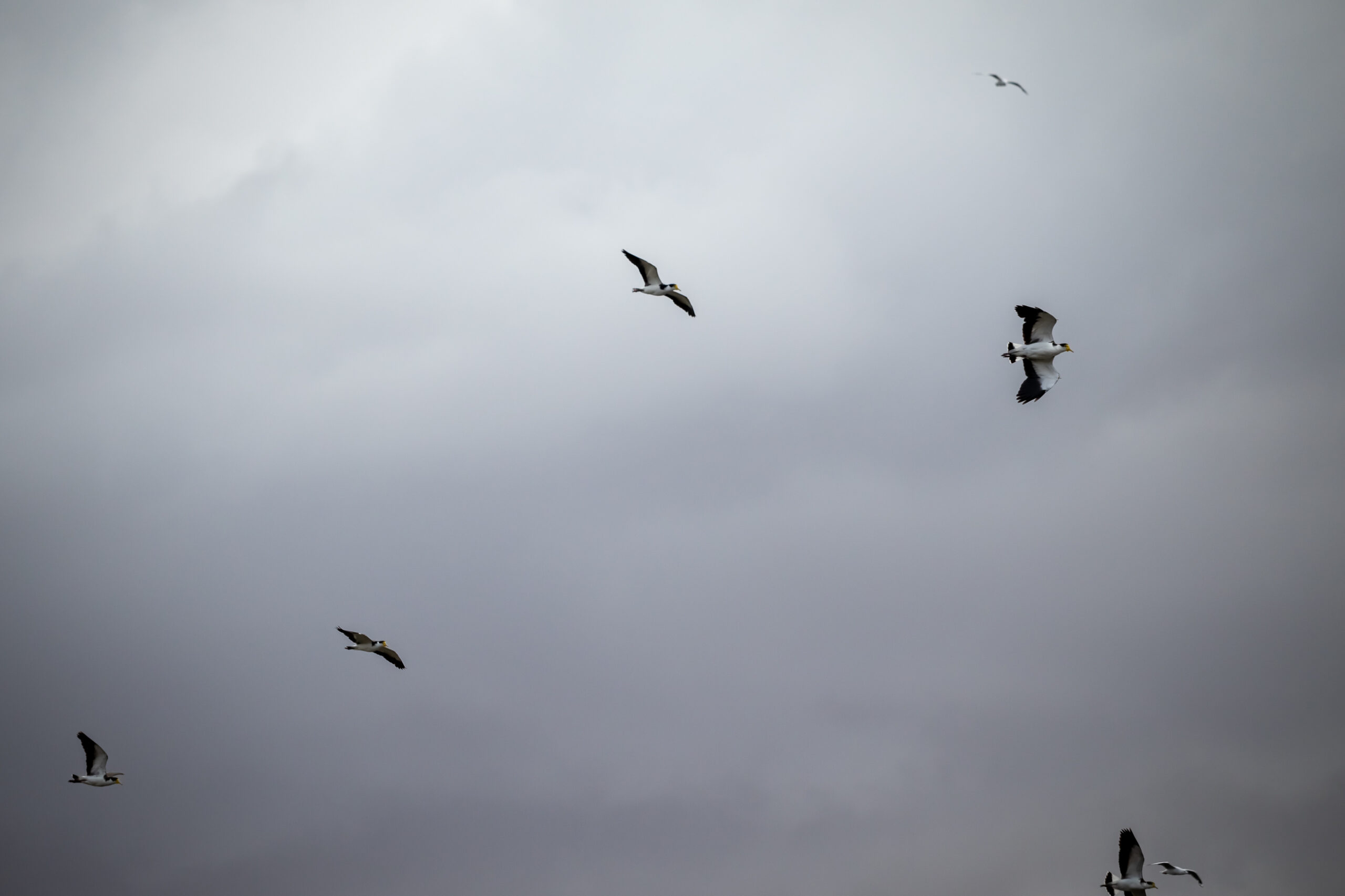
As we wandered we learned more about the various critters that live in this ecosystem (including rabbits, unfortunately) and I was very excited to see the plover stronghold.
They even fly!
Ducks of Tasmania
We also met Jason the duck expert, who talked about the problems caused to the native ducks through the escape and dumping of mallard ducks. In particular, this threatens the Pacific Black ducks, because they can cross-breed with the mallards and produce fertile offspring which result in more hybrids and fewer pure Pacific Blacks (which are neither black, nor confined to the Pacific). (I learned more than the sum total of what I knew about ducks in just that sentence.)
Mallards are larger and more aggressive than the Pacific Black and other native duck species, and they can force them out of their habitats.
Because of their success at cross-breeding, there are a lot of hybrids about and it’s often very difficult to distinguish a pure Pacific Black from a hybrid. For example, one that we saw could have been confused for a Pacific Black but for one white stripe on its wing just above the blue patch. It’s barely noticeable but Jason saw it straight away.
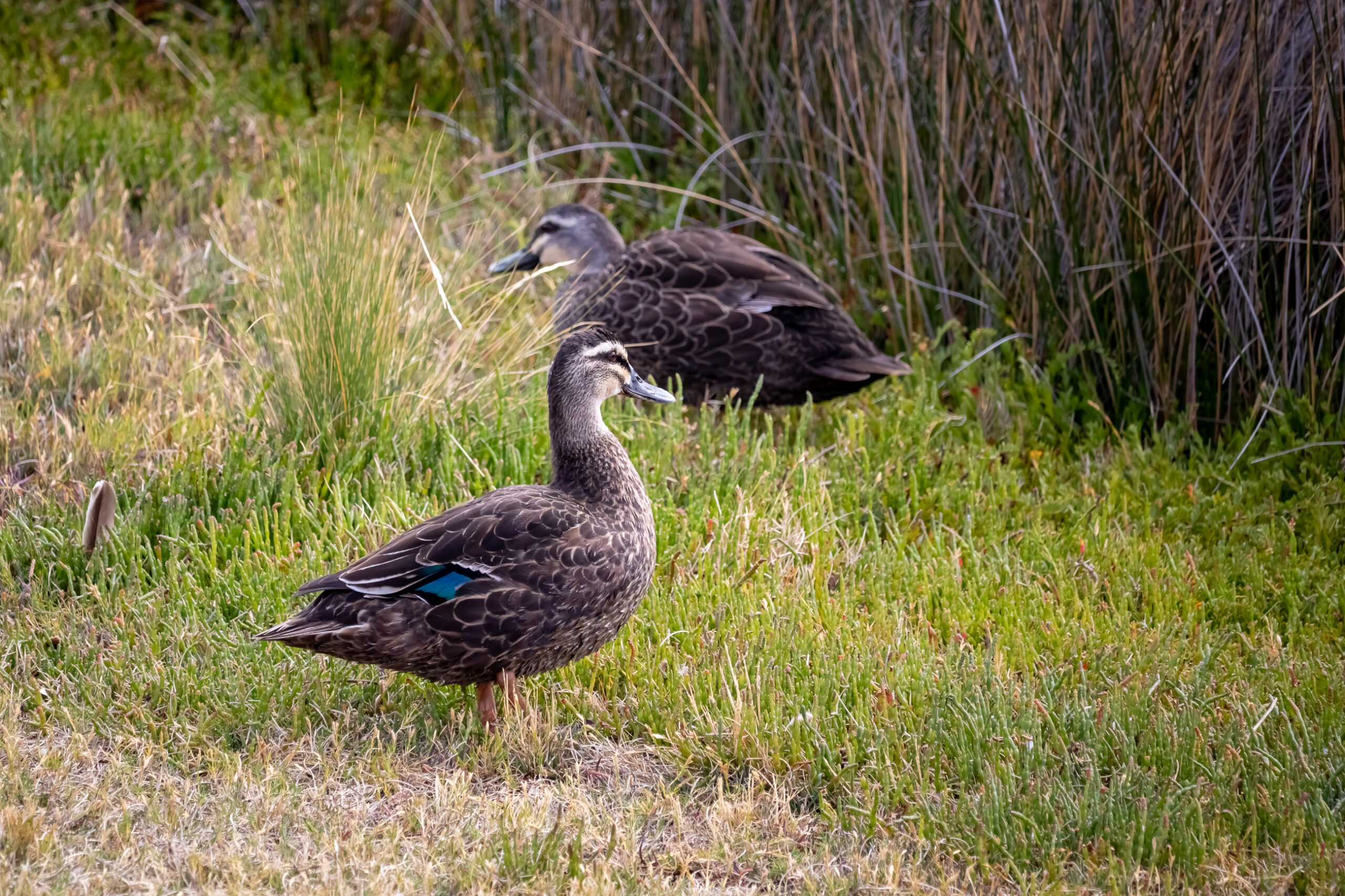
The Pacific Black Duck Conservation Group, which Jason is involved with, is working to remove some of the mallards and hybrids in an attempt to reduce the cross-breeding and make the waterways more hospitable for the native ducks. (There are 11 native species of duck in Tasmania and some of them are very rare.)
You probably know this, but don’t feed the ducks.
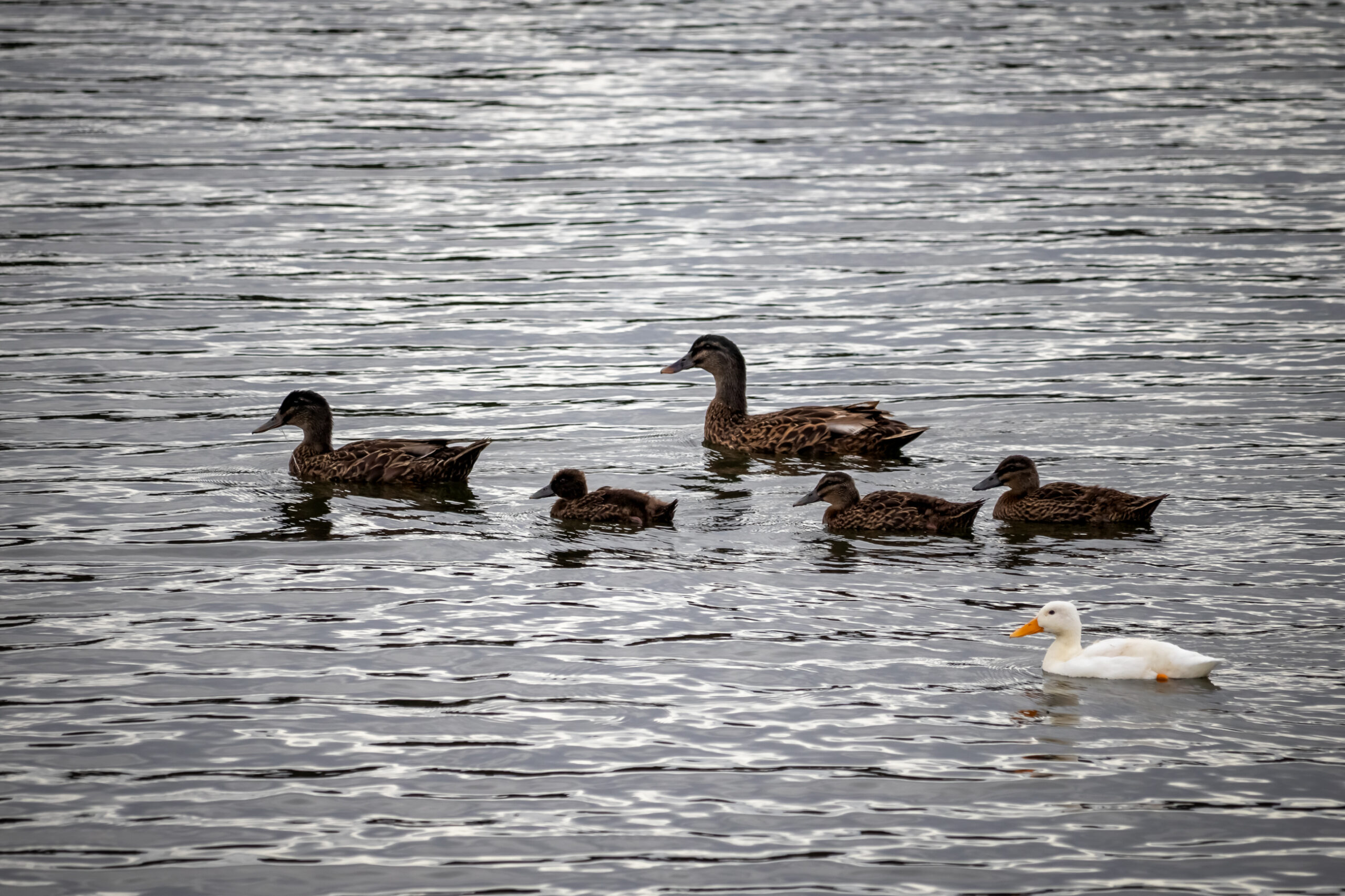
Jason observed that where people feed ducks, people who want to dump them feel okay about doing so because they know they’ll get fed. This not only encourages dumping but it increases the number of these feral ducks, which are larger and more aggressive and cause more damage to the vegetation. It also means more duck poo and attracts rats.
Gross. Don’t feed the ducks. Don’t dump ducks. Don’t even get mallards. Jason says if you do want a domestic duck, get muscovy ducks as they can’t cross breed with natives and they are more friendly and quieter than mallards.
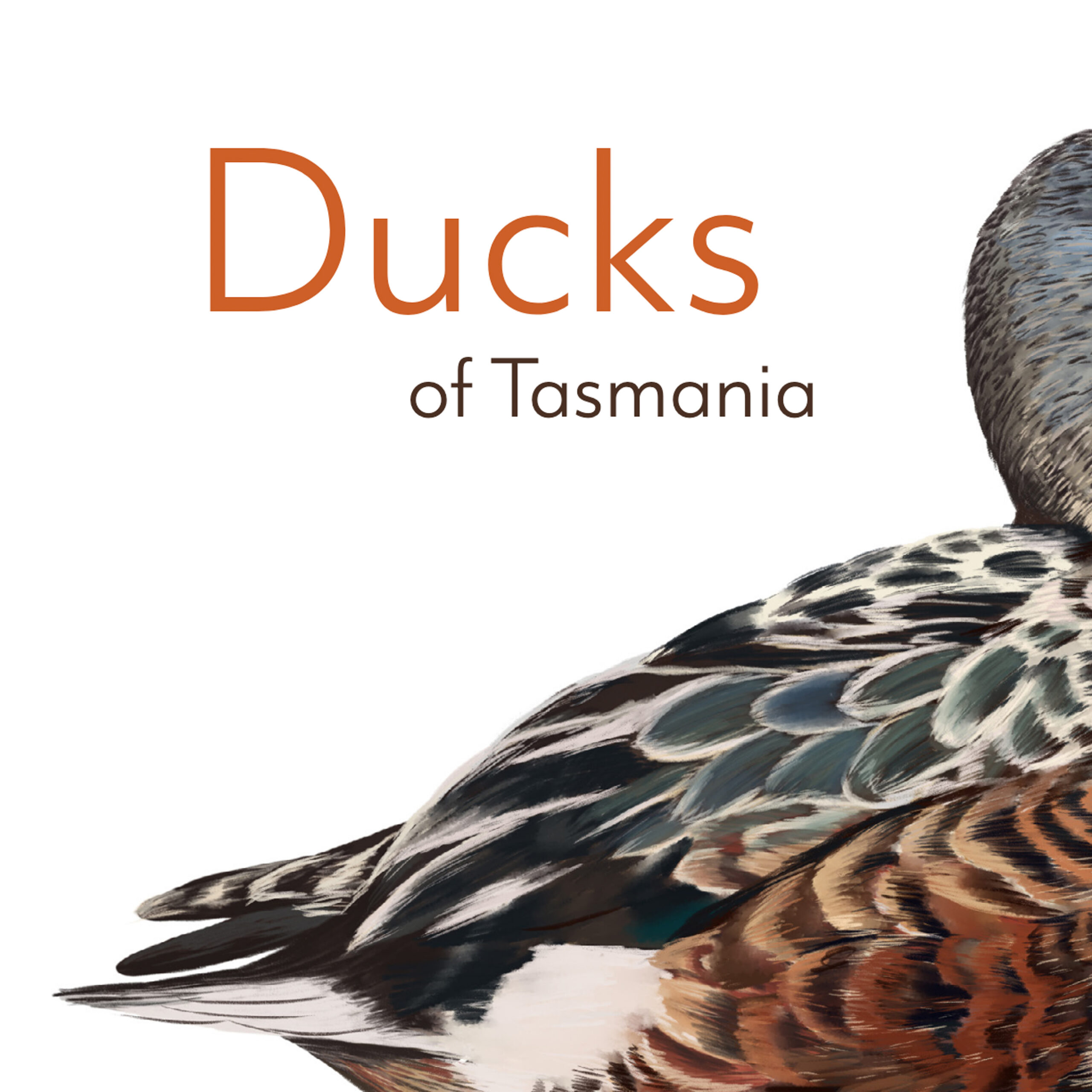
You can find out more about ducks in the Ducks of Tasmania book which is available from some southern councils or online.
The end of the tour
When we got back from the walk we saw a seagull perching on what looked like a tomato stake and I was like, how is it perching on something so small with its webbed feet?
Then it stretched its wing and was only standing on one leg on this tiny post.
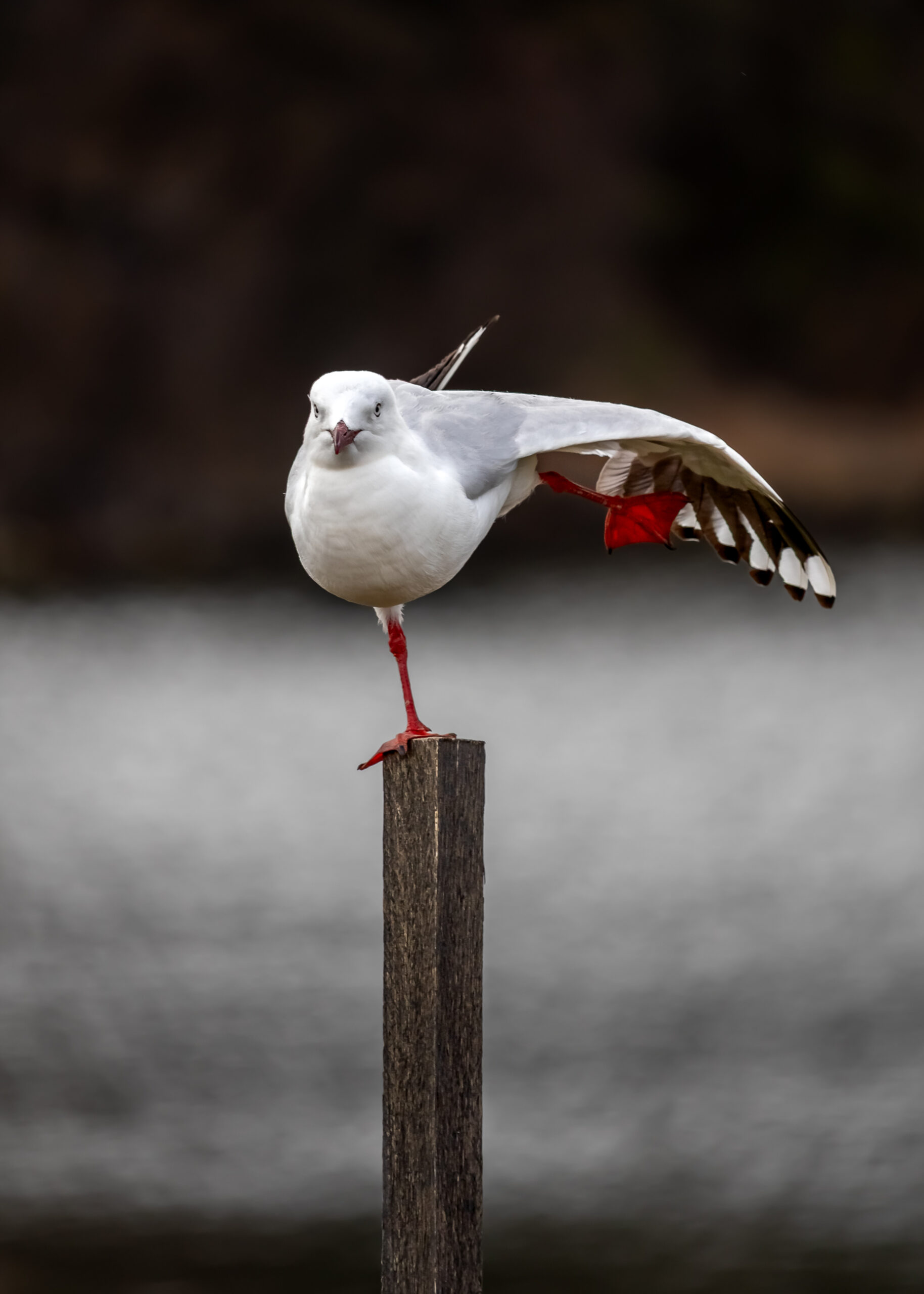
Amazing!
Habit tracker
- Go outside first thing (7 days): 6/7
- 15 minutes morning exercise sequence (7 days): 7/7
- Hip exercises (5 days): 1/5
- Walk (7 days): 7/7
- Carry a notebook with me when I walk (7 days): 6/7
- Thinking time (4 days): 4/4
- Morning planning routine (4 days): 3/4
- Mid-day journalling (7 days): 4/7
- Work shutdown (4 days): 1/4
- 9.30 shutdown & dim lights (6 days): 4/6
- Evening routine (7 days): 7/7
Summary of the week
Some positive things
I was in the Mercury on Monday in an article about the Pride launch last week.
This week I learned
The Roulettes are the Royal Australian Air Force’s aerobatic display team, established in 1970.
The website says they fly as low as 80 metres at speeds of up to 685km/h and pilots can experience up to 6 ‘G’, or 6 times the force of gravity, during a display.
“Flying as close as three metres apart, the team showcases the level of visual judgement and hand-eye coordination that pilots in the Air Force are able to achieve.”
They were here in Hobart this weekend for the Royal Hobart Regatta.
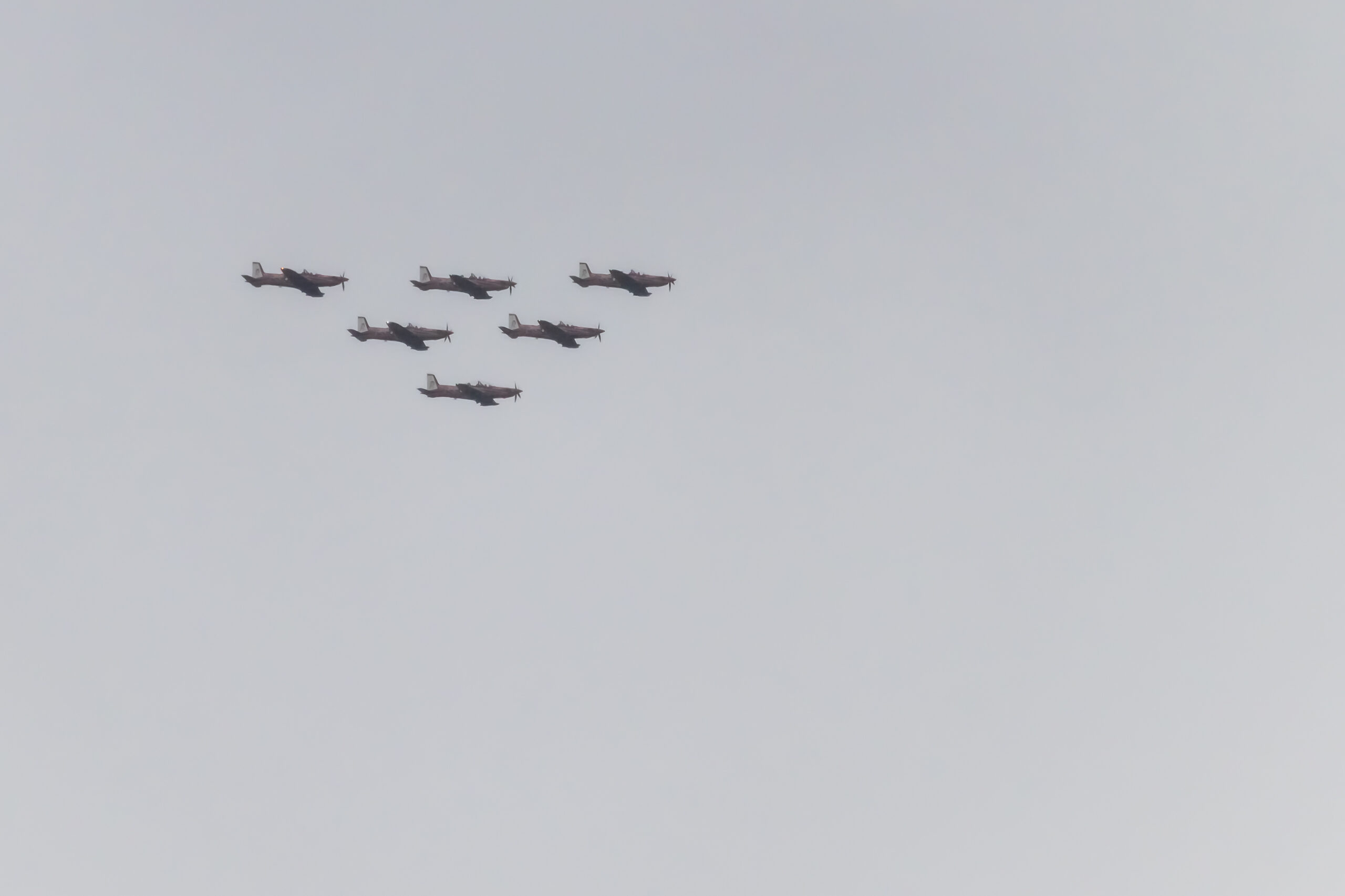
Sunday wasn’t a great viewing day, however.
This week I noticed
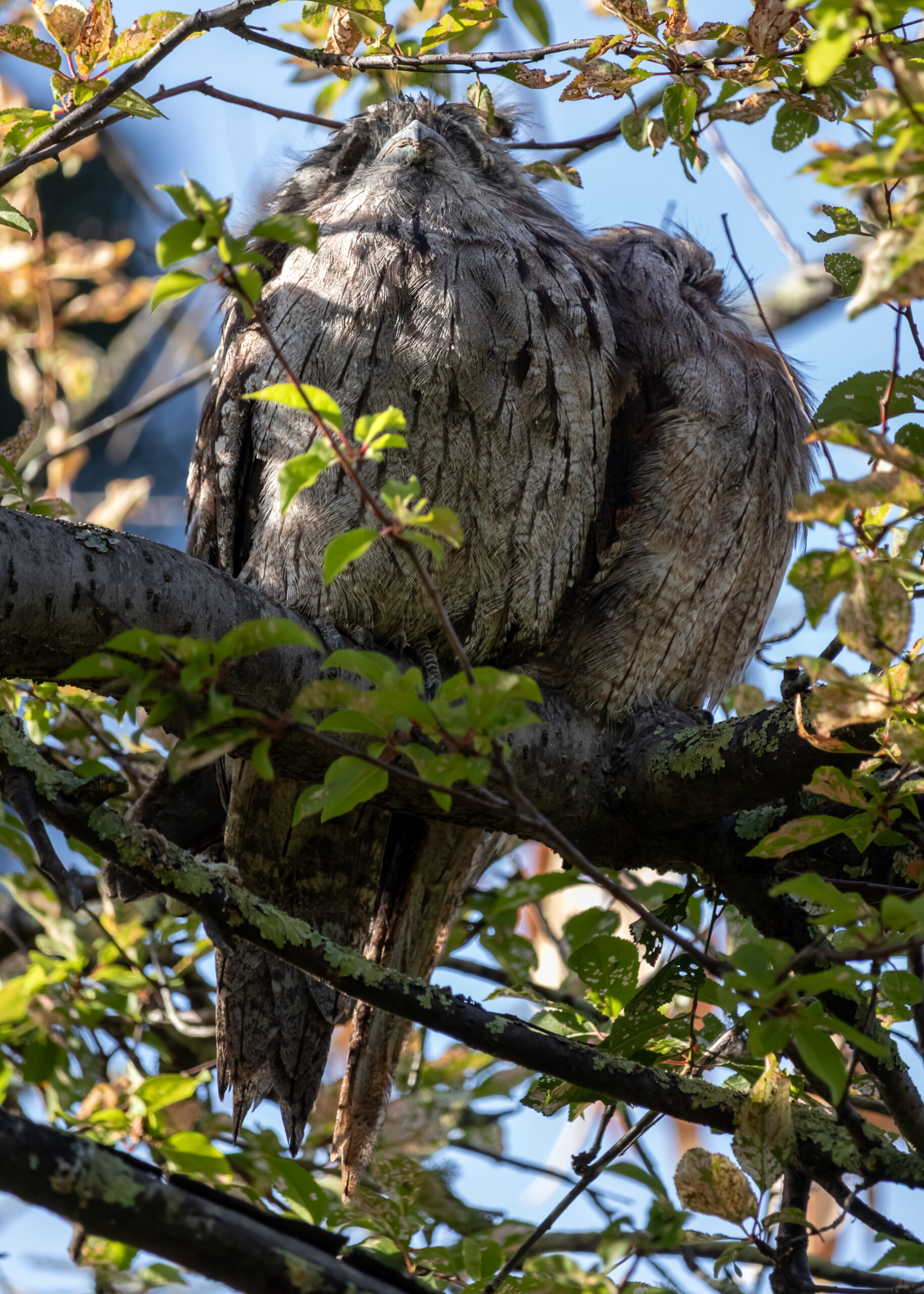
Tawny frogmouths in a tree in my street.
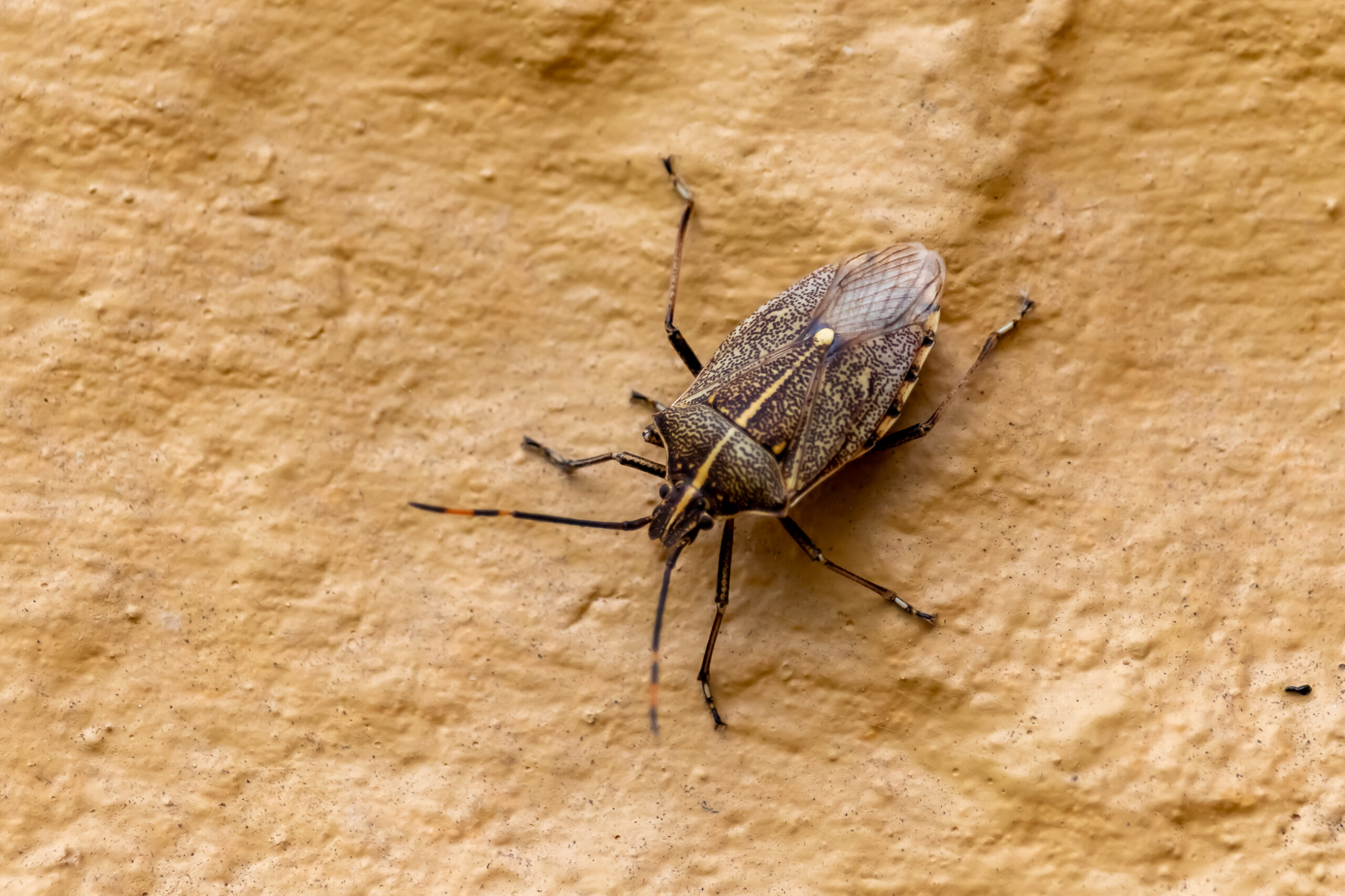
An insect on the side of the house.
Unrelated, I saw a p-plate driver narrowly avoid being wiped out driving straight through in a right turn only lane at Murray Street when there was a car going straight on Collins Street right alongside them.
Eeeeek!
What’s making me think?
According to a post on Bluesky, there is not a single introductory sociology textbook that would pass the censors and be allowed to be used for teaching in the state of Florida.

Also what I’m dwelling on is the many many posts from people writing about how surreal it seems to be carrying on doing our work when the world around us is collapsing, yet we are expected to continue doing what we’ve always done as if it was still 2016.
It isn’t a glitch in normality. Things aren’t going ‘back’, but where are we, and what are we doing?
The best thing this week
Our NBN box, which we had been trying to have installed for several months, finally arrived and was installed.

This was the fourth technician that had come to our house to do this job. And now it’s done. Happy days.
Reading
- The Visual Imagination by David duChemin
- Lady Audley’s Secret by Mary Elizabeth Braddon
- Meditations for Mortals by Oliver Burkeman
Watching
- Resident Alien
- Doctor Who ‘The Evil of the Daleks’
- Blackadder II ‘Potato’
Listening
- SIX: The Musical Studio Cast Recording
About The Author
