Week 05/2026: January 26
Week of 26 January 2026
Monday was a public holiday in Australia. It’s been a national public holiday since 1994.
I’m grateful that my workplace recognises that this is a date that causes pain to many First Nations people and allows us to substitute this public holiday for another day.
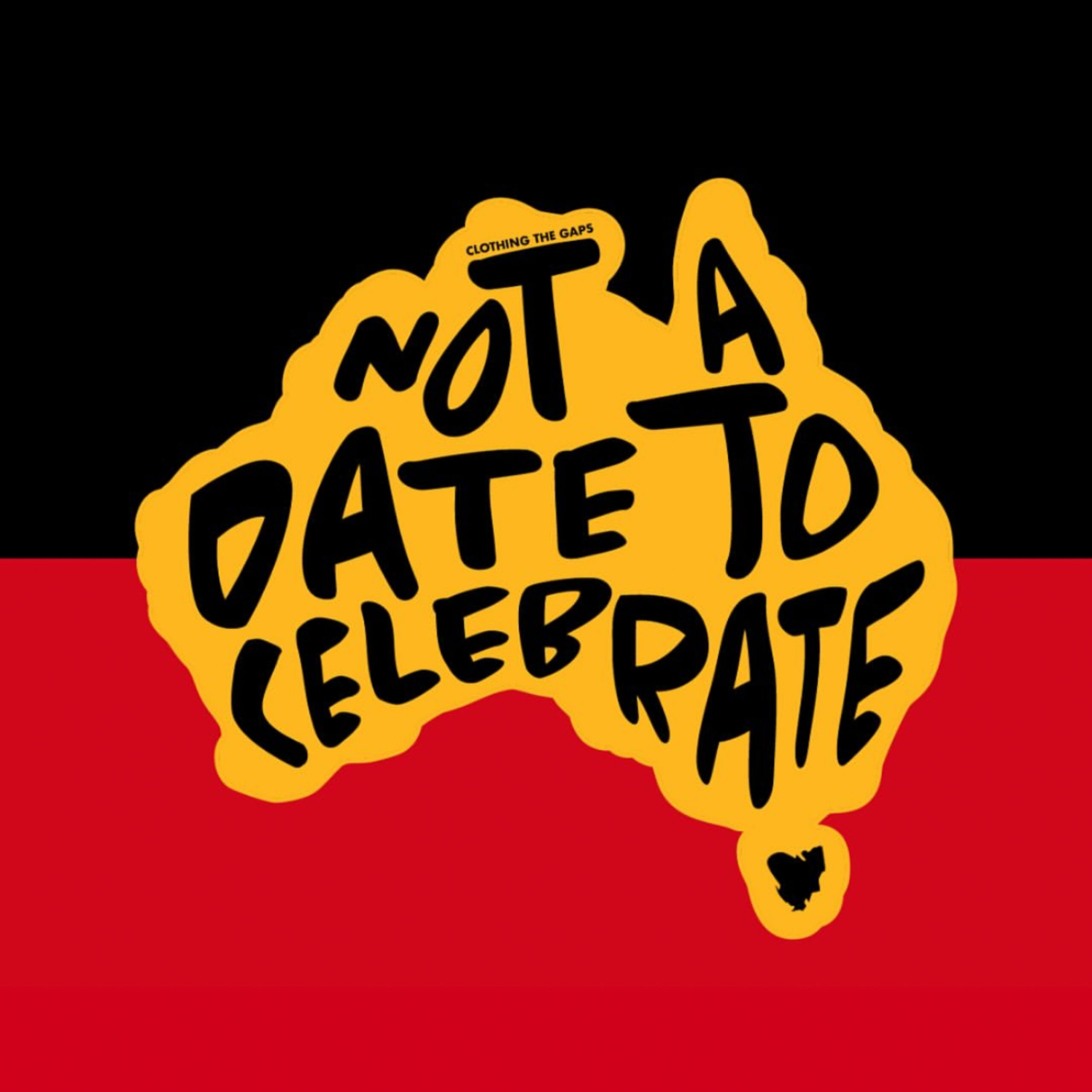
This post is wholly researched and written by me. I do not use AI in my writing. I will always bring you my stories in my real human voice.
January 26
However, as always, the date stirred up a lot of debate in the weeks leading up to it.
The soap
Let me start with an article in the local paper with the title “Anti-Australia Day soap causes big stink”.
This was about a councillor, Ross Fowler, in Western Sydney (this is in a Hobart newspaper, by the way) complaining about a soap produced by Lush as part of its support for the “Not A Date to Celebrate” campaign.
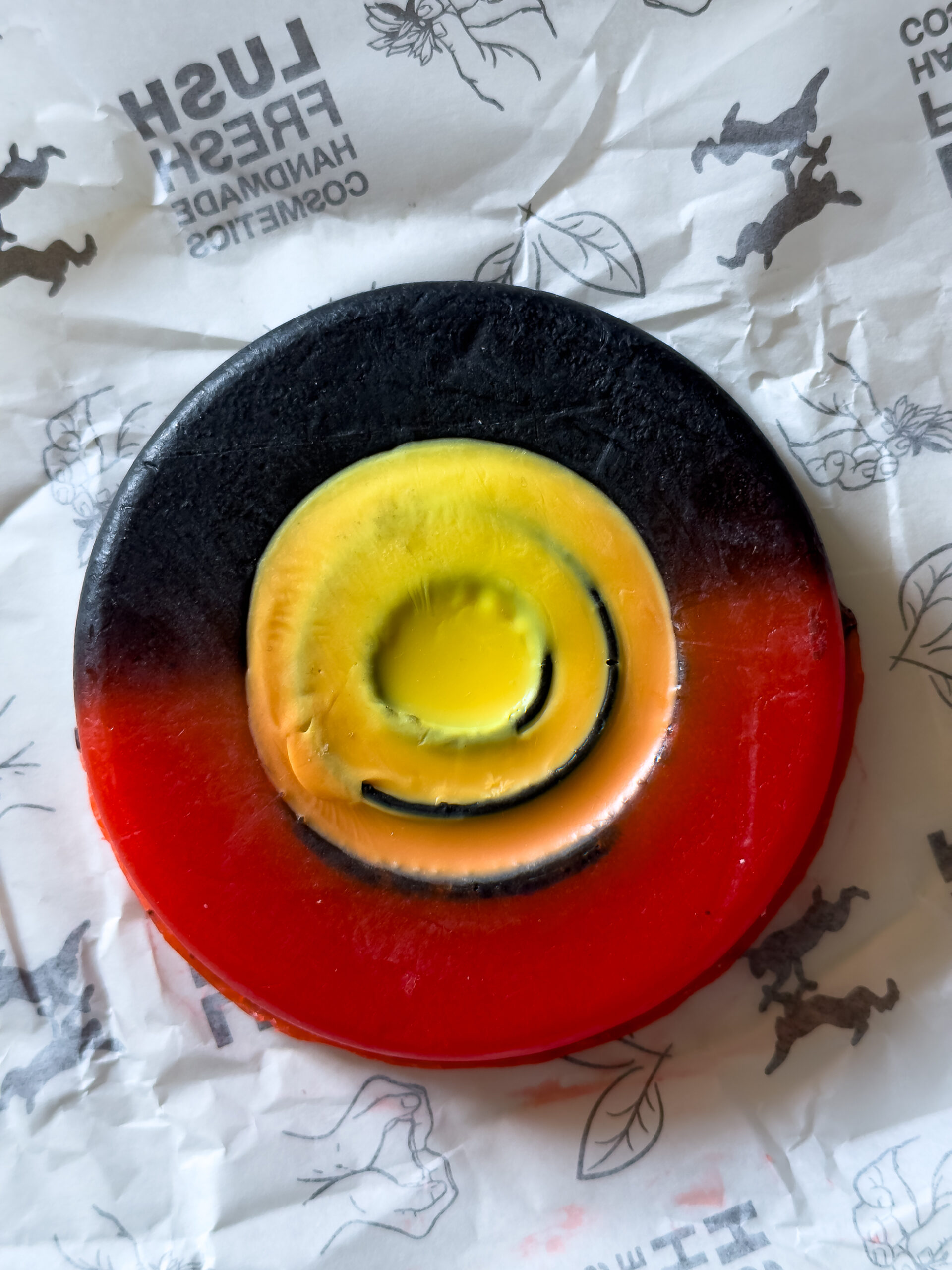
Apart from the fact that Ross said he could see “no reason” to change the date because it had been a day of celebration for years (I’ll get to that in a minute), I found this rather amusing. I had no idea this product existed and went into Lush to buy some the next day. (It’s very lovely and is still available should you wish to purchase it.)
I told the sales assistant I’d seen the article and that’s what had made me come in, and they said I wasn’t the only one.
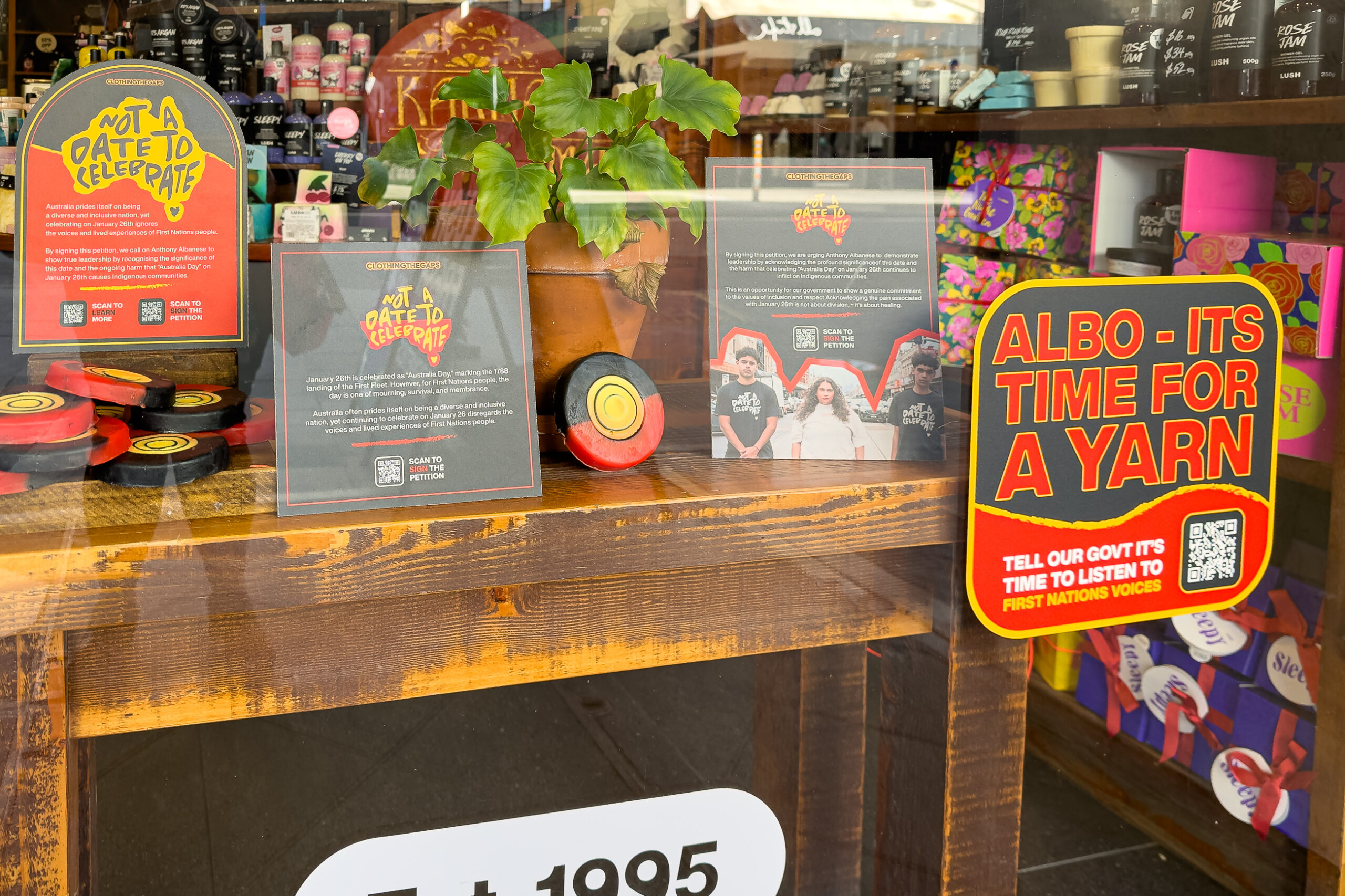
So I’m sure Lush thanks you for your support, Mr Fowler.
Years and years
It wasn’t really amusing though. He was reported as having said January 26 has “been a day of celebration for years and years” and he could “see no reason to change it”, implying he thinks the reasons that Aboriginal people have been providing for years and years against this date don’t count.
I wonder if Ross knows that Aboriginal people organised their first Day of Mourning on 26 January 1938 to commemorate 150 years of “misery and degradation” imposed on the original inhabitants of this land by the British colonists. That’s 56 years before the national public holiday was declared.
He is also quoted as saying that efforts to change the date are “trying to create division” and that this is a time to be united.
I disagree.
There’s no division being created by seeking to change the date. Division exists without that. The “unity” that people claim is being threatened does not exist, and it won’t exist while-ever we celebrate a date that is so hurtful and disrespectful to so many Aboriginal people.
The fact that there is division is acknowledged in the very name of governments’ commitments to ‘Closing the Gap’.
While recognising the strength and resilience of First Nations people, who continue to care for country and practice their culture, ‘Closing the Gap’ is governments’ attempts to address the effects of British colonisation on First Nations people that continue to this day. This includes entrenched disadvantage, systemic racism, and intergenerational trauma, which is reflected in poorer health outcomes, higher levels of imprisonment and lower levels of education. We are not “one and free”, and continuing to celebrate the day that started this—and to say there is “no reason” to change it— is, at the very least, a symbolic reason for this division continuing to exist. I’m not sure how celebrating the date that the British invaded this land, killed many of the inhabitants and created these gaps can be anything but “divisive”.
Maybe changing the date won’t change anything in practice, but it would be acknowledgement of a country that is prepared to listen and to understand, and it might be another step towards building a more respectful and understanding society.
But people are used to it
The media coverage continued the next day, with the same newspaper reporting a poll by “Freshwater”, who surveyed 1050 voters and found 7/10 of them wanted to keep Australia Day on January 26.
This organisation’s head of research, Jordan Meyers, is reported as having said there was a lack of compelling alternative days, and people were used to celebrating Australia Day in the third week of January. “It’s become ingrained into our culture,” he is reported as having said. “My whole life it’s always been January 26 and there’s definitely a ritual and build-up around that amongst Australians. I think people are very attached to that date fundamentally.”
Both people quoted in these stories seem to base their argument for not changing the date around the point that people are used to it or are somehow attached to it.
What they’re saying then is effectively that one group of people’s “attachment” to the date is more important than the actual harm done to First Nations people. That doesn’t sit well with me.
What is January 26?
The date itself is not the foundation of the country we call Australia. January 26 marks the day the British colonists claimed territory in what is now NSW for themselves, and this was the beginning of attempts to dispossess the inhabitants of this land: murders, massacres, taking their children, attempting to wipe out their languages and cultures, and denying that the land was inhabited.
NSW was just one colony, which, eventually, along with the other five colonies, were formally joined together to form the Commonwealth of Australia on 1 January 1901. So January 26 is about NSW, not Australia.
And while January 26 has been celebrated in various forms over the years, it wasn’t until 1994 that it became a national holiday. That’s 38 years ago—not even two generations. It’s been an Aboriginal Day of Mourning for longer than it’s been Australia Day.
We can change it
The date is not set in stone; it can change. Just because people are used to it doesn’t mean it has to stay, and just because we’ve done something for 38 years doesn’t mean we have to continue to do it. People were used to smoking in restaurants too.
1 January, Federation Day, marks the official start date of Australia. Okay, so that’s New Year’s Day and already a holiday, so how about 3 March—the date the Australia Act 1986 came into force and Australia became independent of the British parliament and courts. That’s almost equivalent to our independence day. It makes more sense than January 26 because at least it includes the other former colonies.
And there are plenty of other suggestions. Saying we can’t change it because there isn’t an obvious alternative is a cop-out and it continues to disrespect the trauma that many First Nations people associate with this date. Why can’t we be better than this and stop recycling the “division” argument every year?
I’m not celebrating
I used to celebrate January 26. You’ll find images if you want to look. But I didn’t know then what I know now, and I’ve changed my views on this date as I’ve come to understand how problematic it is.
Listening and learning and changing my beliefs based what I learn is a lifelong process, and I know I can change what I believed 20 years ago, 10 years ago, even last year. People can change. People do change. I hope more people will change their minds about this date and support the campaigns to change it.
I don’t even care what the polls say. It shouldn’t be what the majority of people want. It should be changed because it is the right and respectful thing to do for the First Nations people of the countries that make up this land.
It’s perfectly reasonable for people to want to have a date to acknowledge what this country means to them. But why does it have to be a day that is so hurtful?
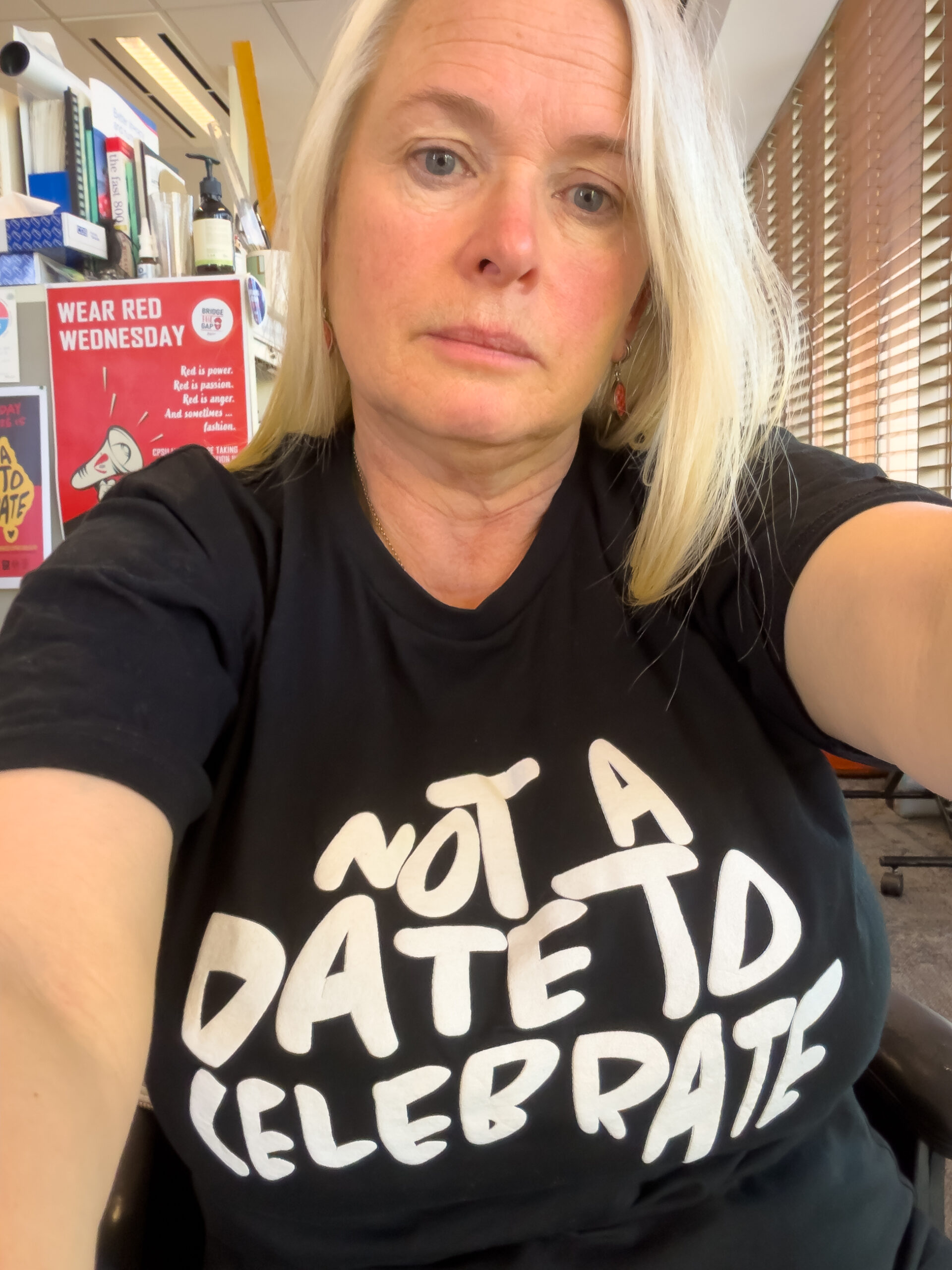
I went to work on Monday and I went to the Tasmanian Aboriginal Centre‘s rally at lunch time.
This is part of a speech by Cody Gangell-Smith, which basically sums up everything I’ve tried to say in this post in a lot fewer words:
Australians must resist this manufactured division. We need to stop fighting each other and do the real work of building a nation together. A nation where we stand on equal ground. A nation that has finally reckoned with its colonial past. A nation where we can stand side by side without prejudice or shame.
. . .
Decolonisation is not about blame. It is about building a future that is fair, honest and safe for everyone who calls this place home.
This is not about division. Let’s try and build that country.
Find out more
There are many great resources online. Here are some that I’ve recently read
- 8 things to know about January 26, Blog by Yorta Yorta woman Taneshia Atkinson (2021)
- Why we need to change the date of Australia Day by Luke Pearson (2016)
- Why Australia Day is really held on January 26 (SBS)
- Why we should celebrate Australia Day on March 3 – the day we became a fully independent country (The Conversation)
Habit tracker
Usual habits
- Go outside first thing (7 days): 6/7
- 15 minutes morning exercise sequence (7 days): 7/7
- Hip exercises (5 days): 0/5
- Walk (7 days): 7/7
- Carry a notebook with me when I walk (7 days): 4/7
- Thinking time (4 days): 2/7
- Morning planning routine (4 days): 4/4
- Mid-day journalling (7 days): 5/7
- Work shutdown (4 days): 2/4
- 9.30 shutdown & dim lights (6 days): 6/6
- Evening routine (7 days): 7/7
My experiment
Days out of 30 I have got up at the alarm: 22/28
Summary of the week
This week I learned
Molly houses
A molly house was a public house in 1700s and 1800s England, which provided a safe space for queer people to socialise. At the time gay men weren’t tolerated and they could have been put in the pillories, or even hanged, so secret, informal meeting places were established in back-rooms of pubs, coffee houses or chocolate houses. (This reminds me of stories Rodney Croome told about gay bars in 20th century Tasmania on the Queer History Walk.) These establishments were known as molly houses and they were mainly frequented by working class men. According to the London Museum, there were more molly houses in London in the 1720s than there were gay clubs in the 1950s.
Catherine Parr
Catherine/Katherine/Kateryn Parr (1512-1548), the sixth wife of English King Henry VIII, valued women’s education highly, as role modelled by her mother, Maud. She was a supporter of religious reform and enjoyed reading and discussing new reformist ideas—which was somewhat at odds with her husband’s views towards the end of his life. Not only did she survive a plot to remove her, which would have likely made her the third of Henry’s six wives to have been beheaded, she reconciled Henry with his daughters Mary and Elizabeth, which helped set them on their paths to the throne.
Catherine published several books, at first anonymously and eventually under her own name. The first, titled Prayers or Meditations, was published in 1545. It included five original prayers and was the first work published in the name of an English Queen.
This week I noticed
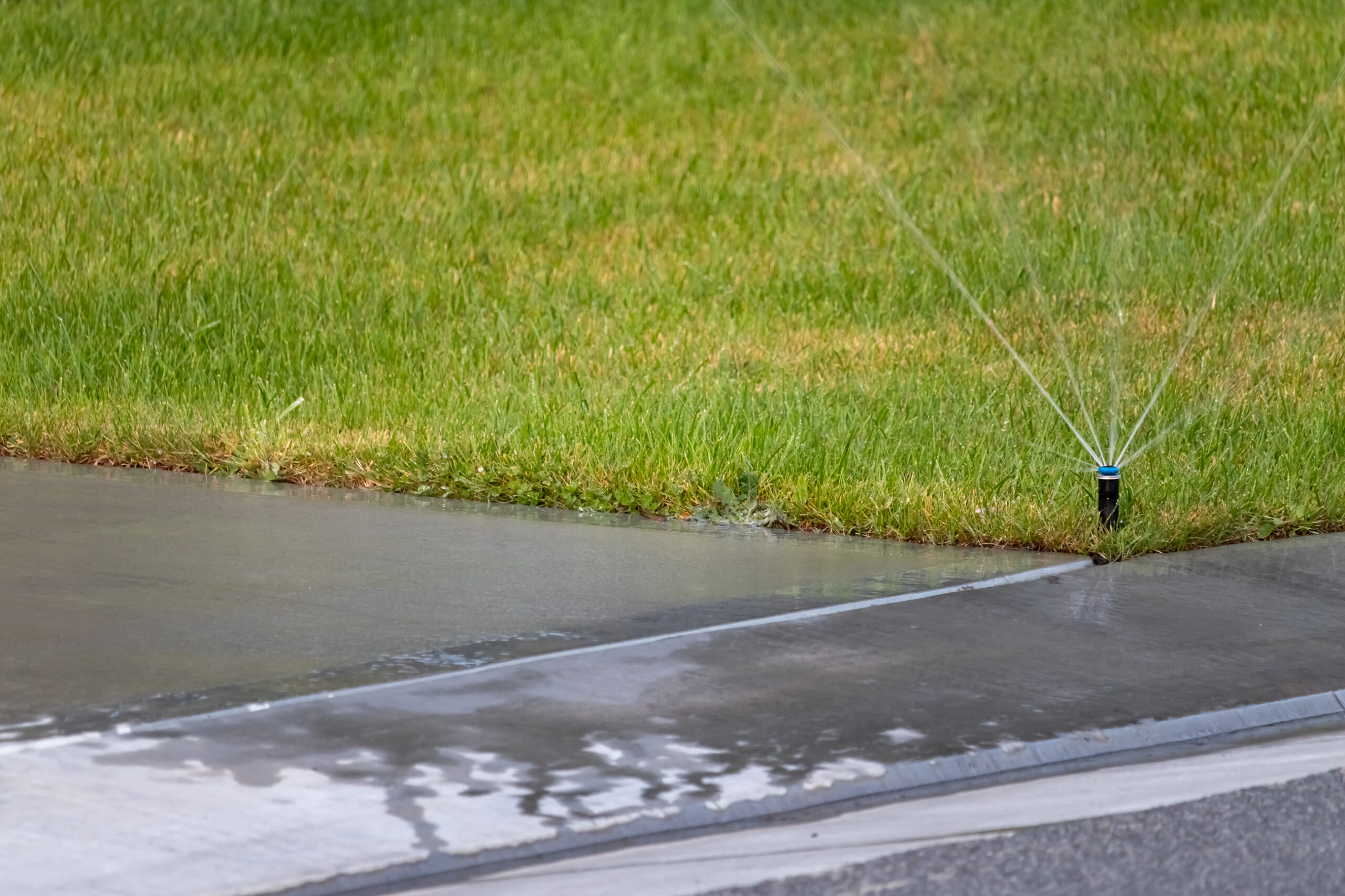
Automatic water sprinklers on a pristine lawn with half the water running off over the driveway.
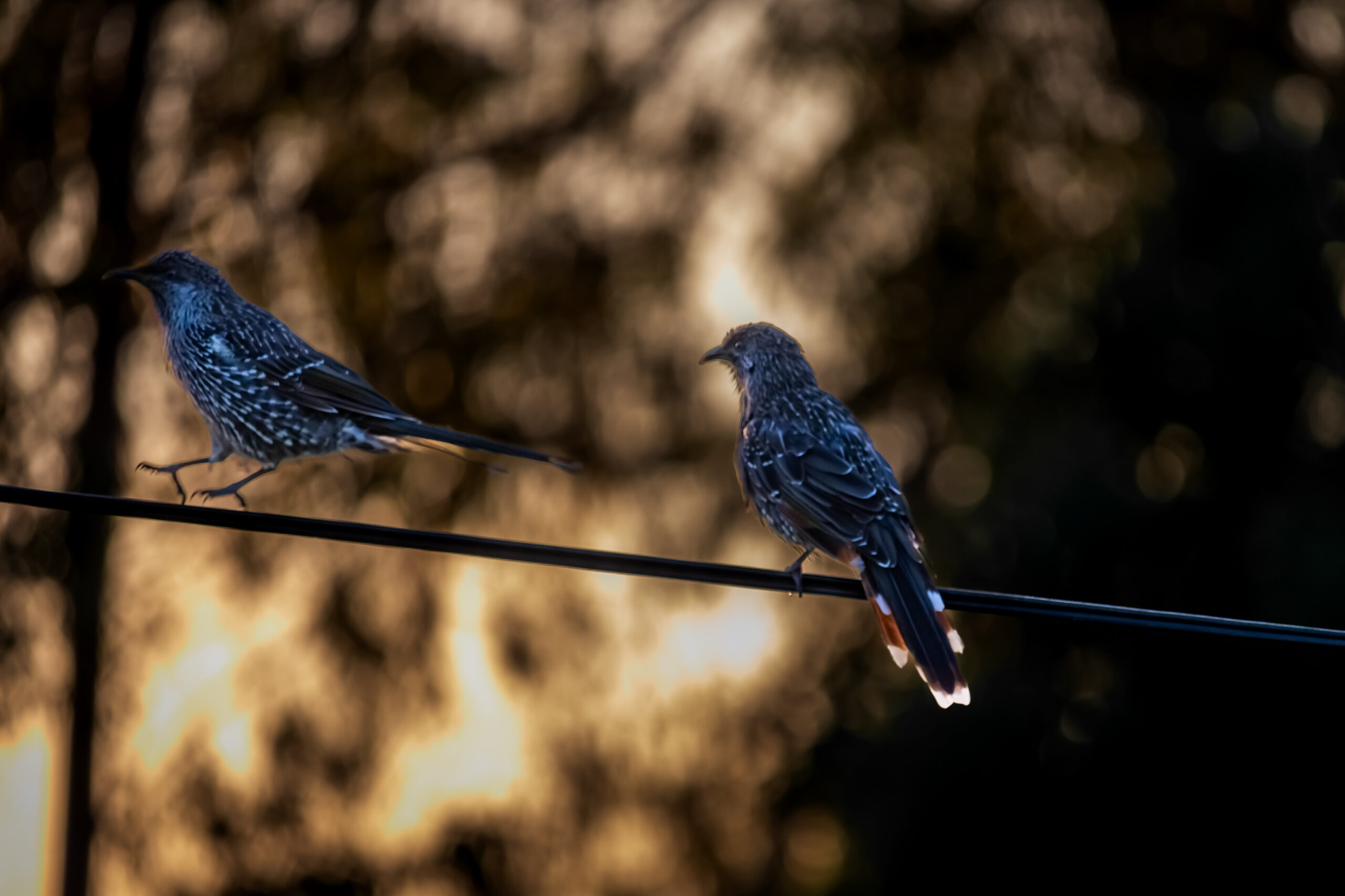
A kookaburra landing on a power pole where two birds are sitting. There’s a scuffle and lots of flapping and screeching and the two birds escort the kookaburra off-site, come back and start flying around their space, well pleased with their work.
Dead moth on the ground.

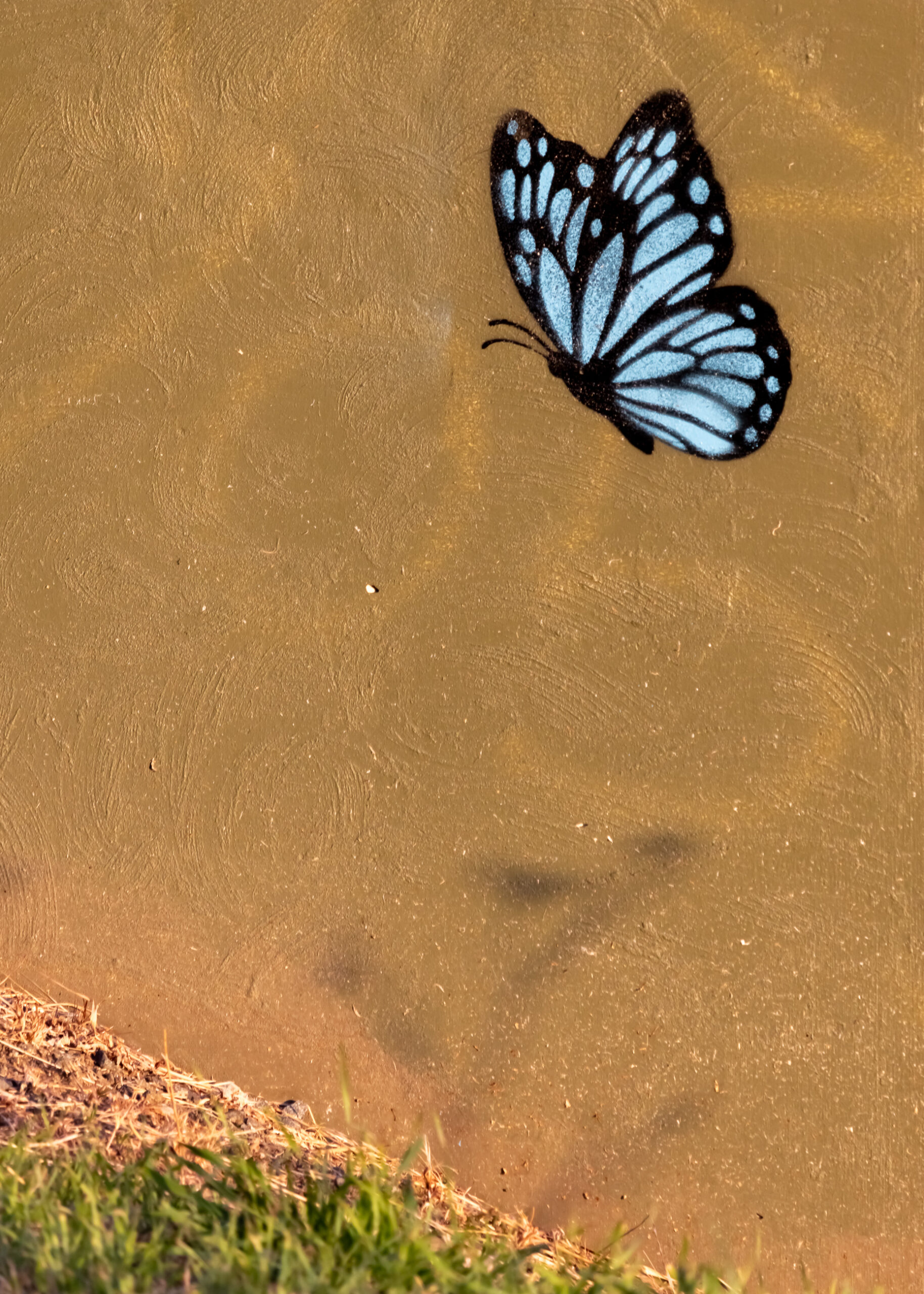
The painted butterfly looked like it was landing on the plant whose shadow fell on the wall.
A bee in an agapanthus.

What’s making me think?
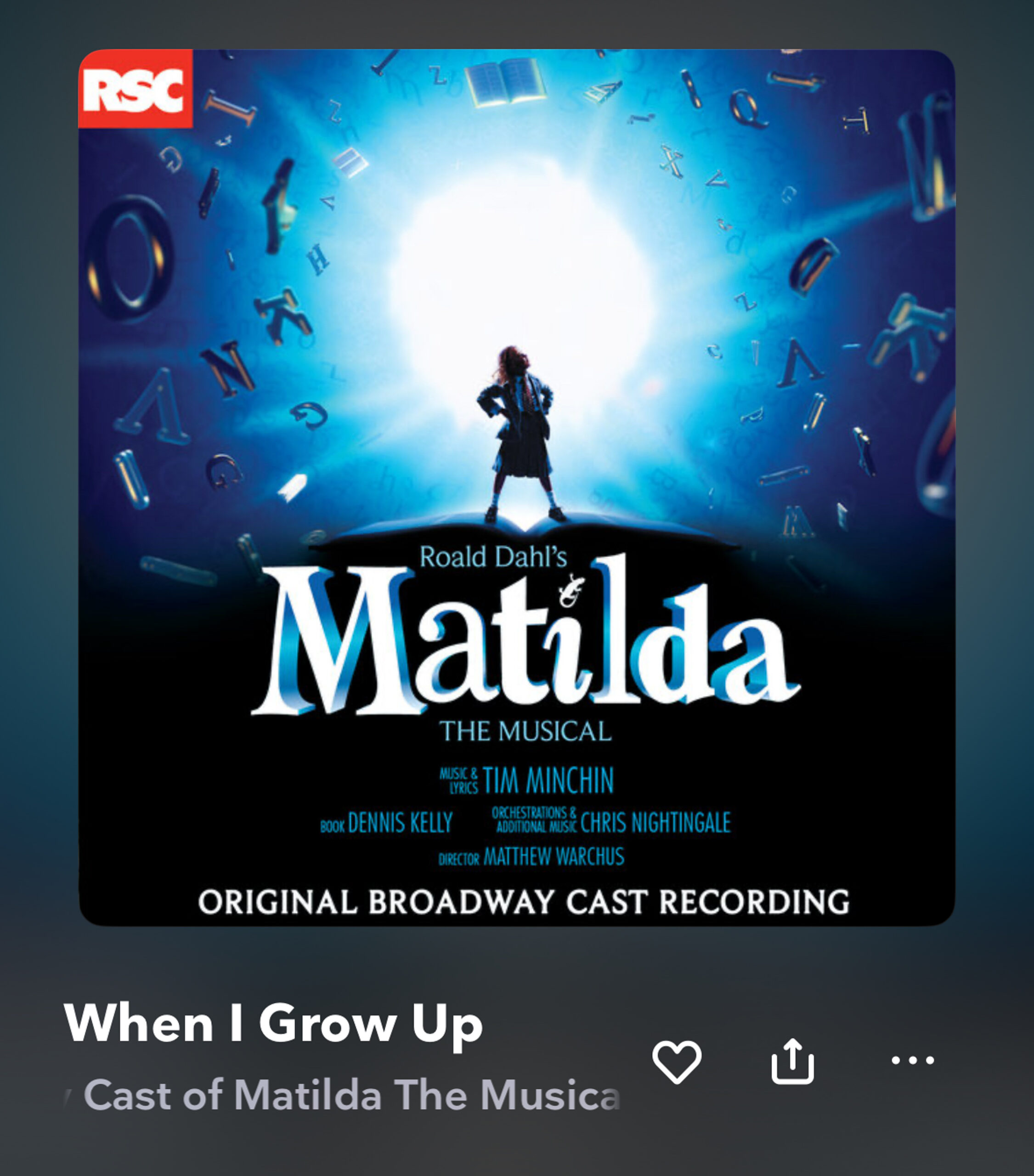
These lyrics from “When I Grow Up” by Tim Minchin from the musical Matilda.
When I grow up,
I will be brave enough to fight the creatures
That you have to fight beneath the bed
Each night to be a grown up.Just because you find that life’s not fair, it
Doesn’t mean that you just have to grin and bear it.
If you always take it on the chin and wear it, nothing will change.Just because I find myself in this story,
It doesn’t mean that everything is written for me.
If I think the ending is fixed already,
I might as well be saying I think that it’s OK,
And that’s not right!
A positive thing this week
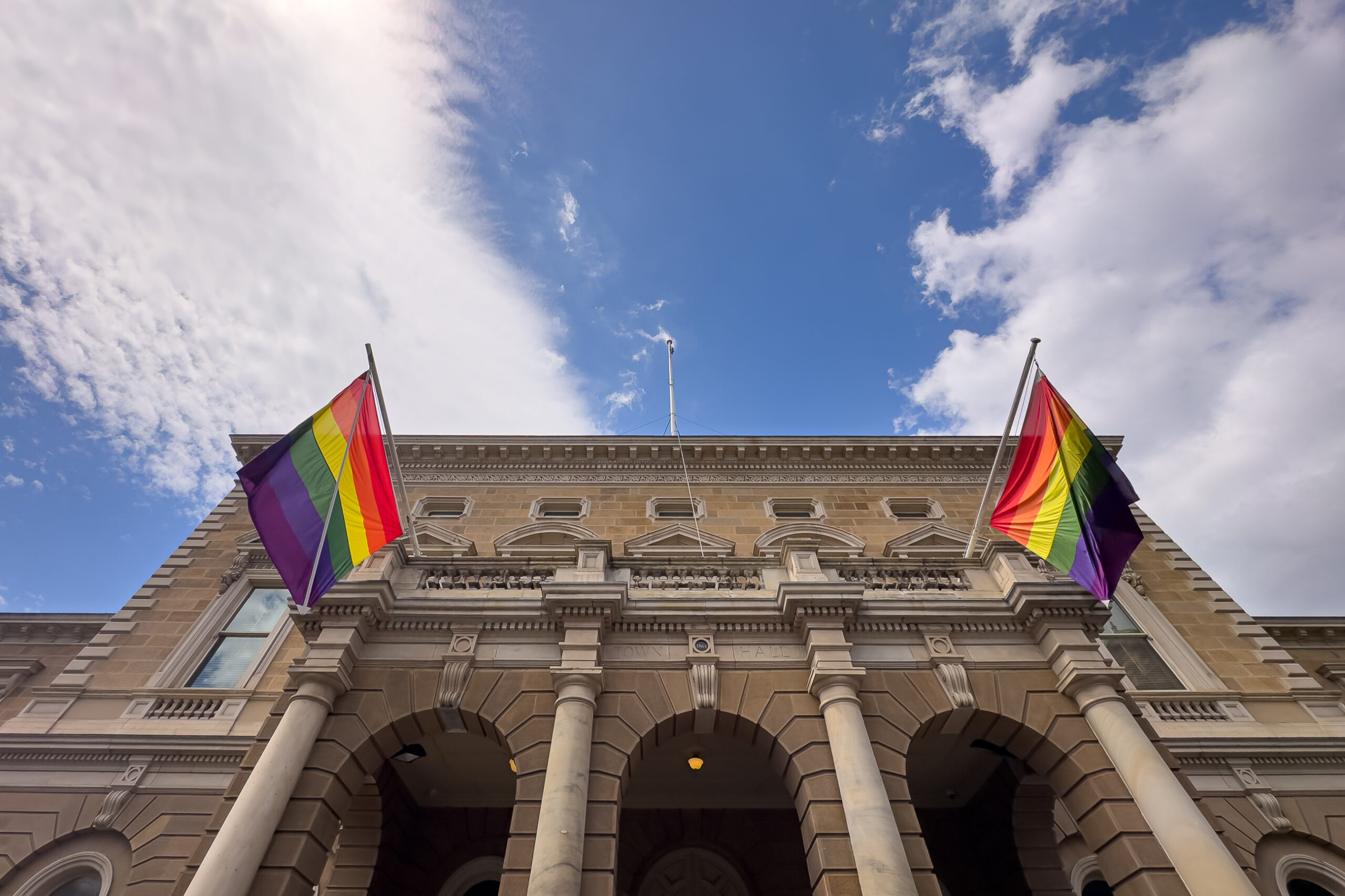
I went to the launch of Pride Month at Hobart Town Hall.
Reading
- Meditations for Mortals by Oliver Burkeman,
- Romeo and Juliet by William Shakespeare;
- Close Reading for the Twenty-First Century edited by Dan Sinykin and Johanna Winant
- The Visual Imagination by David duChemin
- Lady Audley’s Secret by Mary Elizabeth Braddon
- A Challenge for the Actor by Uta Hagen
Watching
- Much Ado About Nothing (John X Presents Shakespeare in the Gardens)
- Resident Alien
- Doctor Who ‘The Faceless Ones’
Listening
- Shrek the Musical Soundtrack
- SIX: The Musical Studio Cast Recording
About The Author
